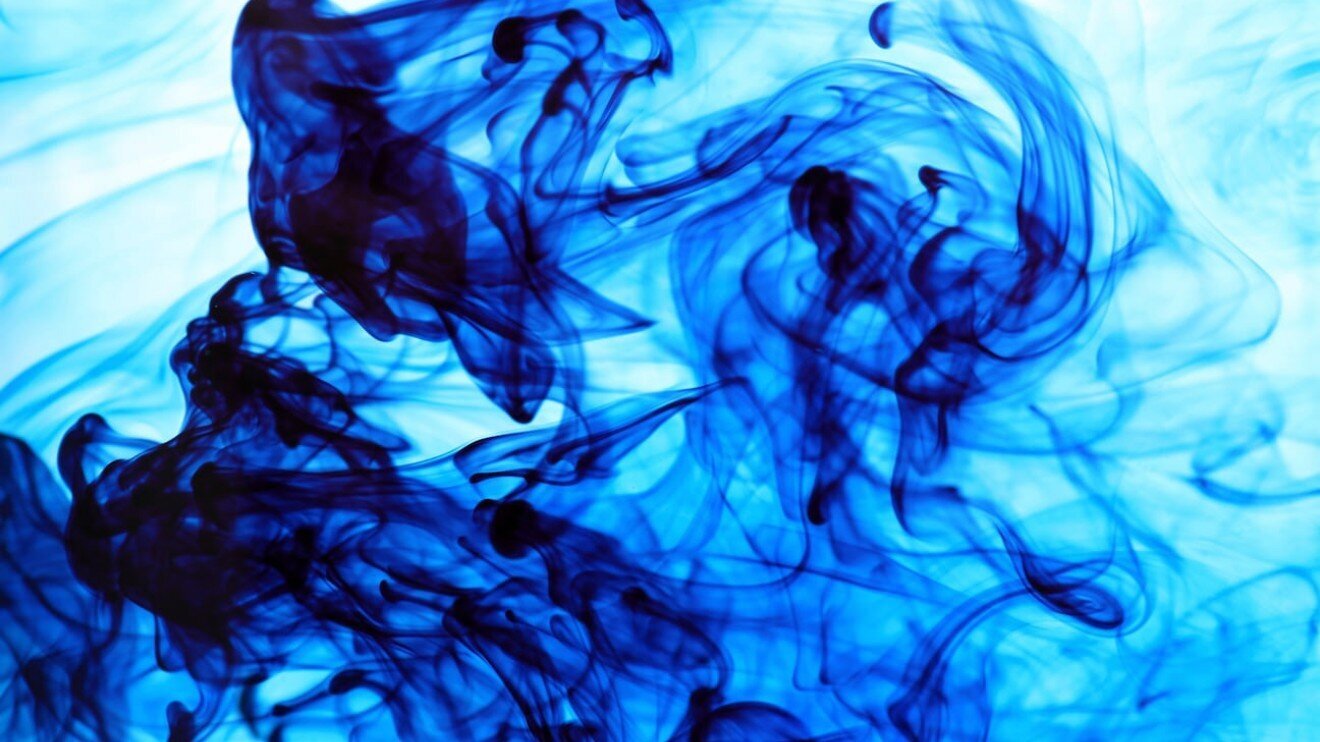
What Prussian Blue Is
Prussian blue (also known as Berlin blue, iron blue, Paris blue, or milori) is a blue inorganic pigment, chemically a mixture of iron hexacyanoferrates. Its intense, rich blue with a slight greenish cast made the pigment indispensable in painting, textiles, and the decorative arts.
What makes Prussian blue unique is its ability to produce a wide range of blue shades — from deep dark blue to soft pale blue — depending on concentration and method of application. It’s exactly this quality that makes the pigment so valuable to painters and craftsmen alike.
The History of Its Discovery
The story of Prussian blue’s discovery begins in early-eighteenth-century Berlin and is wrapped in legend. According to the most credible account, the pigment was produced around 1706 by the dye-maker Johann Jacob Diesbach. But a mysterious figure played a key role in the discovery — Johann Konrad Dippel, a German physician, alchemist, and adventurer.
Two versions of events survive. In the first, Diesbach worked in Dippel’s laboratory and stumbled on the new pigment while experimenting. A more romantic version, related by the French historian Michel Pastoureau, tells how Diesbach, an apothecary and dye merchant, bought some low-quality potash from Dippel to precipitate a cochineal dye solution — a popular red dye of the time.
The potash turned out to be «contaminated» — Dippel had previously used it to purify animal-bone oil. Instead of the expected red, Diesbach got a magnificent blue precipitate. Struck by the result, he went to Dippel with questions. The enterprising alchemist quickly grasped the commercial potential of the discovery and set up production of the new pigment.
Commercial Success and Secrecy
Dippel kept the formula for Prussian blue a closely guarded secret for a full ten years, which let him amass a considerable fortune. The new pigment caused a sensation — until then, producing a rich blue had been an extremely costly process, requiring ultramarine ground from lapis lazuli or indigo.
Prussian blue turned out to be not only far cheaper but also superior in brightness and durability to traditional blue pigments. Painters and craftsmen were desperate to get their hands on this revolutionary material, but the formula remained a trade secret.
It wasn’t until 1724 that the English chemist John Woodward managed to work out the secret of production and published the recipe. After that, Prussian blue began to be manufactured all across Europe, driving down the price of blue paints and spreading the color widely through art and everyday life.
Influence on Art and Culture
The appearance of Prussian blue had an enormous influence on eighteenth-century European art. Painters gained access to an inexpensive but high-quality blue pigment, sparking a genuine «blue revolution» in painting. Antoine Watteau, Jean-Baptiste-Siméon Chardin, and later Caspar David Friedrich and many other masters made active use of the new pigment in their work.
The influence of Prussian blue showed especially clearly in the decorative arts. European porcelain manufactories began producing pieces with deep blue decoration, textile makers mastered new dyeing techniques, and metalworkers used the pigment to create enamels of unprecedented beauty.
In Russia, Prussian blue became especially popular in the mid-eighteenth century, when Empress Elizabeth Petrovna patronized the development of domestic manufacturing. Russian craftsmen quickly mastered the new pigment and created many masterpieces of applied art using the characteristic Prussian blue.
A Plurality of Names
The pigment’s rich history is reflected in the many names it has gone by. Prussian blue, Berlin blue, Paris blue, iron blue, milori — each name is tied to a particular period in the pigment’s history or to features of its production in different regions.
The name «Prussian blue» comes from the fact that eighteenth-century Berlin was the capital of Prussia. «Paris blue» was the commercial name for a purified form of Prussian blue produced in France. «Milori» was the trade name under which the pigment was sold in Russia and other countries.
Worth a special mention is «Turnbull’s blue» — a pigment long thought to be a separate substance. It was produced by the Scottish firm Arthur & Turnbull in the late eighteenth century using a somewhat different process. It wasn’t until the twentieth century that it was conclusively proven that Turnbull’s blue and Prussian blue are, in fact, the same chemical compound.
Production Technology
The original method for producing Prussian blue was relatively simple but required some skill. At its core was a reaction between «yellow prussiate of potash» (potassium hexacyanoferrate) and iron salts. Mixing these components in the right proportions produced the characteristic blue precipitate.
Interestingly, the initial precipitate was white, and it quickly oxidized in the air, taking on its rich blue color. This oxidation process was key to producing a high-quality pigment — craftsmen learned to control it to achieve the desired shade and intensity of color.
Over time, the technology improved. Producers learned to make both soluble and insoluble forms of Prussian blue, each suited to different uses. The soluble form was used mainly for dyeing fabric and making watercolor paints; the insoluble form, for oil paints and enamels.
Properties and Characteristics
Prussian blue has a number of unique properties that account for its widespread use. First and foremost is its exceptional color saturation — the pigment produces a deep, «royal» blue with a slight greenish cast. Diluted or mixed with white pigments, it produces a broad range of shades from dark blue to soft pale blue.
The pigment has high light-fastness — objects colored with Prussian blue keep their color for decades. It also has good chemical resistance to acids, making it suitable for various technical applications.
Prussian blue does have weaknesses, though. It’s unstable in alkaline conditions — even weak alkaline solutions break the pigment down, which limits where it can be used. It also begins to decompose under strong heating (above 180°C).
Use in the Textile Industry
One of the most important uses of Prussian blue was in dyeing fabric. Before this pigment appeared, producing a rich blue in textiles was an extremely costly process, available only to the nobility. Prussian blue democratized the color blue, making it accessible to the middle class.
Its use for dyeing wool and silk fabrics became especially popular. Master dyers developed a variety of techniques for applying Prussian blue, allowing for both even coloring and complex patterns and shade gradients.
In eighteenth- and nineteenth-century Russia, Prussian blue was widely used to dye military uniforms. The characteristic dark blue of Russian hussar uniforms was often achieved with this very pigment.
Role in the Development of Printing
Prussian blue played an important role in the development of printing and reprographic technologies. In the nineteenth century, it became the basis for the cyanotype process — one of the earliest methods for copying documents and drawings. The famous «blueprints» — copies of technical drawings with white lines on a blue background — were produced using Prussian blue.
This process revolutionized architecture and engineering, making it possible to reproduce technical documents quickly and cheaply. Cyanotype was used well into the second half of the twentieth century, when it was displaced by more modern copying methods.
Prussian Blue in the Decorative Arts
The influence of Prussian blue on the decorative arts is hard to overstate. The porcelain manufactories of Meissen, Sèvres, and the Imperial Porcelain Factory in St. Petersburg produced many masterpieces using this pigment. The motif of «blue flowers» — painted in cobalt and Prussian blue on a white ground — became especially popular.
In the enameling arts, Prussian blue made it possible to create jewelry and luxury items with deep blue tones. Russian enamelers of the eighteenth and nineteenth centuries, Fabergé’s craftsmen among them, made masterful use of this pigment to create exquisite jewelry.
Furniture makers and cabinetmakers also recognized the potential of the new pigment. Prussian blue was used to create decorative finishes imitating expensive types of wood, and to paint furniture in the chinoiserie style — the European interpretation of Chinese art.
Symbolic Meaning
In the culture of the eighteenth and nineteenth centuries, Prussian blue took on a particular symbolic meaning. Blue was traditionally associated with aristocracy, spirituality, and eternity. The availability of Prussian blue expanded the use of blue in everyday life, gradually reshaping how the color was perceived symbolically.
In Russia, the blue produced with Prussian blue came to be associated with state symbolism. The dark blue uniforms of Russian diplomats, mentioned in the novel, were dyed with this very pigment, lending them a particular solemnity and formality.
In Romantic art, Prussian blue became a symbol of infinity and reverie. Romantic painters such as Caspar David Friedrich used the pigment to depict the sky and vast bodies of water, creating an atmosphere of the sublime and the mysterious.
Scientific Research
As chemistry developed as a science, Prussian blue became the object of serious scientific study. In the nineteenth century, scientists established its exact chemical formula and studied its mechanism of formation. This research contributed to the development of coordination chemistry and the theory of complex compounds.
Its magnetic properties proved especially interesting. In the twentieth century, it was discovered that at very low temperatures (below 5.5 K) this pigment displays ferromagnetic properties — a unique phenomenon among metal coordination compounds.
Modern research has shown that Prussian blue has semiconductor properties, opening new prospects for its use in electronics and nanotechnology.
Modern Applications
Although synthetic pigments have partly displaced Prussian blue in artistic practice, it continues to find use in various fields. In medicine, this pigment is used as an antidote for poisoning by the radioactive isotopes of cesium and thallium.
In industry, Prussian blue serves as a specialized sorbent for removing radioactive contamination from water. It played a particularly important role in the cleanup after the Chernobyl disaster.
Art restorers still use Prussian blue to restore historical paintings and decorative-art objects, since only this pigment can accurately reproduce the colors of the eighteenth and nineteenth centuries.
Conclusion
Prussian blue is more than just a chemical compound or an artistic material. It’s an important chapter in the history of human civilization, a symbol of technical progress and artistic achievement. From an accidental discovery in a Berlin laboratory to widespread use in art, industry, and science — the story of this pigment traces the development of European culture over the last three centuries.
Today, looking at works of art from the eighteenth and nineteenth centuries, we can appreciate just how revolutionary the appearance of Prussian blue really was. This humble blue pigment forever changed painters’ palettes and the color perception of entire generations, leaving an indelible mark on the history of human culture.