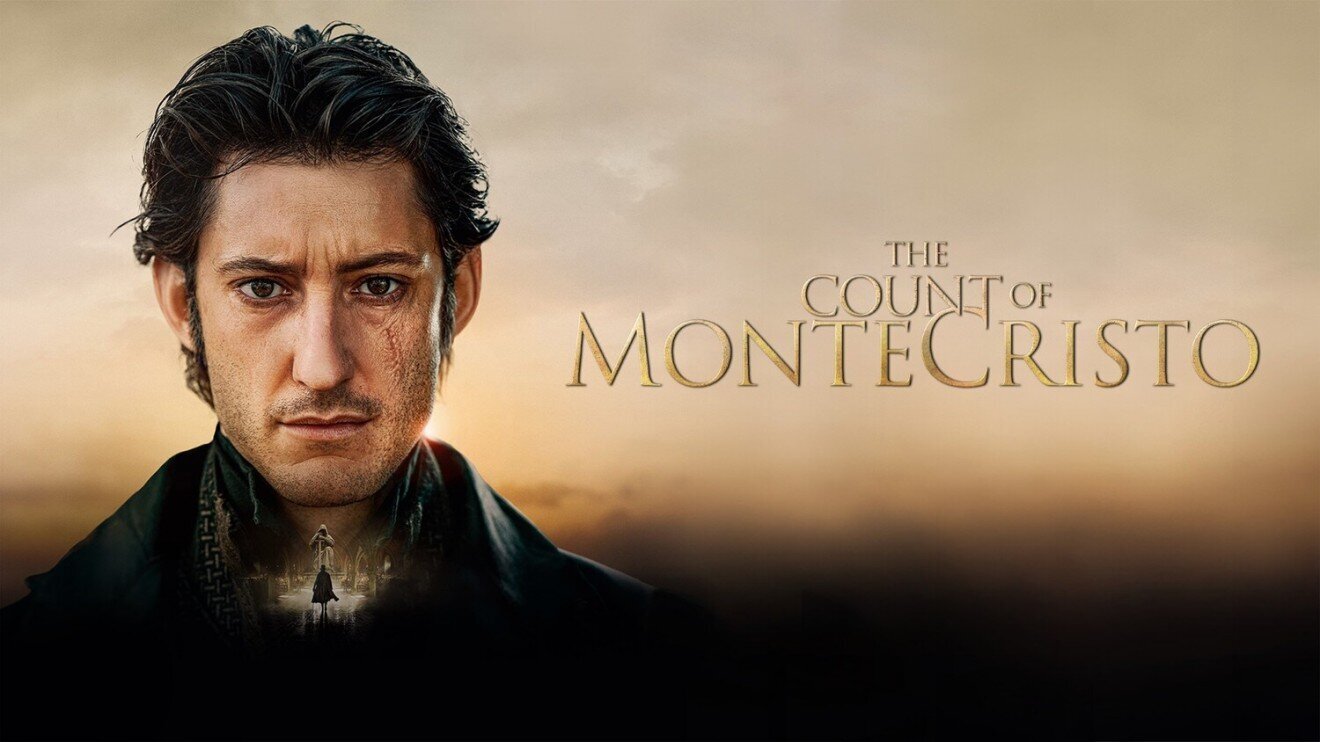
«The Count of Monte Cristo» is one of the greatest adventure novels in the history of world literature, written by Alexandre Dumas père in 1844-1846. A story of righteous vengeance and human passion, it has become a symbol of the fight for truth and retribution.
How the Novel Came About
Dumas conceived the novel in the early 1840s. He came up with his hero’s name during a trip across the Mediterranean, when he saw the island of Montecristo and heard a legend about untold treasures buried there. The work was co-written with Auguste Maquet, a common practice for Dumas.
The first edition was serialized in the magazine «Journal des Débats» from August 28, 1844, to January 15, 1846. Even before the magazine serialization finished, the first book edition appeared in Paris in 1844-1845.
The novel’s success outstripped all of the writer’s previous work. At the time, it was one of the biggest successes any novel had ever had in France. The earnings let Alexandre Dumas build a country villa, which he named «Chateau de Monte-Cristo.»
Plot and Structure
The novel takes place in 1815-1829 and 1838, spanning the period from Napoleon’s fall to the reign of Louis-Philippe. The plot centers on the fate of Marseille sailor Edmond Dantès, who falls victim to treachery and betrayal.
Imprisonment
The main character is nineteen-year-old Edmond Dantès, first mate on the merchant ship Pharaon. On its final voyage, at the request of the dying captain, he takes on the task of delivering a letter to Paris from Marshal Bertrand. On returning to Marseille, he expects a promotion to captain and a wedding to his beloved Mercédès.
But his happiness is short-lived. Three men, driven by envy and greed, decide to destroy Dantès: the accountant Danglars envies his career advancement, Fernand Mondego wants to marry Mercédès himself, and the neighbor Caderousse, though not an active participant in the plot, stays cowardly silent.
Danglars writes an anonymous denunciation, accusing Edmond of Bonapartist activity. Dantès is arrested right at his engagement party and brought before deputy crown prosecutor Villefort. Villefort is initially ready to release the innocent man, but on learning that the letter’s addressee is his own Bonapartist father, decides to sacrifice Edmond to save his own career. With no trial, Dantès is sent to the Château d’If, a grim fortress on an island from which no one returns.
Education and Awakening
Edmond spends fourteen years in prison. A few years into his imprisonment, driven to despair, he decides to end his life by starving himself. But fate brings him together with Abbé Faria, an Italian scholar-priest considered mad because of his stories of a hidden treasure.
Faria becomes both teacher and father to Edmond. He teaches the young man the sciences, languages, philosophy, and history, turning a simple sailor into an educated aristocrat. Most importantly, the abbé helps Edmond understand who betrayed him, and why. He also reveals the secret of the treasure on the island of Monte Cristo.
After Faria’s death, Dantès makes a daring escape, taking the dead man’s place in the sack the jailers toss into the sea. Reaching the island, he finds Cardinal Spada’s treasure and becomes one of the richest men in Europe.
Return and Revenge
Edmond spends nine years preparing for his return. He studies the world, masters the art of manipulating people, and creates several personas: the Count of Monte Cristo, Abbé Busoni, Lord Wilmore, Sinbad the Sailor. Each mask serves a purpose in his grand plan.
Under the name Count of Monte Cristo, Edmond enters Parisian high society. He finds his enemies: Danglars has become a wealthy banker and baron, Fernand a general and Count de Morcerf, married to Mercédès, Villefort a crown prosecutor.
The count’s revenge is elaborate and just. He doesn’t kill his enemies, but destroys their lives by their own hands. Fernand will kill himself, disgraced by the exposure of his crimes. Danglars will lose his entire fortune and fall into the hands of bandits. Villefort will lose his mind after losing his family.
But in the end, the count comes to understand that his revenge has brought suffering not only to the guilty but to the innocent. He gives up further retribution in favor of mercy, leaving Danglars with the means to survive.
The Main Character: Edmond Dantès, the Count of Monte Cristo
Edmond Dantès is one of the most complex, multifaceted characters in world literature. His image embodies the romantic ideal of a man able to rise above his circumstances and change his fate through sheer will and intellect.
The Evolution of His Character
At the start of the novel, Edmond is a simple, honest sailor, full of hope and plans for the future. His imprisonment changes him completely. Suffering and education turn a naive young man into a wise but ruthless avenger.
The Count of Monte Cristo is a new identity Edmond consciously builds for himself. He is a cosmopolitan aristocrat, holding immense wealth and encyclopedic knowledge. He speaks many languages, understands the sciences and the arts, and can read the human soul.
But beneath the mask of a high-society man lies a deeply traumatized individual. The count sees himself as an instrument of Providence, a tool of higher justice. This conviction lets him act mercilessly, without a twinge of conscience.
A Man of Many Faces
One of the character’s most striking traits is his multiplicity. Edmond creates several alternate identities, each serving a specific purpose:
- The Count of Monte Cristo — the main mask for infiltrating Parisian society
- Abbé Busoni — for gathering information and making contacts
- Lord Wilmore — an English aristocrat for special errands
- Sinbad the Sailor — for dealing with sailors and smugglers
This capacity for transformation makes the hero an almost mystical figure, a riddle of a man who can be everywhere and nowhere at once.
A Philosophy of Revenge
The Count of Monte Cristo doesn’t simply take revenge, he administers justice. His philosophy rests on the belief that a higher justice exists and must prevail. He sees himself as its chosen instrument.
The count’s revenge isn’t spontaneous, it’s a carefully planned system of retribution. Each of his enemies receives a punishment matching their crime. Danglars, who betrayed out of greed, loses his fortune. Fernand, who stole love, loses his honor and his family. Villefort, who sacrificed justice for his career, loses everything he valued.
Symbolism and Philosophical Themes
The Island of Monte Cristo as Symbol
The island of Monte Cristo isn’t just a setting, it’s a powerful symbol. It’s the point of transformation, where Edmond Dantès dies and the Count of Monte Cristo is born. The island symbolizes the isolation necessary for inner transformation, and at the same time a source of strength for what comes next.
The treasure on the island isn’t just material wealth, but a metaphor for the spiritual riches the hero gains through suffering. Cardinal Spada’s gold becomes an instrument of higher justice.
The Theme of Justice and Retribution
The novel’s central theme is the conflict between human and divine justice. The count takes on the roles of judge and executioner, but in the end comes to understand the limits of any human right to dispense justice.
Dumas shows how the thirst for revenge can twist a person’s soul. The count becomes almost inhuman in his pursuit of justice. Only his love for Haïdée, and the realization that his actions are causing suffering to the innocent, restore his humanity.
The Theme of Time and Patience
«Wait and hope» — the words that close the novel express its central philosophy. Dumas argues that time is an ally of justice. The hero learns patience in prison and wields it as a weapon in his fight against evil.
Fourteen years of imprisonment, nine years of preparation — the count is in no hurry. He understands that a real victory takes time and thorough preparation.
The Hero’s Real-Life Prototype
One of the prototypes for Edmond Dantès was a real person: a shoemaker from Nîmes named François Picaud. In 1807 he was falsely accused of espionage by three envious «friends» and thrown into the Fenestrelle fortress, where he spent seven years.
In prison, Picaud befriended a wealthy Italian priest who, before dying, revealed to him the secret of treasure hidden in Milan. After his release, Picaud took possession of the inheritance and, under another name, spent ten years taking revenge on those who had betrayed him.
Picaud’s story, recorded in French police archives, gave Dumas the basis for his plot. But the writer significantly refined the story, stripping it of its grim criminal edge.
Literary Significance
Genre Features
«The Count of Monte Cristo» is a classic adventure novel, but it goes beyond the genre. The work combines features of:
- An adventure novel with a gripping plot
- A social novel critiquing contemporary society
- A philosophical novel reflecting on justice and morality
- A psychological novel with deep character analysis
Influence on World Literature
The novel had an enormous influence on the development of adventure literature. The image of the Count of Monte Cristo became an archetype of the noble avenger, echoed in the work of many authors.
The theme of righteous revenge, developed by Dumas, was carried forward by writers across many countries and eras. The novel’s influence can be traced from Arthur Conan Doyle to contemporary authors.
Adaptations
«The Count of Monte Cristo» is one of the most frequently adapted works in world literature. Over a century and a half, the novel has been filmed many times in different countries:
- French versions starring Jean Marais (1954) and Gérard Depardieu (1998)
- Hollywood adaptations starring Richard Chamberlain (1975) and Jim Caviezel (2002)
- The Soviet film «The Prisoner of the Château d’If» (1988), starring Viktor Avilov
- The latest French adaptation, from 2024, starring Pierre Niney
Each adaptation interprets the hero differently, emphasizing different sides of his character — from romantic hero to grim avenger.
Contemporary Reception
Today, «The Count of Monte Cristo» is seen not only as a classic, but as a still-relevant story about the fight for justice. The themes of corrupt power, betrayal by friends, and the triumph of justice remain as pressing as ever.
The figure of Edmond Dantès continues to inspire the creators of contemporary culture. Elements of his story can be found in comics, video games, and television series. The American series «Revenge» (2011-2015) offers a modern take on the plot, with a woman as the avenger at its center.
Conclusion
«The Count of Monte Cristo» remains one of the greatest achievements in world literature. Alexandre Dumas’s novel touches on the eternal themes of justice, revenge, forgiveness, and human dignity. The image of Edmond Dantès, the Count of Monte Cristo, embodies the romantic ideal of a man capable of rising above any circumstance.
The story of a simple sailor who becomes a powerful count continues to move readers across generations. Each finds something of their own in it: some see a gripping adventure plot, others a profound philosophical drama about the price of justice.
The novel’s final words — «wait and hope» — have become a catchphrase expressing faith in the triumph of justice and human dignity. And in that lies the enduring value of Alexandre Dumas’s great work.