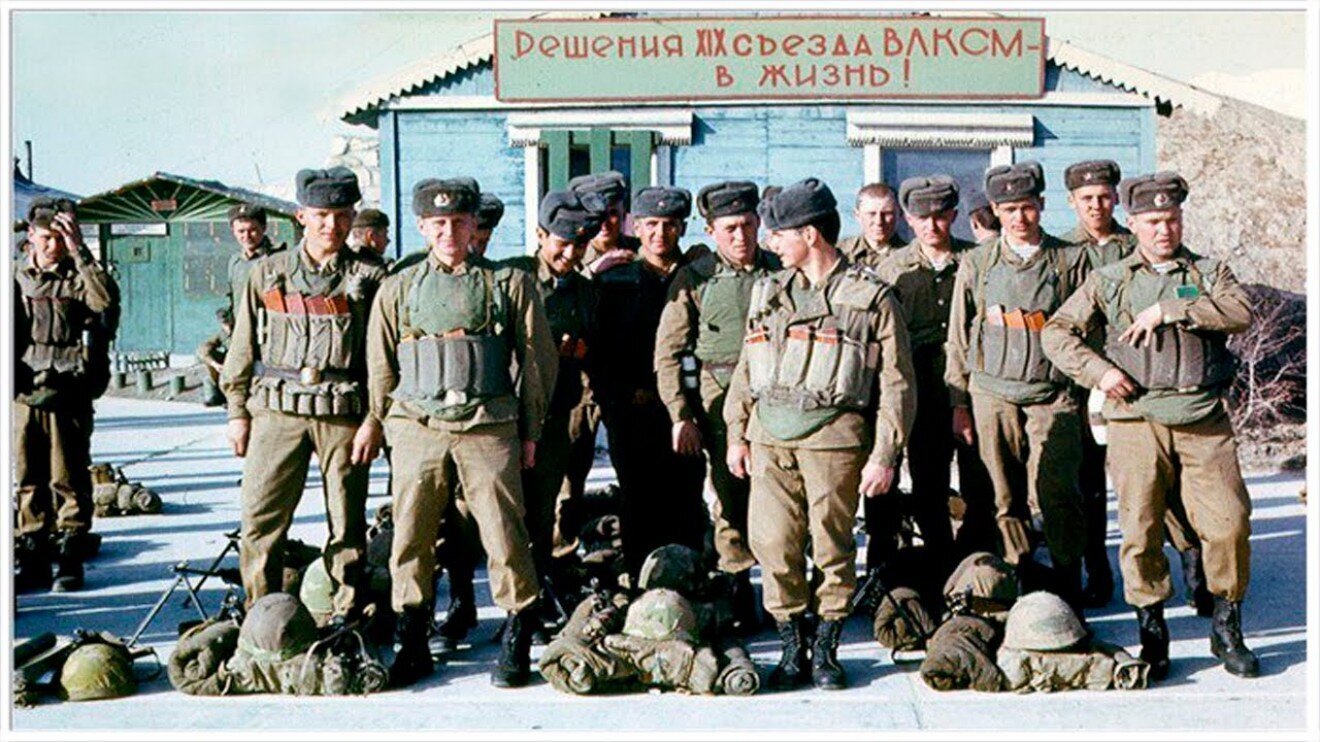
A paratrooper’s standard rucksack includes a backpack, a case for an entrenching tool, pouches for two hand grenades, and pouches for two rifle magazines — meaning a paratrooper’s standard combat load is two grenades and two magazines, which is very little for actual fighting. Given that Anton mentions a chest rig, it’s reasonable to assume his combat load was considerably larger.
The chest rig owes its origin to the Vietnam War: the Chinese supplied North Vietnamese forces with Kalashnikov rifles paired with a chest rig holding 2 AK magazines and 4 F-1/RGD-5 type grenades, known as the «Chi-Com,» short for Chinese Communist.
In 1979, the US began supplying the mujahideen with weapons and gear. Shipments came through China and Vietnam — Kalashnikov rifles, Mauser rifles, and other weapons. The Chi-Com again became the standard gear. Afghan mujahideen decorated them with leather trim, beadwork, and other local embroidery patterns.
Soviet servicemen recognized the advantage of the Chinese chest rigs and started actively using captured Chi-Coms on raids and combat operations. That’s also when the well-known term «army chest rig» was born.
There weren’t enough captured rigs to go around, so unit craftsmen started sewing homemade versions out of rain capes and soldiers’ duffel bags. The most «prized» homemade rigs were made from two pouches off an RD-54 paratrooper rucksack — it could hold 4 magazines and 4 grenades.
So a full combat load, also called «the bull,» came to 4 magazines of 30 rounds each and 4 grenades.