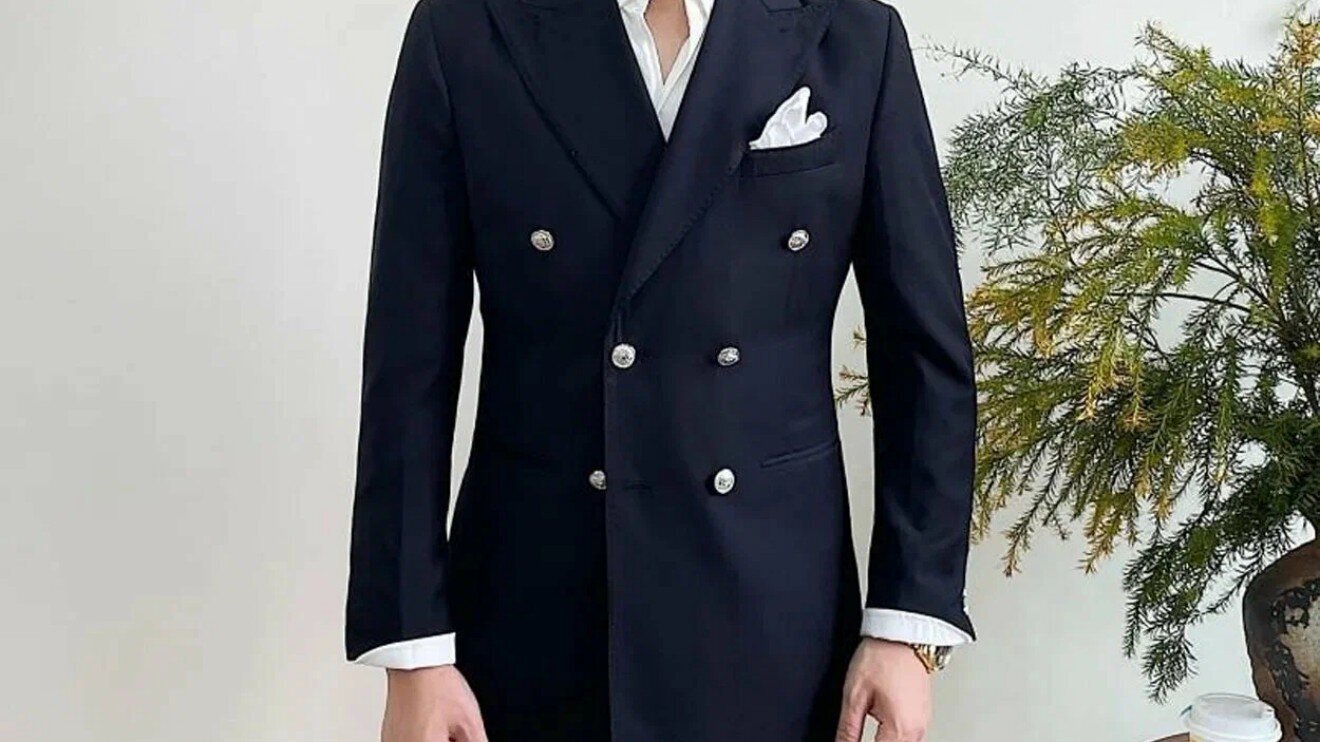
In the early 1990s, Russia saw the arrival of a host of new fashion concepts, among them the mysterious "blazer." Many did not understand how it differed from an ordinary suit jacket — unsurprisingly, since this garment has a rich history and specific features that took shape over a century and a half.
The history of the blazer's origin
The blazer's history began in the 1860s, and is closely tied to nautical themes and the sports clubs of Great Britain. There are several versions of how the garment's name came about.
The most reliable version links the term "blazer" to the bright red jackets worn by members of the Lady Margaret Boat Club, a rowing club at St John's College, Cambridge, founded in 1825. These jackets were called "blazers" for their vivid scarlet color — from the English word "blaze," meaning "flame," "bright glow." As the writer Walter Wren noted in the London Daily News in 1889: "A blazer is a red flannel boating jacket, worn at Lady Margaret, the boat club of St John's College, Cambridge. When I was at Cambridge, that's exactly what it meant and nothing more."
An alternative but less well-documented version links the blazer's origin to the British warship HMS Blazer. According to this version, the ship's crew wore striped blue-and-white jackets as far back as 1837, which supposedly gave the garment its name. Modern sources, however, do not confirm this theory with reliable facts.
Originally, blazers were bright-colored sporting jackets — scarlet, striped, or in club colors — intended exclusively for rowing, cricket, and other sports popular among the British aristocracy and student body.
The evolution of the blazer in the 20th century
A fundamental shift in how the blazer was perceived took place in the 1930s, when it gradually began to shed its purely sporting associations. It was during this period that the classic image of the blazer took shape, one associated with the lifestyle of the wealthy elite.
A special place in this evolution belongs to the double-breasted navy-blue blazer with metal nautical-style buttons. This variant, often called the "nautical blazer" or "reefer blazer," became a true classic, occupying a middle ground between the informal tweed jacket and the strict business suit.
The color "navy," mentioned in the novel, is a deep dark-blue shade, taking its name from the color of the Royal Navy's uniform. This color became canonical for the classic blazer, and remains so to this day.
In the 1960s, the blazer enjoyed a new wave of popularity thanks to the British Mod subculture. Striped blazers became an integral part of the fashionable look, worn by members of such famous bands as The Who, Small Faces, The Beatles, and The Rolling Stones. Later, in the late 1970s, during the Mod revival, blazers came back into fashion again, especially models with three-color stripes and distinctive cut details.
The blazer's construction features
The blazer has a number of distinctive construction features that set it apart from other types of jackets:
Buttons
One of the blazer's main distinguishing traits is its metal buttons, often gold or silver in color. A traditional nautical blazer has six buttons (in the double-breasted version), each of which may be engraved with an anchor or other nautical symbol. The buttons contrast with the fabric in both color and material, which fundamentally distinguishes the blazer from a classic suit jacket.
Pockets
Blazers are traditionally fitted with patch pockets, often with flaps. This is another important detail distinguishing them from formal jackets with welt pockets. A patch pocket is usually located on the chest, which may bear a club, college, or other emblem.
Cut and length
The blazer has a looser cut than a classic suit jacket. Its length usually does not extend past the top of the hip, giving the silhouette a more relaxed look. Double-breasted models often have two vents in the back for greater freedom of movement — a legacy of naval uniforms.
Collar and lapels
The blazer's collar is usually wide and notched, with rectangular or slightly pointed lapels. Contrasting piping along the edge of the lapels is sometimes found, adding elegance to the garment and emphasizing its informal character.
Materials
A wide range of materials is used to make blazers, which also sets them apart from formal suit jackets:
Traditional materials: Wool of various weights, tweed, flannel. The classic nautical blazer is made of dense dark-blue wool cloth with a characteristic slight sheen.
Summer variants: Linen, cotton, lightweight wool fabrics. These materials make the blazer suitable for warm weather and informal occasions.
Modern materials: Denim, suede, corduroy, blended fabrics. This variety of materials makes it possible to create blazers for different styles and occasions.
Types of blazers
The club blazer
This is the most traditional type of blazer, going back to its nautical origins. It is characterized by a navy-blue color, a double-breasted closure, brass or gold-colored buttons with anchor symbolism, patch pockets with flaps, and wide lapels. This exact type of blazer was used as a uniform in prestigious sports and yacht clubs.
The classic blazer
An elegant evolution of the club blazer, stripped of excess nautical symbolism. Usually solid-colored, navy blue, and can be either single- or double-breasted. Modern stylists favor a minimalist approach without decorative elements.
The sport blazer
A less formal variant, which nonetheless looks more official than an ordinary sports jacket. Often made in muted tones, it may feature a plaid or striped pattern. It may include various decorative elements characteristic of an informal style.
The striped blazer
A legacy of rowing and cricket clubs, where stripes of different colors indicated membership in a particular institution or club. Such blazers often carry an emblem or crest of the relevant organization on the chest.
The main differences between a blazer and a suit jacket
Understanding the differences between a blazer and a classic suit jacket is critical for choosing and wearing these wardrobe items correctly:
Buttons and hardware
Blazer: Metal buttons (gold, silver, brass), often engraved or bearing emblems, contrasting with the base fabric.
Suit jacket: Buttons matching the fabric's tone or harmonizing with it in color, usually made of the same material or in neutral shades.
Pockets
Blazer: Patch pockets, often with flaps, giving the garment a more informal look.
Suit jacket: Welt pockets, creating a stricter, more formal silhouette.
Decorative elements
Blazer: May feature emblems, crests, anchors, and other symbols, especially on the breast pocket.
Suit jacket: A strict design without decorative elements, patches, or emblems.
Cut and silhouette
Blazer: A looser, more relaxed cut, often with a shorter length.
Suit jacket: A strict, fitted cut, creating a clear silhouette.
Range of use
Blazer: Informal events, casual style; can be paired with jeans, chinos, and various types of trousers.
Suit jacket: Formal events, business style; usually part of a suit.
Seasonality
Blazer: More often associated with the summer season, though winter variants exist.
Suit jacket: Universal for any time of year.
Rules for wearing a blazer
The blazer offers significantly more freedom in choosing combinations than a classic suit jacket, making it a versatile element of the male wardrobe.
Pairing with trousers
One of the blazer's main advantages is that it can be worn with many types of trousers:
Classic white trousers: A basic combination with a navy-blue blazer, creating an elegant summer look in nautical style.
Gray flannel trousers: A versatile combination, suitable for semi-formal events.
Jeans: A modern casual combination, in which overly contrasting colors should be avoided — it's best to choose jeans one or two shades lighter or darker than the blazer.
Chinos: An excellent alternative to jeans for a smart-casual look.
Beige or brown trousers: A classic combination with a navy-blue blazer, especially popular in the American style.
Choosing a shirt
The blazer can be worn with various types of shirts:
The classic white shirt: A universal choice that goes with a blazer of any color.
Colored shirts: Blue shades pair well with most blazers, but sharp contrasts should be avoided in a business setting.
Patterned shirts: In the classic style, small patterns on a light-blue background are acceptable.
Polos and T-shirts: For an informal style, polo shirts or even T-shirts can be used.
Turtlenecks: A modern solution, especially popular in cold weather.
Buttoning the blazer
The rules for buttoning a blazer depend on its type:
Single-breasted blazer: Does not need to be buttoned, and can be worn open for a more relaxed look.
Double-breasted blazer: Traditionally worn buttoned, though younger wearers sometimes prefer to leave the top button undone.
The blazer within the dress-code hierarchy
In the hierarchy of formality of Western dress codes, the blazer occupies a middle position:
Above the blazer: A two- or three-piece suit, tuxedo, tailcoat
The blazer's level: Smart casual, business casual
Below the blazer: A sport jacket, cardigan, ordinary shirt
This position makes the blazer an ideal choice for events where one needs to look elegant without being overly formal.
The blazer in different cultures
Great Britain
The blazer's homeland, where it remains an integral part of school uniforms, university tradition, and club culture. The British blazer is often adorned with crests and emblems, and carries rich symbolism.
The USA
The American interpretation of the blazer leans toward a more democratic style. Especially popular is the so-called "Ivy League" style, characterized by pairing a navy-blue blazer with gray flannel trousers or chinos.
Continental Europe
In continental European countries, the blazer is seen as an element of elegant casual style, often used in resort fashion and for summer events.
Modern trends
In the late 20th and early 21st centuries, the blazer underwent significant changes:
Women's fashion: By the late 2000s, the blazer had become a popular element of the women's wardrobe, often in a cropped version with rolled-up sleeves.
Color palette: It has expanded beyond the traditional navy-blue to include a wide range of shades.
Materials: Modern blazers are made from the most diverse range of materials, including high-tech fabrics.
Cut: More fitted variants have appeared, adapted to modern notions of male elegance.
Caring for a blazer
Proper care for a blazer ensures its longevity and preserves its appearance:
Cleaning: Professional dry cleaning is recommended, especially for wool and tweed garments.
Storage: A blazer should be stored on a hanger in a well-ventilated closet, ideally in a garment bag.
Buttons: Metal buttons need periodic polishing to preserve their shine.
Ironing: Careful ironing is needed, using a protective cloth, especially around the lapels.
Conclusion
The blazer is a unique element of the male wardrobe, successfully combining elegance and ease. Its rich history, from 19th-century naval jackets to modern interpretations, reflects the evolution of men's fashion and social norms.
Understanding the differences between a blazer and a classic suit jacket makes it possible to use this garment correctly in different situations. The blazer remains a versatile choice for men who value style and comfort, and continues to evolve alongside modern fashion while preserving its classic foundation.
The color "navy," mentioned in the novel, really is a classic choice for a blazer — a deep, noble shade of dark blue that has become a symbol of elegance and good taste in men's fashion.