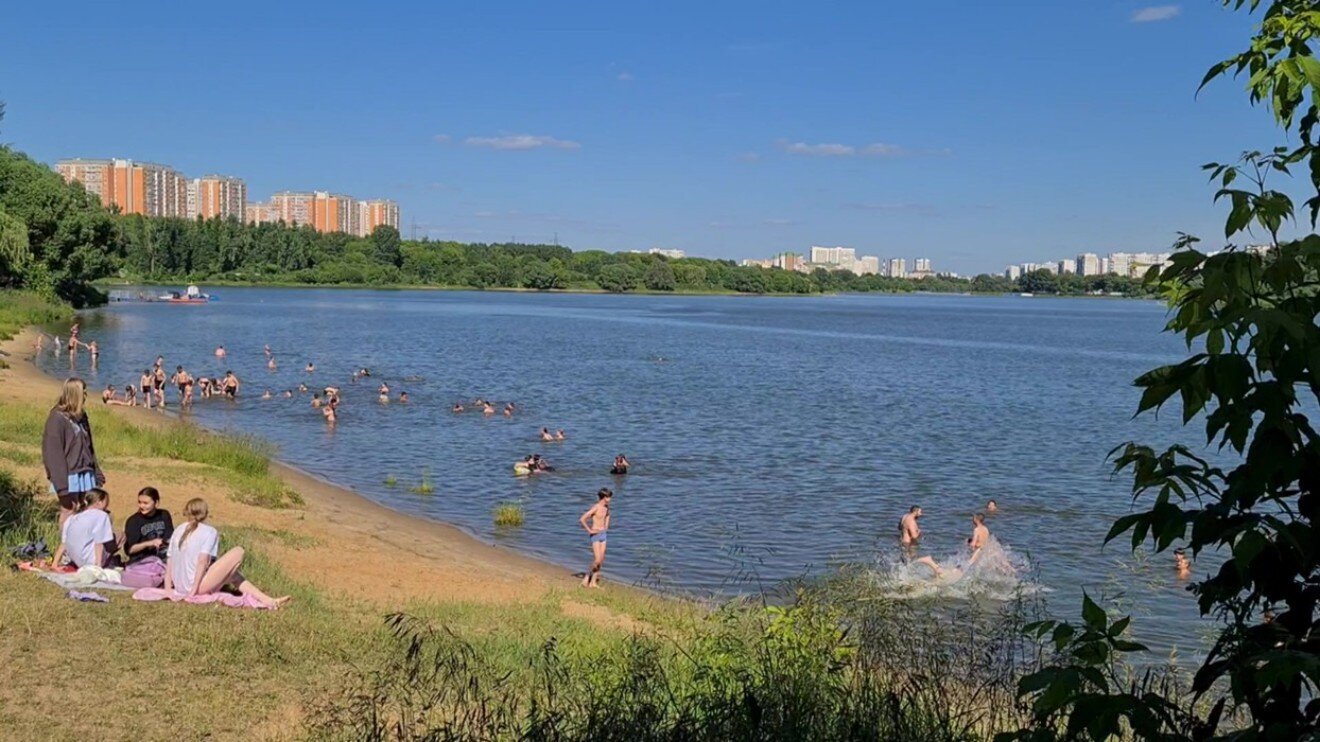
The Borisov Ponds (or Borisov Pond) are the largest historic artificial body of water in Moscow, located in the floodplain of the Gorodnya River, within the Southern Administrative Okrug. This unique natural feature has a rich four-century history, and serves as an important recreation area for the capital.
Location and characteristics
The Borisov Ponds lie within the districts of Orekhovo-Borisovo Severnoye and Moskvorechye-Saburovo, bordering the district of Brateyevo. The body of water closes off the chain of Tsaritsyno ponds, and is separated from the Lower Tsaritsyno Pond by the Shipilovskaya dam. Its surface area is a sizable 75.55 hectares, with a relatively shallow depth of 1.5 to 2.5 meters.
A distinctive feature of the pond is its division into two basins. In the early 1970s, an artificial island was built within the pond, and the Upper and Lower Borisov bridges were built across it. This split the body of water into a western upper basin (the Shipilovsky) and an eastern lower one (the Borisov proper). This is why the pond is referred to both in the singular and the plural — "Borisov Pond" or "the Borisov Ponds."
The pond is fed by groundwater and surface water. One of Moscow's major transport arteries, Kashirskoye Highway, crosses the pond, making it easily accessible to residents of the capital.
Its historical legacy
The history of the Borisov Ponds dates back to the 17th century, and is closely tied to the name of Tsar Boris Godunov. The first official mention of the pond dates to 1600 — when, by decree of Boris Fyodorovich Godunov, the Tsareborisovskaya (Godunovskaya) dam was built, forming the pond. The name "Tsareborisovsky" (or "Tsareborinovsky") pond was used for many centuries.
In the census records of 1627–1628, the pond is mentioned as the "Sovereign's" pond, with a stone dam and a mill. This fact underscores the pond's state significance even at that early date. Throughout the 17th to 19th centuries, the left side of the Borisov Pond bordered the protected forest of Zarazy, lending the area a particular picturesqueness and seclusion.
Industrial development of the area began in the mid-19th century. In 1860, the merchant Ya.V. Gamson built a cotton-spinning mill on the site of the old watermill, marking the start of the area's industrial development. This enterprise operated well into the Soviet period, and shaped much of the character of the surrounding development.
An important milestone in the history of the Borisov Ponds came in 1960, when the territory around the pond was officially incorporated into Moscow. This event radically changed the ponds' status — from a body of water outside the capital, they became an important part of the city's infrastructure.
Soviet-era development
A major reconstruction of the pond took place in the 1970s. Building the artificial island and the bridges across it not only changed the pond's shape, but significantly improved the neighborhood's transport access. The Lower and Upper Borisov bridges became important elements of the road network in Moscow's southern districts.
In 1983–1984, extensive work was carried out to clean the pond and reinforce its banks. These measures were needed to preserve the pond's ecological condition and its recreational value. The work included removing bottom sediment, reinforcing the shoreline, and improving the surrounding grounds.
Its protected-nature status
An important milestone in the history of the Borisov Ponds came in 1998, when, under Moscow Government resolutions No. 1012 and No. 564, the pond was included within a specially protected natural area of regional significance — the "Tsaritsyno" natural-historical park. This status provided additional protection for a unique natural area within the megacity.
On the southeastern shore of the Borisov basin, two springs have been set up, which were declared natural monuments in 2003. These springs carry ecological significance, while also serving as a reminder that natural water sources can survive even within a large city.
Modern infrastructure and improvements
In 2007, the pond underwent another round of large-scale cleaning and improvement. The pond was fully drained, after which work was carried out to clean the bottom, reinforce the banks, and build modern recreational infrastructure. Completion of this work in 2008 marked a new stage in the area's development.
A significant boost to the park's development came from a visit by Moscow Mayor Sergei Sobyanin on July 30, 2011. Following his inspection of the area, a decision was made to undertake a large-scale reconstruction and development of the park around the ponds. This project resulted in a modern recreational zone with developed sports and leisure infrastructure.
As part of these improvements, two full-size soccer fields, eight volleyball courts, and six tennis courts were built; an eight-kilometer bike path was laid; and 40 gazebos with barbecue grills, along with many other amenities for active and family recreation, were installed.
Recreational opportunities
The Borisov Ponds offer a variety of options for recreation and leisure for Moscow residents. On the northern shore of the pond is a landscaped beach with designated relaxation areas, though swimming in the pond is officially prohibited by Rospotrebnadzor, on sanitary and epidemiological grounds.
Water-based activities include a boat rental point, letting visitors enjoy trips across the water. A rescue station operated by the Ministry of Emergency Situations (EMERCOM) ensures the safety of those relaxing on site. A developed network of food service establishments makes for a comfortable visit year-round.
In winter, the pond area becomes a center for winter sports and recreation. A ski trail is laid out around the pond's perimeter, ice holes are cut near the beach for the Epiphany dip, and a "walrus club" operates for winter-swimming enthusiasts.
The "Borisov Ponds" park
In 2011, a park called "Borisov Ponds" was officially established on the shore of the pond, becoming an extension of the famous Tsaritsyno park. The park is a modern recreational area with developed infrastructure for a wide range of active pursuits.
The park has numerous children's playgrounds, equipped with modern, safe play structures. Volleyball courts draw team-sport enthusiasts, and rest gazebos provide a comfortable setting for family groups and groups of friends.
Tennis courts and bike paths expand the options for individual sports. The bike paths are integrated into the citywide network of cycling routes, allowing the park's territory to serve as part of longer bicycle rides across Moscow.
Architectural and religious landmarks
The area around the Borisov Ponds is rich in architectural and religious landmarks, which fit organically into the natural landscape. On the southern shore of the pond stand two churches — the Church of the Life-Giving Trinity and the Trinity Church in Borisovo, both important spiritual centers for the district.
These Orthodox churches not only serve the religious needs of the local population, but hold historical and architectural value. Their location on the pond's shore creates a picturesque panorama, especially appealing at various times of year.
Ecological significance
The Borisov Ponds play an important role in Moscow's ecological system. As a large body of water within the megacity, they help maintain the local microclimate, and provide a habitat for various species of urban wildlife and vegetation.
The ponds' inclusion in the "Tsaritsyno" natural-historical park protects them from the harmful effects of the urban environment, and guarantees the preservation of these natural complexes for future generations. The specially protected natural area status requires strict compliance with environmental standards and limits on economic activity.
Transport access
The Borisov Ponds enjoy excellent transport access. Kashirskoye Highway — one of Moscow's major radial thoroughfares — crosses the pond, providing convenient access by car. A developed public transit network, including bus routes and proximity to metro stations, makes the park accessible to residents of every district of the capital.
Between Borisovskiye Prudy Street and Shipilovsky Proyezd lies the main part of the park zone, providing convenient pedestrian access to the primary recreational facilities. Landscaped footpaths and sidewalks create comfortable conditions for walking and active recreation.
Cultural and social significance
The Borisov Ponds hold particular significance in Moscow's cultural and social life. This body of water has been mentioned repeatedly in fiction, and serves as a venue for various cultural events and celebrations. The park grounds are regularly used to host festivals, sporting competitions, and family celebrations.
For many generations of Muscovites, the Borisov Ponds became a symbol of accessible, high-quality recreation within the city. The chance to spend a weekend in nature without leaving the capital is especially valued by residents of the densely populated districts of southern Moscow.
The park's social function shows in its role as a meeting place, a space for sports and active leisure, and a zone for family recreation. Its varied infrastructure meets the needs of different types of visitors — from those seeking a quiet stroll to enthusiasts of active sports.
Reference information
Official name: Borisov Ponds (Borisov Pond)
Location: Southern Administrative Okrug of Moscow, the districts of Orekhovo-Borisovo Severnoye and Moskvorechye-Saburovo
Surface area: 75.55 hectares
Depth: 1.5–2.5 m
Status: Specially protected natural area, part of the "Tsaritsyno" natural-historical park
Year founded: 1600
Nearest transport arteries: Kashirskoye Highway, Borisovskiye Prudy Street, Shipilovsky Proyezd