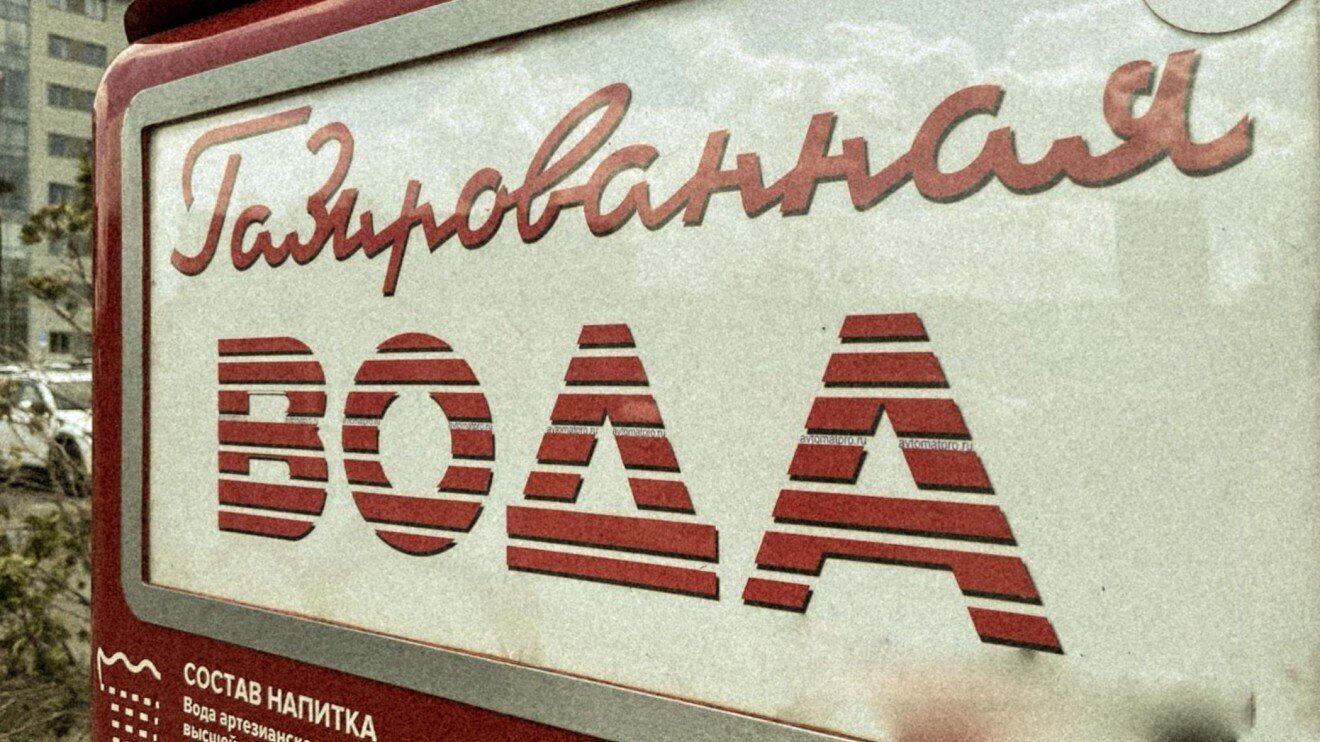
Carbonated drinks in the Soviet Union constituted a whole stratum of consumer culture. Lemonade production developed across the USSR from the 1930s onward, reaching mass scale in the postwar period. The drinks were produced at breweries and at specialized soft-drink enterprises within the structure of the Ministry of the Food Industry.
Production technology
The basis of the process was the kupazh — the blend of all the drink’s components. The blend was prepared cold, semi-hot or hot depending on the formula. The water base made up around 80 percent of the finished product by volume. Large plants used water from their own boreholes, subsequently filtered, softened and disinfected.
Carbonation was performed in special units called saturators. The degree of carbonation ranged from light to strong. Liquid carbon dioxide was bought from specialized suppliers, though breweries could use the gas produced by beer fermentation.
The refreshing effect of the drinks came from dissolved carbon dioxide and organic acids, chiefly citric acid. Citric acid had been synthesized on an industrial scale in the middle of the nineteenth century, which made the mass production of carbonated drinks possible.
The formula base
Soviet lemonades were created on the basis of industry standards — the OSTs, which laid down the exact composition and proportion of ingredients. The basic composition included sugar, citric acid, carbon dioxide and the flavor-and-aroma components specific to each drink.
Color was supplied by sugar caramel — burnt sugar produced by heating moistened sugar. A caramel solution is dark brown with a characteristic smell. Caramel counted as a natural colorant and was widely used across the food industry.
The flavor-and-aroma compositions for the blend were built from essences and extracts. Essences were concentrated flavor additives, based either on natural components (juices, infusions) or on synthetic substances. Blend compositions contained ethyl alcohol as a preservative, which accounted for a minimal alcohol content in the finished product — between 0.2 and 0.3 percent.
Packaging and distribution
Carbonated drinks were bottled in glass bottles of 0.33 and 0.5 liters. The glass was clear, dark green or dark orange. Bottles were sealed with tin crown caps. Glass containers were returnable — once the drink was finished, bottles were handed back at retail points and returned to use after washing and disinfection.
Most lemonades had a shelf life of seven days. The short life was explained by the absence, or minimal use, of preservatives. The drinks were kept in cool premises at temperatures between +2 and +12 degrees Celsius.
The product was sold through the state retail network — grocery shops, canteens at enterprises and institutions, kiosks. Part of the output was sold by the glass through street vending machines. The machines offered water without syrup and water with syrup. Carbonated water without syrup cost 1 kopeck, with syrup 3 kopecks a glass.
Pricing
Retail prices for bottled carbonated drinks were set centrally and remained stable for decades. The price reflected the cost of production and covered the drink without the container. The price of the glass bottle was accounted for separately and refunded when the bottle was returned.
In the 1970s and 1980s lemonade prices ran from 10 to 15 kopecks for half a liter excluding the container. The commonest varieties cost 10 kopecks; certain special drinks with more complex formulas went up to 15. The bottle itself cost 12–15 kopecks and was refunded in full when handed in at a retail point.
«Buratino» lemonade
How it was created
«Buratino» was developed in the early 1970s at the Zhigulyovsky brewery in Samara (then Kuibyshev). The plant specialized in beer, but its production program also included non-alcoholic carbonated drinks. New lemonade formulas were developed in the plant’s laboratories jointly with food-industry research institutes.
Mass production of «Buratino» began in the first half of the 1970s. After a successful launch at the Zhigulyovsky plant, the formula was rolled out to other enterprises in the sector. The drink was produced at practically every brewery and soft-drink plant in the USSR.
Geography of production
«Buratino» was made by enterprises in every union republic. Among the major producers were the Gorky sparkling wine plant, the Pavlovo food combine in the Gorky region, the Ostankino fruit-water plant, the Ryazan brewery and soft-drink plant, the «Krasny Vostok» plant in Kazan, the Yaroslavl brewery and soft-drink plant, the Chita brewery and soft-drink combine, and the «Kotlassky» food complex.
Every enterprise worked to a single industry standard, OST 18-117-73, which guaranteed identical flavor characteristics regardless of where the drink was made. Local variation could show up in the quality of the source water and in minor deviations of process that stayed within the standard.
The formula under OST 18-117-73
The industry standard fixed the exact proportions of the components per 100 decaliters of finished drink (1,000 liters). The composition included:
- sugar — 73.53 kilograms
- citric acid — 1.408 kilograms
- sugar caramel — 0.96 kilograms
- carbon dioxide — 4 kilograms
- blend composition — up to 3.47 liters
The blend composition was a concentrated mixture of flavor-and-aroma components. At its base were lemon and orange essences, made from natural lemon and orange juice with apple components added. Besides the fruit base, the composition contained ethyl alcohol, which acted as a preservative.
Alcohol content in the finished drink came to between 0.2 and 0.3 percent. That quantity did not classify the drink as alcoholic and had no effect on its consumer properties, but it guaranteed the microbiological stability of the blend at the stage of preparation for bottling.
Organoleptic characteristics
«Buratino» was golden in color, thanks to the sugar caramel. The intensity of the color ranged from pale gold to a saturated amber depending on how much caramel was used. The drink was clear, free of haze or sediment.
The flavor was described as sour-sweet-bitter. The sourness came from citric acid and lemon essence. The sweetness was determined by the amount of sugar. A light bitterness was the drink’s characteristic feature, achieved through the orange essence, which contained zest components.
The aroma combined the citrus notes of lemon and orange with light fruity shadings of apple. Carbonation was medium to strong, giving a pronounced refreshing effect.
The trademark
The drink’s name referred to the hero of Alexei Tolstoy’s tale The Golden Key, or the Adventures of Buratino. Bottle labels traditionally showed the fairy-tale character — a wooden boy in a pointed cap. The visual design of labels varied by producer, but the image of Buratino was a compulsory element.
The rights to the «Buratino» trademark were registered by the joint-stock company Zhigulyovskoye Pivo in 1993. The registration took place amid the transition to a market economy, when it became necessary to give legal form to rights over trademarks created in the Soviet period.
Popularity and availability
«Buratino» was among the most popular and widely produced lemonades in the USSR. It was present in the retail network everywhere and was not a scarce product. Availability was guaranteed by the large number of producers and by substantial output.
The drink cost 10 kopecks for half a liter excluding the container. That was the base price for most Soviet lemonades, which made «Buratino» affordable for every category of the population.
The drink was sold not only in bottles but by the glass through street vending machines, where «Buratino» was offered as one of the syrup options alongside other popular flavors.
«Kolokolchik» lemonade
Where the name came from
The name goes back to the old Russian tradition of making drinks from bellflower honey. Bellflower honey was produced by bees gathering nectar from the flowers of the kolokolchik, the bellflower. In several districts of Oryol province in the nineteenth century there were specialized apiaries — bellflower plantations intended for producing that variety of honey.
The bellflower was considered a plant pleasing to God, since the shape of its blossom recalled a church bell. The secrets of making drinks from bellflower honey passed from monks to the local peasantry. The most popular was bellflower kvass, valued for its fine sourness and particular aroma. A bellflower mead was also produced, characterized by a mild flavor.
The tradition of bellflower honey was lost after the reform of 1861. For peasants who had gained personal freedom it was economically more sensible to farm than to cultivate flower plantations. Landowners lost the ability to maintain large operations requiring substantial labor.
Soviet «Kolokolchik» lemonade contained no honey and had no direct formulaic connection to the old Russian drinks. The name was chosen as a nod to the historical tradition and underlined the drink’s characteristic sourness, reminiscent of old bellflower kvass.
Composition and flavor
«Kolokolchik» was a colorless or pale golden carbonated drink with a citrus flavor. Its base was a lemon infusion with added citric acid and lemon essence. A specific feature of the formula was the inclusion of ascorbic acid — vitamin C.
Ascorbic acid served a double function. On the one hand it strengthened the drink’s sour taste, giving it its characteristic tart note. On the other it was positioned as a healthful component enriching the drink with a vitamin.
The chief flavor characteristic of «Kolokolchik» was a pronounced sourness, more intense than in other citrus lemonades. Compared with the drink called «Limon,» «Kolokolchik» contained less lemon infusion, which made its taste lighter and more refreshing. The acidity was not smothered by excess sweetness, which gave it a bracing effect.
Production and availability
«Kolokolchik» was produced at many Soviet soft-drink plants, among them the Moscow brewery and soft-drink combine and other major enterprises of the sector. The drink was bottled in glass bottles of 0.33 and 0.5 liters.
The labels showed a bellflower. The visual image might be presented either as the flower itself or as a stylized bell. No single standard for label design existed, which allowed producers to use various graphic solutions.
In every union republic the drink’s name was translated into the national language, but the visual design and the formula remained uniform.
Price category and distribution
«Kolokolchik» cost between 13 and 15 kopecks for a half-liter bottle excluding the container. That was a higher price than the base lemonades at 10 kopecks. The premium was explained by the more complex formula and, probably, by smaller production volumes.
For a long period «Kolokolchik» counted as an elite lemonade. It was produced in limited batches and supplied mainly to closed canteens — the dining rooms of party committees, executive committees, and large enterprises and institutions. It reached the general retail network only irregularly.
The reasons for this pattern of distribution have not been precisely established. Its limited availability may have been due to the formula, which required more expensive or scarce components. Another version holds that output was deliberately restricted in order to create the image of a prestige product.
In the 1970s «Kolokolchik» began to reach general sale. The drink lost its elite status and became available to broad layers of the population through ordinary grocery shops and kiosks.
Technology and standards
«Kolokolchik» was produced to industry standards defining composition and process. The modern formula, fixed in GOST 28188-89, describes it as a clear, pale golden lemonade with a sweet-sour flavor and a lemon aroma.
Shelf life was seven days, provided the temperature was held between +2 and +12 degrees Celsius. That short life was characteristic of all Soviet lemonades and was explained by the minimal use of preservatives.
How production changed after the Soviet Union
Changes to the formulas
After the collapse of the USSR, production of the traditional Soviet lemonades continued in Russia and in the other post-Soviet states. The formulas underwent substantial change, driven by new economic conditions and a new regulatory framework.
The main change was the introduction of preservatives that extend shelf life. Where Soviet lemonades kept for seven days, their modern equivalents keep for months. The commonest preservative became sodium benzoate, which guarantees the product’s microbiological stability.
The packaging changed. Half-liter glass bottles remained in production, but the main form of container became the plastic bottle, from 0.5 to 2 liters. PET packaging lowered transport and storage costs but altered the drink’s organoleptic properties over long storage.
Some producers replaced natural components with synthetic analogues. Natural essences and extracts cost more than artificial flavorings. Replacing natural colorants with synthetic ones likewise lowers production cost.
The legal status of the trademarks
In the transition to a market economy the question arose of rights to trademarks created in Soviet times. Many lemonade names had no officially registered rights holder, which led to conflicts between producers.
The «Buratino» trademark was registered by Zhigulyovskoye Pivo in 1993. The registration was carried out by the enterprise at which the drink had been developed in the early 1970s. That secured for the Samara producer exclusive rights to the name and the visual image.
Other producers who had made «Buratino» in Soviet times found themselves in legal limbo. Some enterprises continued production under the same name, others changed the product’s designation or concluded licensing agreements with the rights holder.
The market today
The «Buratino» trademark is now widespread on the Russian soft-drinks market. The product is made by a great many producers with varying formulas. Quality and composition differ substantially from one producer to another.
Some producers stick to the classic formula using natural components. Such drinks cost more but preserve organoleptic characteristics close to the Soviet original. Others use a maximally simplified and cheapened formula with synthetic flavorings and colorants.
«Kolokolchik» is also present on the market, but in smaller volumes than «Buratino.» The drink retains its characteristic sourness, though modern formulas may differ from the Soviet original.
The shelf life of modern lemonades runs from several months to a year depending on composition and packaging. This is achieved through the use of preservatives and the sterilization of production lines.