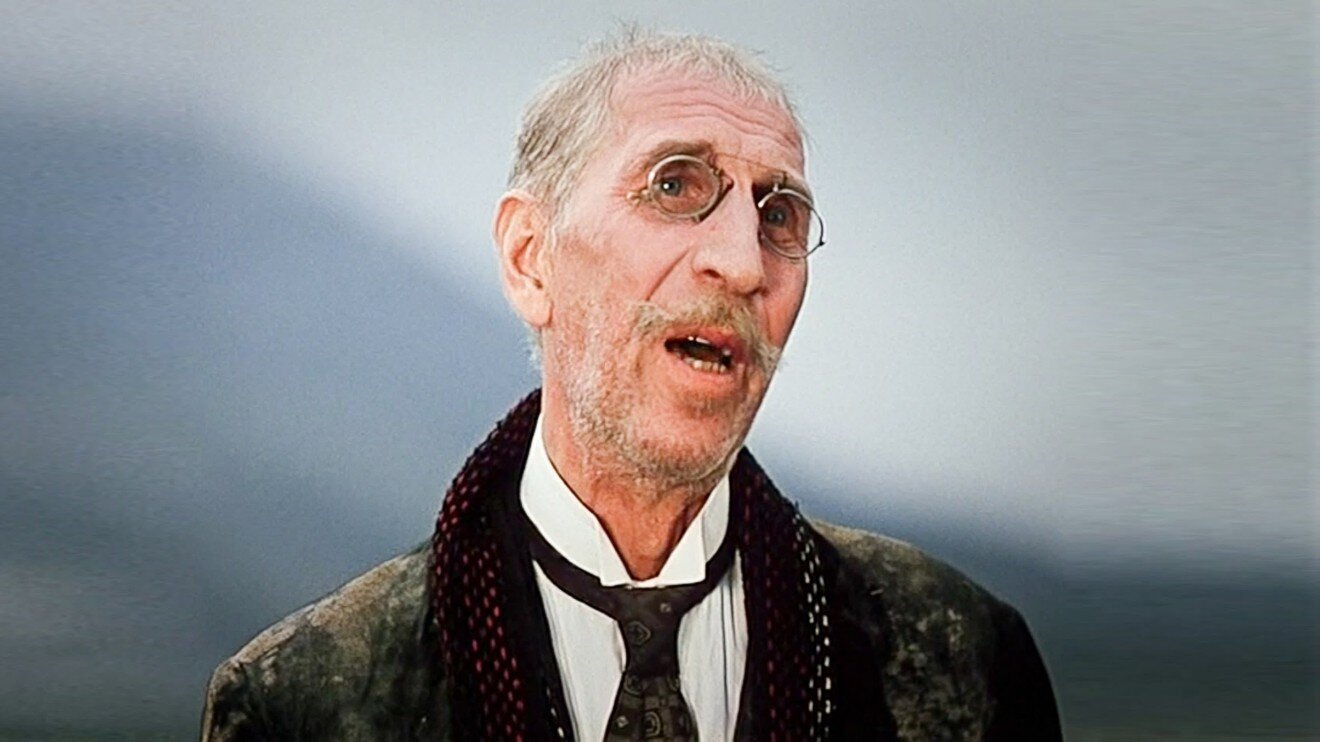
The mention in the text of a “former State Duma deputy” sends the reader to the image of Ippolit Matveyevich Vorobyaninov from Ilf and Petrov’s novel “The Twelve Chairs.” This character became a symbol of the old Russia destroyed by revolution, and of the fate of an entire class stripped of its accustomed way of life.
The History of the Imperial State Duma
The State Duma of the Russian Empire was established by Emperor Nicholas II’s Manifesto of August 6, 1905, as a “special legislative-consultative body.” Initially conceived as a consultative body, after the revolutionary events of 1905 and the issuing of the October 17 Manifesto, it was transformed into a legislative body — effectively the lower house of the Russian parliament.
In total there were four convocations of the State Duma, each with its own particulars and tragic fate.
The First State Duma (April 27 — July 8, 1906)
The First Duma lasted only 72 days. Its composition was predominantly liberal: of 448 deputies, 153 were Kadets (Constitutional Democratic Party), 97 Trudoviks, 63 Autonomists, 13 Octobrists, and 105 non-party. Its chairman was the Moscow University professor and Kadet S.A. Muromtsev.
The main issue the First Duma addressed was the agrarian question. Deputies debated two land-reform proposals — the Kadet and the Trudovik — both providing for partial expropriation of landowners’ estates. The government categorically rejected forced expropriation, leading to conflict. On July 8, 1906, the tsarist government dissolved the Duma, on the pretext that it “not only fails to calm the people but further inflames unrest.”
After the dissolution, 200 deputies gathered in Vyborg and signed the famous “Vyborg Manifesto,” calling on the people to defy the authorities.
The Second State Duma (February 20 — June 3, 1907)
The Second Duma was even more radical in composition, since Social Democrats and Socialist Revolutionaries, who had boycotted the first elections, took part this time. Of 518 deputies, 65 were Social Democrats, 37 SRs, 16 People’s Socialists, 104 Trudoviks, and 98 Kadets. Its chairman was the Kadet F.A. Golovin.
A curious episode occurred on March 2, 1907, when the ceiling of the Tauride Palace’s assembly hall collapsed. Fortunately the session hadn’t yet begun, and no one was hurt. Left-wing deputies used this incident to criticize the government, seeing it as a symbol of the old regime crumbling.
On June 1, 1907, Prime Minister P.A. Stolypin accused 55 deputies of conspiring against the imperial family. On June 3 the Duma was dissolved by decree of Nicholas II — an event that became known as the “June Third Coup.”
The Third State Duma (November 1, 1907 — June 9, 1912)
The Third Duma was the result of an electoral reform that significantly restricted the population’s voting rights. Under the new electoral law of June 3, 1907, representation for the nobility and large bourgeoisie was increased, while that of peasants and workers was reduced.
Composition of the Duma: 154 Octobrists, 147 right-wingers and nationalists, 54 Kadets, 13 Trudoviks, 19 Social Democrats. Its chairmen were the Octobrists N.A. Khomyakov, A.I. Guchkov, and M.V. Rodzianko.
The Third Duma was the only one of the four to serve its full five-year term. It cooperated with P.A. Stolypin’s government on agrarian reform and other measures.
The Fourth State Duma (November 15, 1912 — October 6, 1917)
The last Duma of the Russian Empire worked through the dramatic period of the World War and revolution. Its composition was close to the third: 185 nationalists and right-wingers, 98 Octobrists, 59 Kadets, 48 Progressives, 14 Social Democrats, 10 Trudoviks.
Its chairman throughout was M.V. Rodzianko. From 1915 the leading role was played by the “Progressive Bloc,” which united the moderate opposition.
On February 25, 1917, Nicholas II signed a decree suspending the Duma’s sessions, but it refused to comply. On February 27 the Provisional Committee of the State Duma was formed, which went on to establish the Provisional Government. After the October Revolution the Duma was finally dissolved.
The Fate of Deputies After the Revolution
The 1917 revolution radically altered the fates of State Duma deputies. Their subsequent lives depended on many factors: party affiliation, activity during the revolutionary events, personal qualities, and connections.
Different Paths
Emigration: A significant portion of deputies, especially among the Kadets, Octobrists, and right-wingers, emigrated. Many settled in Paris, Berlin, and Prague, where they continued political activity in emigration or turned to literary work and teaching.
Service to the Provisional Government: Some deputies actively took part in the work of the Provisional Government. For instance, the Kadet P.N. Milyukov was foreign minister, and A.I. Guchkov was war minister.
Adapting to Soviet Power: Some deputies tried to adjust to the new conditions, and some even cooperated with the Bolsheviks. However, most of them sooner or later suffered repression.
The White Movement: Many deputies, especially among the right-wingers and Octobrists, joined the White movement. After its defeat, they either emigrated or were repressed.
Soviet-Era Repression
Most former deputies who remained in Russia sooner or later faced persecution. Waves of repression swept through in the 1920s, the 1930s, and the years that followed. Many were arrested, exiled, or shot as “enemies of the people.”
The fate of those who had held prominent positions in pre-revolutionary Russia was especially harsh. Former marshals of the nobility, landowners, and senior officials automatically fell into the category of the “exploiting classes.”
Kisa Vorobyaninov as a Composite Image
The character Ippolit Matveyevich Vorobyaninov from the novel “The Twelve Chairs” (1928) became a symbol of an entire generation of Russian nobility stripped by revolution of its accustomed way of life. Ilf and Petrov created a vivid image of a man unable to adapt to the new reality.
The Character’s Biography
According to the story “The Past of the Registry Office Clerk” (1929), Ippolit Matveyevich Vorobyaninov was born in 1875 on his father’s estate in Stargorod district. Before the revolution he had been the district marshal of the nobility, a landowner, a wealthy and influential man.
In the pre-revolutionary years Vorobyaninov led the life typical of the landed nobility: he took part in the district’s public life, collected stamps, and allowed himself various hobbies and romances. In 1912, as marshal of the nobility, he even issued a zemstvo stamp in two copies, one of which he kept for himself.
The Image’s Symbolic Meaning
After the revolution of 1917, Vorobyaninov, stripped of his estates and position, turned into a minor Soviet clerk — a registry-office employee in a provincial town. This striking contrast between past grandeur and present squalor became the novel’s central theme.
The authors showed the typical fate of a former nobleman: complete practical helplessness, an inability to adapt to new conditions, and nostalgia for a lost past. Vorobyaninov retained the habits and manners of a nobleman, but they look comical in the new setting.
Especially telling is the description of his morning greetings: “bonjour” if in a good mood, or “guten Morgen” if his “liver was acting up.” These details underscore his attempts to preserve the remnants of a “European” way of life in utterly changed circumstances.
The Character’s Tragedy
Despite the novel’s satirical character, Vorobyaninov’s image carries tragic traits. This is a man completely knocked out of his accustomed groove, deprived not just of material well-being but of his social role, of the meaning of his existence.
The search for treasure hidden in twelve chairs becomes his attempt to reclaim a lost past. But this search leads him to complete degradation: from a respectable clerk he descends into a beggar, a thief, and finally a murderer.
The novel’s ending is especially tragic: upon learning that the treasure has been confiscated and that all his efforts were in vain, Vorobyaninov takes his own life. This ending is symbolic — it shows the impossibility of returning to the past, the futility of trying to restore a destroyed world.
The Historical Basis of the Image
Though Vorobyaninov is a fictional character, his image is based on the real fates of thousands of representatives of pre-revolutionary Russia. Many former State Duma deputies, marshals of the nobility, and landowners genuinely found themselves in a position similar to the novel’s hero.
Real-Life Prototypes
The novel’s authors could have observed such people in the 1920s. Former nobles worked in Soviet institutions in the humblest of positions, hid their origins, and tried to exist inconspicuously in the new society.
Especially hard was the fate of those who had held elected positions in the zemstvos and dumas. They automatically fell into the category of “former people,” lost their voting rights, and faced various restrictions.
Social Typicality
Vorobyaninov’s image is typical of an entire social stratum. These were people raised in a particular cultural tradition, accustomed to a particular way of life, who found themselves in entirely new conditions with no way to adapt.
Their tragedy lay not only in the loss of material well-being but in the collapse of the entire system of values in which they had been raised. Notions of honor, noble dignity, and class belonging lost their meaning in the new society.
The Image’s Cultural Significance
Kisa Vorobyaninov became one of the most recognizable characters in 20th-century Russian literature. His name became a byword for a person unable to adapt to changed circumstances, living on memories of past grandeur.
In modern culture this image remains relevant as a symbol of a lost era, of nostalgia for the past, of an inability to accept a new reality. Monuments to the character have been erected in several Russian cities, testifying to his significance in the popular imagination.
Conclusion
The history of the Imperial State Duma’s deputies is the history of an entire era, which ended in 1917. Their fates after the revolution were various: emigration, adaptation to new conditions, repression, physical destruction. The literary image of Kisa Vorobyaninov became an artistic generalization of these tragic fates.
This character reminds us of the price of historical change, of how human fates are broken at history’s turning points. He remains a relevant symbol for any era of radical change, when entire social groups find themselves “overboard” from the new society.
The mention of a “former State Duma deputy” in a modern text instantly conjures in the reader’s mind this vivid image and the whole historical drama standing behind it.