In 1998, the mention of «demonic CDMA» in Florida reflected a real technological revolution unfolding in the world of mobile communications, one that was radically reshaping the US telecommunications landscape.
What CDMA is
CDMA (Code Division Multiple Access) is a channel-access method used by various radio communication technologies. Unlike traditional methods of dividing channels by frequency or time, CDMA lets multiple users share the same frequency band simultaneously, separated by unique codes.
CDMA works on the principle of spread-spectrum technology. Each user is assigned a unique code that «spreads» their signal across the entire available frequency band. A receiver, knowing the code of a particular transmitter, can extract the needed signal from the overall «noise,» ignoring the signals of other users.
Qualcomm and the creation of CDMA
Qualcomm was founded in July 1985 by seven former Linkabit employees led by Irwin Jacobs. The name stands for «Quality Communications.» The company initially operated as a contract research and development center, mostly for government and defense projects.
A key moment in Qualcomm’s history was its merger with Omninet in 1988 and the raising of $3.5 million in funding to produce the Omnitracs satellite communications system for trucking companies. It was the profit from Omnitracs that allowed Qualcomm to fund research and development of CDMA technology for cellular networks.
Interesting fact
By 1989 Qualcomm had revenue of $32 million, 50% of which came from the Omnitracs contract with Schneider National. The company grew from 8 employees in 1986 to 620 in 1991 thanks to demand for Omnitracs.
Financial struggles and breakthrough
In the early 1990s Qualcomm operated at a loss due to its investment in CDMA research. To raise funding, the company held an initial public offering in September 1991, bringing in $68 million. An additional $486 million was raised in 1995 through the sale of 11.5 million shares.
The second funding round was needed for mass production of CDMA-based phones, base stations, and equipment after most American cellular networks announced adoption of the CDMA standard. By 1996 the company’s annual revenue reached $814 million.
The situation in 1996: the technology’s triumph
1996 was a turning point for CDMA technology. After long debates in the wireless industry, CDMA was adopted as the 2G standard in North America, incorporating Qualcomm’s patents. This decision radically reshaped the US telecommunications landscape.
While Russia and most of the world stuck with the GSM (Global System for Mobile Communications) standard, the US was actively rolling out IS-95, also known as cdmaOne – the first commercial implementation of CDMA technology for mobile communications.
CDMA’s advantages over GSM
- Spectrum efficiency: CDMA optimizes use of the available bandwidth, transmitting data across the whole frequency range
- Security: unique codes for each user provide added protection against eavesdropping
- Call quality: spread-spectrum technology delivers a more stable connection under interference
- Network capacity: multiple users sharing the same frequency simultaneously increases throughput
Geographic distribution of the technologies
By 1996 the world had settled into a clear geographic split of mobile standards:
CDMA (IS-95)
- • The US (main standard)
- • Canada
- • South Korea
- • Parts of Asia
GSM
- • Europe
- • Russia and the CIS
- • Most of Asia
- • Africa
That’s exactly why the novel contrasts «good old orthodox GSM» back home in Russia with «demonic CDMA» in Florida – it reflects the real technological split between the two worlds in 1996.
Practical consequences for users
For ordinary users, the difference between GSM and CDMA in 1996 meant:
Standard incompatibility
A phone working on Russian GSM networks couldn’t function on American CDMA networks, and vice versa. That created serious problems for international travelers and businessmen.
Russian businessmen visiting the US were forced to buy or rent local phones supporting the CDMA standard. Motorola was a popular brand at the time, producing phones for both standards.
Motorola and the CDMA market
Motorola played an important role in the CDMA phone market in 1996. Although Qualcomm had developed the technology, it was equipment makers like Motorola, Samsung, and others who produced the commercial devices.
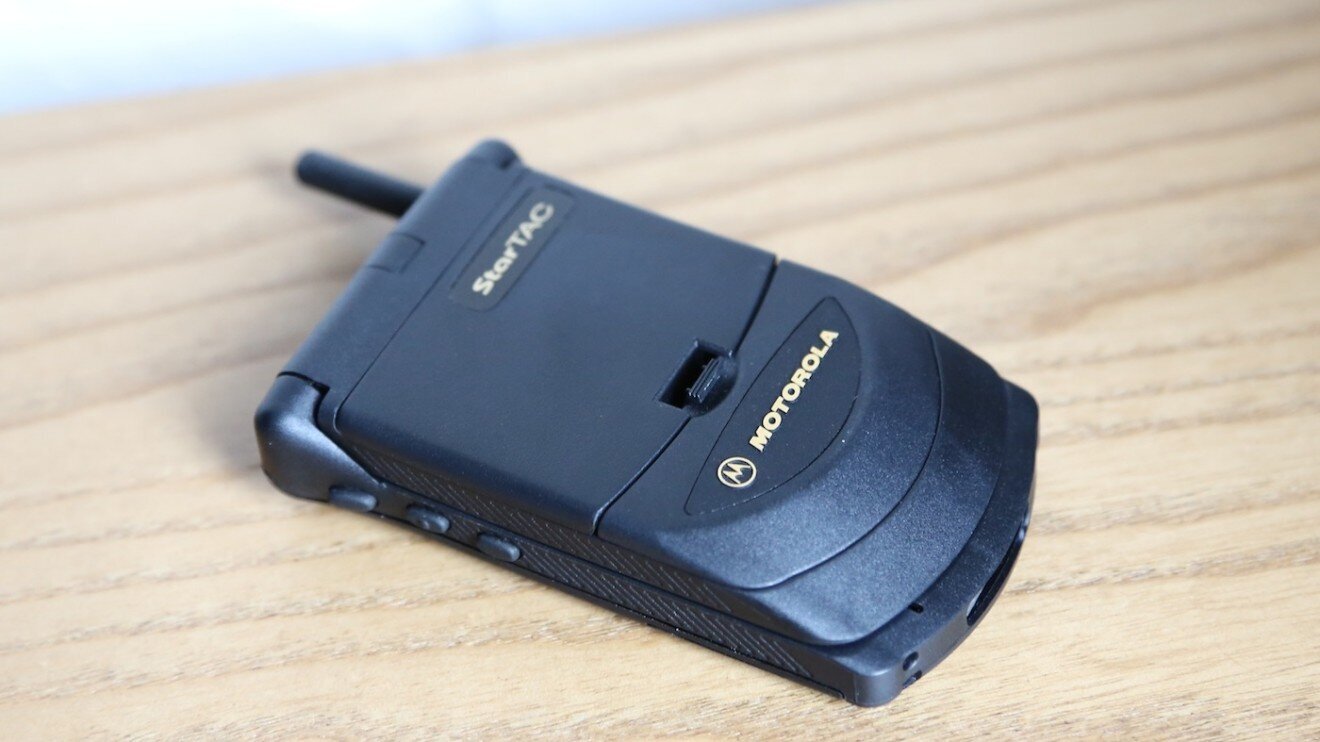
Popular Motorola CDMA models in 1996 included the StarTAC series – among the first truly pocketable digital phones. These devices were considerably smaller and lighter than their analog predecessors, making them especially appealing to business travelers.
The economics of Qualcomm’s patents
By 1996 Qualcomm had already begun earning substantial profit from licensing its CDMA patents. Every maker of CDMA equipment had to pay Qualcomm royalties, giving the company a stable revenue stream.
This business model – developing technology, patenting it, and licensing it to other manufacturers – became the foundation of Qualcomm’s future success. In the following years the company became one of the largest patent holders in mobile technology.
Cultural perception of the technology
Calling CDMA a «demonic» technology in the novel reflects not just a technical distinction but a cultural one. For a mid-1990s Russian, everything American often felt foreign, yet at the same time advanced and desirable.
CDMA really was a more modern technology compared to early GSM, offering better voice quality, more efficient spectrum use, and improved security. But its limited geographic footprint made it «exotic» for most international users.
Historical note
Interestingly, CDMA technology has roots in military development. Spread-spectrum principles were used in military communications to resist jamming and interception. Qualcomm adapted these principles for civilian use, creating a commercially successful mobile technology.
So the mention of CDMA in Florida in 1996 accurately reflects the technological reality of the time, when the US pioneered the use of this advanced but geographically limited mobile technology.