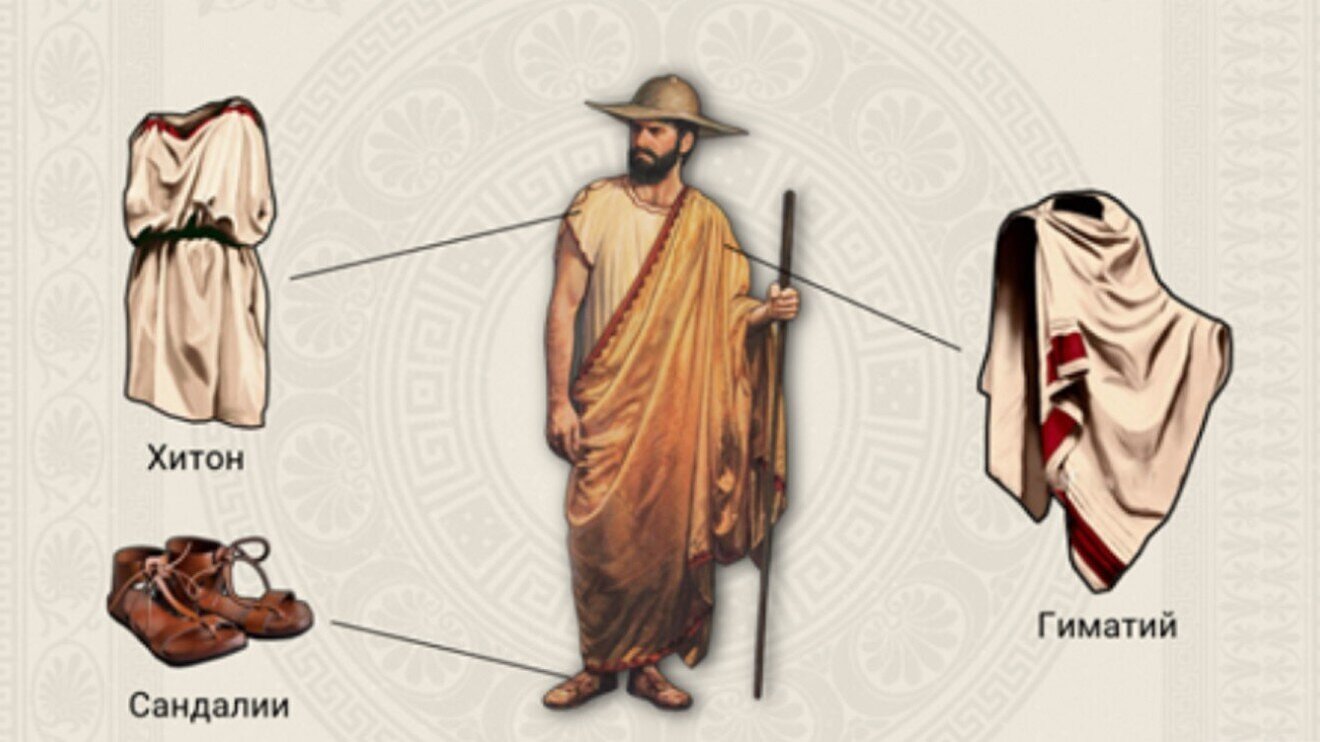
Ancient Greek clothing, simple and elegant, reflected the climate, culture, and aesthetic sensibilities of the era. The main wardrobe pieces were the chiton, himation, and chlamys. Each of these garments played its own role in everyday or ceremonial life, and their elements went on to shape the fashion of ancient Rome.
The Chiton
- The chiton was the basic garment for both men and women. It was a rectangular piece of fabric wrapped around the body.
- Materials and cut: Usually sewn from linen or wool. The chiton was fastened at the shoulders with fibulae (metal clasps) and belted to define the figure. Men wore short chitons (especially for ease of movement in labor or battle), while women wore long ones reaching the floor.
- Function: This was everyday wear, adaptable to any social status. Wealthier Greeks decorated their chitons with embroidery or used costly fabrics.
- Evolution in Rome: The chiton became the model for the tunic, everyday Roman dress. Unlike the Greek version, the tunic was often worn under a toga and had a less loose-fitting cut.
The Himation
The himation was an outer wrap that complemented the chiton.
- Description: A large rectangular piece of fabric draped over the shoulders and body. The himation had no clasps and was held in place purely by the way it was draped.
- How it was worn: It could be worn by both men and women, usually wrapped around the torso. For men it often replaced the chiton entirely, especially on formal occasions. Women sometimes used the himation as a head covering.
- Evolution in Rome: The himation influenced the creation of the Roman toga — a symbol of citizenship and status. The toga was more complex to drape and had strict rules for wear.
The Chlamys
The chlamys was a light, short cloak, often tied to military or travel wear.
- Shape and style: A small rectangular piece of fabric fastened at the right shoulder with a fibula, leaving the arms free.
- Use: Worn by young men, travelers, and soldiers. It symbolized an active lifestyle and offered protection from wind or cold.
- Evolution in Rome: The chlamys influenced the Roman paludamentum — a military cloak worn by officers and high-ranking officials.
The Transition into Roman Fashion
Ancient Roman clothing inherited the simplicity and functionality of Greek dress, but with greater regulation and symbolism. The chiton, himation, and chlamys were adapted, becoming the basis for Roman tunics, togas, and cloaks. The Romans preserved the art of draping but added their own elements, underscoring status and belonging to the empire.
So telling an ancient Greek from an ancient Roman by dress alone is really not so simple!