In the Soviet Union, smoking was popular across every social class — from factory workers to the intelligentsia. The state tried to keep tobacco products affordable, so cheap cigarettes, sold in every shop and kiosk, became widespread.
Features of Cheap Soviet Cigarettes/Papirosy
- Price. These cigarettes were priced as low as possible so that even the poorest citizens could afford them. Prices often came to just a few kopecks a pack.
- Tobacco quality. Cheap cigarettes used low-grade tobacco, sometimes mixed with makhorka or other fillers. This affected taste and smell, making them harsh and heavy to smoke.
- No filter. Most cheap cigarettes were made without a filter, which made them more harmful.
- Minimalist packaging. Pack designs were simple, with few colors and no frills.
Popular Brands of Cheap Cigarettes/Papirosy
Among the cheap cigarettes and papirosy in the USSR, a few brands were in mass demand:
- «Belomorkanal» — one of the most famous brands, often associated with the working class, sold unfiltered in a cardboard pack, with an extremely harsh taste.
- «Kazbek» — papirosy with an Eastern-tinged flavor. Higher quality than most, but still affordable.
- «Prima» — plain, unfiltered cigarettes, found in almost every kiosk.
- «Shipka» — cheap Bulgarian cigarettes, popular for their low price.
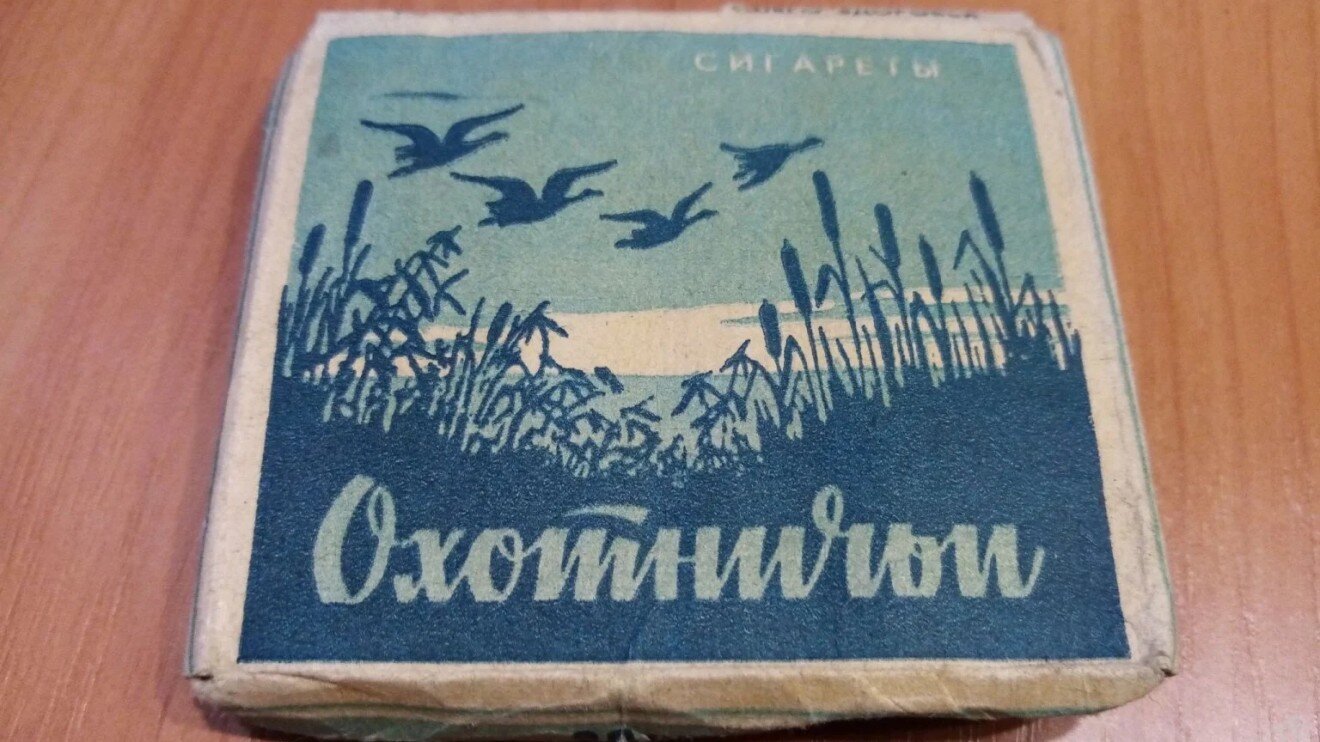
A Special Case: «Okhotnichyi» («Hunter’s») Cigarettes
«Okhotnichyi» cigarettes held a unique place among cheap Soviet brands. They had specific traits that set them apart from other brands.
Features of «Okhotnichyi» Cigarettes
- Target audience. The cigarettes were aimed at a particular audience — hunters, fishermen, and people with an active outdoor lifestyle.
- Aroma. They had a distinctive smell, combining strong tobacco with a light flavoring, which helped mask the smell of gunpowder, fish, or wet clothing.
- Packaging. The pack design featured fitting motifs: nature, forest, weapons (see photo).