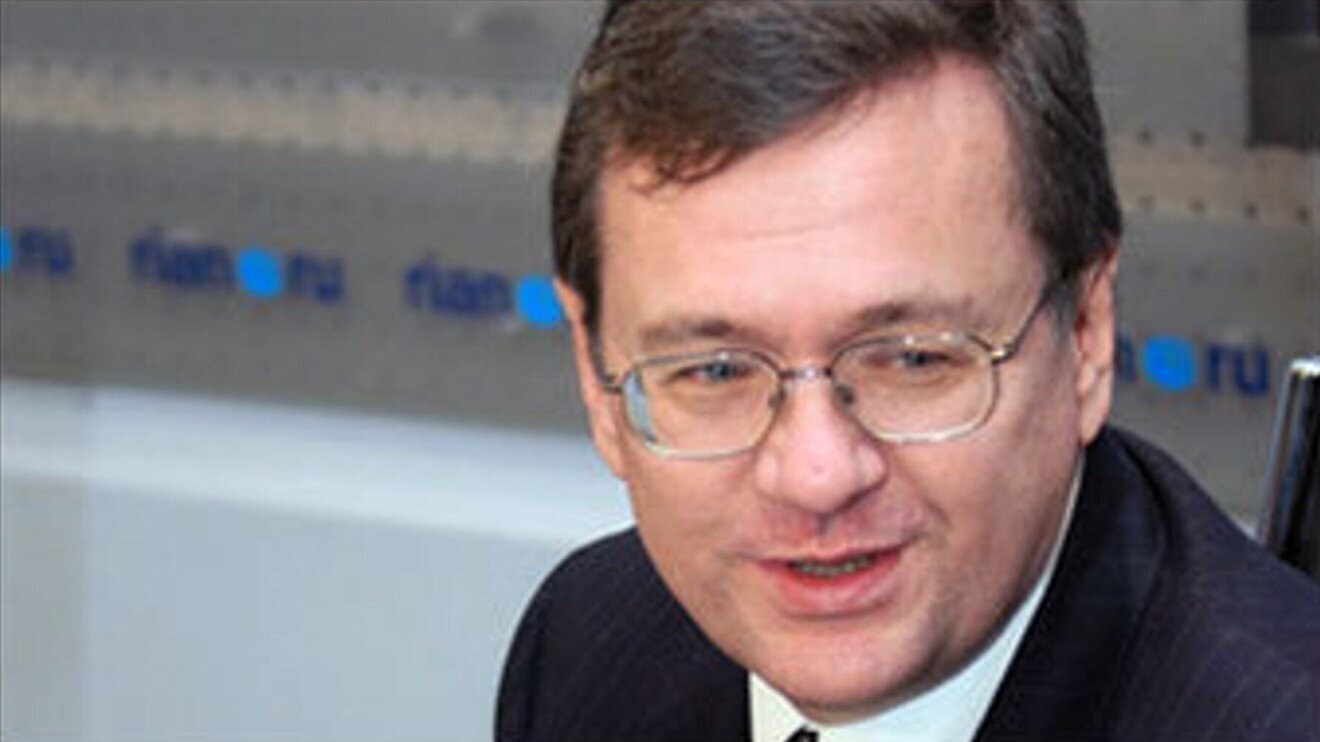
Boris Grigoryevich Fyodorov (1958–2008)
A key figure in Russia’s economic reforms of the 1990s
Brief biography
Life: February 13, 1958, Moscow – November 19, 2008, London
Education: Moscow Financial Institute (1980); Candidate of Economic Sciences (1985); Doctor of Economic Sciences (1990)
Key positions: Finance Minister of the RSFSR (1990); Deputy Chairman of the Russian Council of Ministers and Finance Minister of Russia (1992–1994)
Context in 1996
By 1996 Fyodorov had already left government posts, but remained an influential figure in politics and business, heading the party «Forward, Russia!» and the United Financial Group.
Government career: from reformer to opponent
Finance Minister of the RSFSR (July–December 1990)
Boris Fyodorov became one of the youngest ministers in Russian history – at 32 he headed the RSFSR’s finance ministry. His appointment came in the midst of work on the «500 Days» economic program, developed by Grigory Yavlinsky’s team, which Fyodorov was also part of.
The «500 Days» program called for radical liberalization of the economy in a remarkably short window – a year and a half. Fyodorov was one of its chief architects and most ardent champions.
Yet by December 1990 Fyodorov had already resigned, unwilling to accept the country’s leadership abandoning the «500 Days» program. The move demonstrated his principled streak – the young minister chose to leave a powerful post rather than compromise his own convictions.
Back in power: deputy prime minister and finance minister (1992–1994)
After working at international financial institutions – the EBRD and the World Bank – Fyodorov returned to the Russian government in December 1992. Yegor Gaidar, then heading the cabinet, appointed him his deputy, and from March 1993 Fyodorov once again served as finance minister.
Key areas of work
- Stabilizing public finances
- Fighting hyperinflation
- Creating a government-securities market
- Tax reform
Challenges of the period
- A crisis of non-payments in the economy
- Pressure from regional elites
- Resistance from factory directors
- Political instability
Fyodorov pursued a tight monetary policy, insisting on cuts to government spending and stricter monetary controls. His stance often clashed with demands from the industrial lobby and regional authorities seeking preferential loans and subsidies.
Political career and business (1994–1996)
January 1994: leaving government
Fyodorov left his government posts, unwilling to accept a strengthening of the «soft» line in economic policy. The move marked the start of his career in business and politics.
The United Financial Group (UFG)
By founding UFG, Fyodorov joined the ranks of the leading Russian financiers of the mid-1990s. The group specialized in:
- Trading in government securities
- Corporate finance
- Investment banking
- Asset management
UFG became one of the largest private financial institutions in Russia at the time.
The party «Forward, Russia!»
Fyodorov founded a political party that positioned itself as:
- A liberal-conservative force
- A champion of market reform
- A defender of private property
- An alternative to left-wing and nationalist movements
The party contested the 1993 and 1995 parliamentary elections.
State Duma deputy (1993–1998)
Fyodorov was elected to the first State Duma in 1993 on Yegor Gaidar’s «Russia’s Choice» bloc list, but by January 1994 had already left the faction to join the «Union of December 12» deputy group. In 1995 he was re-elected from Moscow’s Lyublino district.
In the Duma, Fyodorov specialized in
- Budget policy and taxation
- Banking legislation
- Public debt issues
- Currency regulation
Interesting fact: Fyodorov sat on the influential Committee on Budget, Taxes, Banks, and Finance, which gave him considerable sway over economic legislation.
Fyodorov and the 1996 presidential election
His role in Yeltsin’s campaign
In 1996 Boris Fyodorov became one of Boris Yeltsin’s trusted advisors during the presidential election. It was a largely pragmatic decision – despite criticizing certain aspects of the sitting president’s policy, Fyodorov saw him as a guarantee that market reforms would continue.
Arguments in Yeltsin’s favor
- Commitment to a market economy
- Support for private property
- Integration with the global economy
- Political freedoms
Fears about the alternative
- A threat of restoring the Soviet system
- Possible nationalization
- Isolation from the West
- An authoritarian rollback
For Fyodorov, the 1996 election was a choice between continuing reforms, flawed as they were, and a return to the past. His support for Yeltsin rested on economic, not personal, considerations.
Context: the economic situation by 1996
By the time of the presidential election, the Russian economy was going through a difficult stretch. Hyperinflation had largely been brought under control, but industrial output kept falling, unemployment was rising, and a barter economy was thriving. Against that backdrop, Fyodorov’s position – a supporter of continued reform, but with corrections – looked especially relevant.
Economic views and methods
Monetarism
Fyodorov was a consistent adherent of the monetarist school, believing control of the money supply was the key to macroeconomic stability.
- Tight monetary policy
- Central bank independence
- Inflation control
Fiscal discipline
He insisted on strict control of government spending and a balanced budget as the foundation of long-term economic stability.
- Cutting the deficit
- Streamlining spending
- Tax reform
Liberalization
He advocated for the steady liberalization of the economy, including removing administrative barriers and fostering competition.
- Deregulation
- Privatization
- Free trade
Fyodorov’s distinctive approach
Unlike many other reformers of the 1990s, Fyodorov combined radical economic views with a pragmatic approach to implementing them. He understood that reforms had to account for Russia’s specific conditions, but he never abandoned the core principles of a market economy.
His experience at international financial institutions gave him a deeper understanding of global economic processes and helped him adapt international experience to Russian conditions.
Influence on Russia’s financial system
Creating the GKO market
Fyodorov was at the origins of Russia’s market for short-term government bonds (GKOs), which became the backbone of domestic debt financing.
The tax system
He helped lay the foundations of the modern Russian tax system, including VAT and income tax.
Developing private banking
Through UFG, he helped build a competitive banking sector and bring modern financial technology to Russia.
Long-term influence
Many of Fyodorov’s initiatives outlasted political change and became foundations of Russia’s financial system. The government-bond market, the principles of fiscal policy, approaches to currency regulation – all of it bears his mark.
His career showed that successful economic reform requires not just sound theory, but political will, professional execution, and an understanding of national context.
Personality and character
Professional qualities
- Deep knowledge of economic theory
- International experience
- Practical financial skills
- Managerial ability
Personal qualities
- Principled
- Decisive
- Intellectually curious
- Patriotic
Contemporaries noted that Fyodorov combined the qualities of an academic economist with those of a practical manager. He could discuss the finer points of economic theory for hours, yet make swift, concrete decisions in a crisis. His principled stances sometimes earned him enemies, but they also built his reputation as an honest, consistent politician.
Conclusion
By 1996, Boris Fyodorov was a unique figure on the Russian political scene – a man who had gone from reformist minister to successful entrepreneur without abandoning his principles along the way. His experience in government, his knowledge of international finance, and his understanding of Russian realities made him a valuable interlocutor for any serious economic project of the era.
A character resembling Fyodorov turning up in the context of a major financial deal fits neatly with the realities of the mid-1990s, when former senior officials played an active role in shaping the new Russian business world.