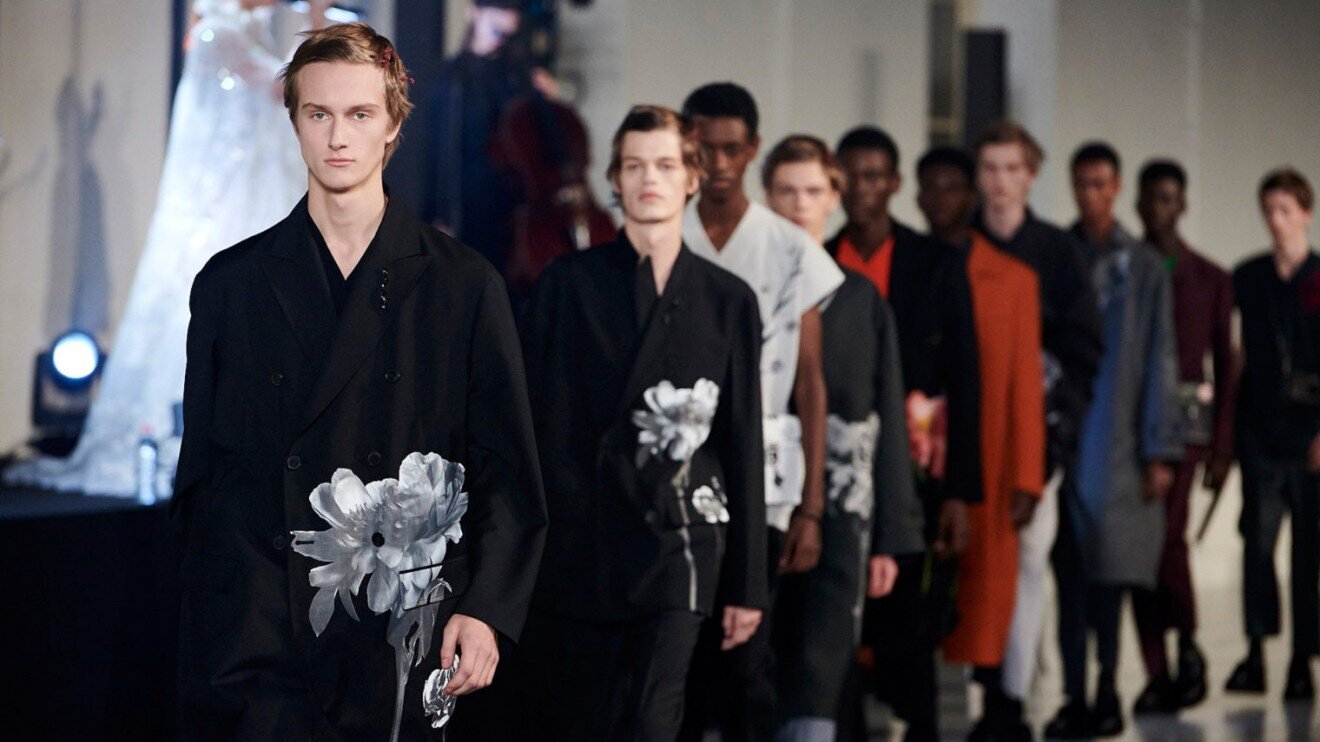
The highest form of the tailor’s art, and a symbol of luxury in the fashion world
What Haute Couture Is
Haute couture (French for "high sewing," or "high dressmaking") is the creation of exclusive, top-tier clothing, made to individual measurements from expensive materials, using the hand-craftsmanship of highly skilled artisans. In the context of the 1990s, when the novel is set, haute couture represented an unattainable pinnacle of elegance and status for most Russians.
The term "haute couture" is legally protected in France. Only ateliers meeting the strict criteria of the Paris Chamber of Commerce may call themselves houses of haute couture: a workshop in Paris with at least 15 full-time staff, at least 20 technical specialists, two collections shown per year (in January and July) with at least 50 original designs, and, crucially, garments made exclusively to order, with individual fittings.
History and Tradition
The tradition of haute couture took shape in France as early as the 17th century, when female dressmakers (couturières) won guild privileges in 1675, gaining the right to make clothing for women and children, while male tailors served male clients. Even then, the finest seamstresses created lavish gowns for royalty and the aristocracy.
The father of modern haute couture is considered to be Charles Frederick Worth, an Englishman who settled in Paris in the mid-19th century. He revolutionized the fashion world, transforming the tailor from craftsman into designer-artist. Worth was the first to show his designs on live models, letting clients choose the styles they liked for individual fitting.
Famous Fashion Houses
By the 1990s, a stable hierarchy of haute couture houses had taken shape:
- Chanel — a symbol of elegance, founded by Coco Chanel
- Christian Dior — a revolutionary of postwar fashion
- Yves Saint Laurent — a master of emancipated women’s clothing
- Givenchy — the embodiment of refinement
- Jean Paul Gaultier — an innovator and provocateur
How a Garment Is Made
Creating a haute couture piece is a long, painstaking process:
- 🎨 The sketch — the designer creates a unique look
- 📏 Measurements — the client’s individual dimensions
- ✂️ The pattern — cut to the specific figure
- 🧵 The first fitting — adjusting the fit
- 👗 Final finishing — hand-finished by artisans
Haute Couture in the 1990s
In the mid-1990s, when the novel takes place, the fashion world was going through an interesting period. After the economic upheavals of the 1980s, many haute couture houses had to rethink their strategy. Couture collections themselves ran at a loss — they cost far more to produce than they earned in sales. But haute couture remained a crucial marketing tool, generating brand prestige and drawing attention to more profitable lines: ready-to-wear (prêt-à-porter), accessories, perfume, and licensed goods.
In the Russian context of 1997, a haute couture garment was a symbol of unattainable luxury. A single dress could cost anywhere from $50,000 to $200,000 — a sum comparable to the annual income of a genuinely wealthy Russian of the time. Owning such clothing automatically placed a person among the elite — either among the "New Russians," with their conspicuous consumption, or among members of the old intelligentsia who’d managed to adapt to the new reality.
Haute Couture vs. Ready-to-Wear
A haute couture garment is fundamentally different from any other clothing:
Haute Couture
- Made to order
- Exclusive fabrics
- Handcrafted
- Multiple fittings
- A unique cut
- Price: $50,000–200,000
Ready-to-Wear
- Mass produced
- Standard materials
- Machine finished
- Standard sizes
- Standard patterns
- Price: $100–5,000
Interesting Facts
- 💫 A single haute couture dress can take up to 1,000 hours of work
- 🎭 Many stars receive haute couture gowns for free for red-carpet events
- 👑 Haute couture’s clientele numbers no more than 2,000 women worldwide
- 🏛️ Shows take place in Paris’s historic mansions
Social Code and Symbolism
In the 1990s, a haute couture garment served as a powerful social marker. It signaled not just wealth, but membership in an international elite, fluency in the codes of high society, and access to an exclusive world. A person in haute couture was automatically presumed to have connections in the most influential circles — getting a fitting with a couturier was no less difficult than affording their services.
For the novel’s hero, Roman Peskov, mentioning haute couture suits alongside clothes from Selfridges and cheaper options draws a distinct social map of 1997 Moscow — a time when Russia’s elite was only just forming its ideas about luxury consumption, often copying Western standards without fully grasping their underlying logic and history.
Conclusion
Haute couture, in the context of 1990s Russia, was more than clothing — it was a symbol of a new social order, where money opened access to things once entirely out of reach for the Soviet citizen. A suit from a Paris couturier became a passport into the world of the international elite, a calling card of success and membership in the global culture of luxury.