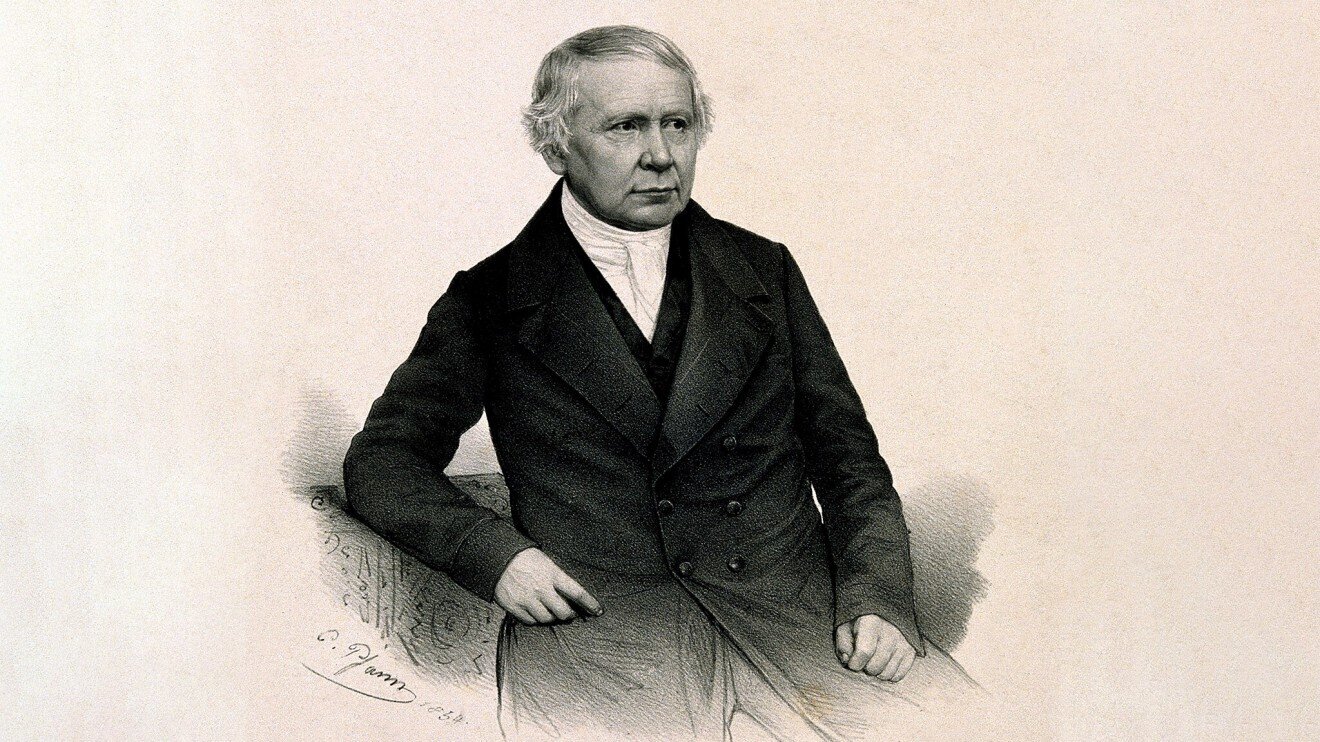
Basic facts
Friedrich Schelling was one of the greatest German idealist philosophers, a figure of Romantic philosophy. Born into the family of a Protestant minister in Wurttemberg, he entered the University of Tubingen at just 15, already noted as a "precocious talent." In his youth he moved in the circle of the Jena Romantics, including the Schlegel brothers and Novalis.
Why would '90s construction workers reference Schelling?
In the era of Perestroika and post-Soviet chaos, the intelligentsia often turned to German classical philosophy in search of deeper meaning. Schelling, with his ideas about a creative principle and the overcoming of chaos through reason, could appeal to those who saw construction not merely as a trade, but as an act of creating order out of disorder.
Schelling's philosophical system
Nature philosophy
Schelling viewed nature as a single living organism, governed by the same underlying forces throughout. He rejected vitalism, arguing that inorganic nature produces organic nature out of itself.
The philosophy of identity
The central idea: the absolute identity of opposites — the real and the ideal, the subjective and the objective. The world develops through successive degrees of differentiation between these principles.
The problem of the origin of evil
A key philosophical problem
One of the most profound questions in Schelling's philosophy is the origin of evil in connection with the problem of human freedom. This is the subject of his most important work, "Philosophical Investigations into the Essence of Human Freedom."
The dilemma of evil and God
Schelling confronts the classic problem of theodicy: if God is all-good, where does evil come from? He rejects both the dualist solution (evil as an independent principle) and the Neoplatonist idea of emanation.
Ground and existence in God
Schelling distinguishes, within God, between the ground of existence (Grund) and existence itself. The ground is God's dark, unconscious nature, a "blind will" striving toward illumination. Out of this "dark depth," God brings himself forth as reason.
The mechanism by which evil arises
- The universal will — a striving toward unity and reason
- The individual will — a striving toward separateness
- Evil — the individual will overpowering the universal will
Evil as a positive force
Unlike Augustine and Leibniz, Schelling sees evil not merely as an absence of good, but as a positive force. He observes: "Heaven is opposed not by earth, but by hell," and just as there is an enthusiasm for good, there is an "exuberance of evil."
"God can only be revealed in the overcoming of his opposite, that is, of evil, for every essence is revealed only in its opposite: light in darkness, love in hatred, unity in division."
Man and freedom
In Schelling's system, humanity occupies a special place — the stage at which the universal will first becomes manifest, but at which a split between the individual and universal will also first becomes possible. Human freedom consists in the ability to choose between these two principles.
Overcoming evil
Evil is overcome through an act of renouncing individuality. In this self-renunciation, "as if in fire," the human will is purified, becoming a participant in the universal will. Humanity's greatest weakness is its fear of the good, for the good demands self-renunciation.
Historical significance
Schelling's philosophy had an enormous influence on later European thought. His ideas about a living process of ideas underlying the world, about the dialectic of opposites, and about the creative nature of the absolute influenced Hegel, the Romantics, and 19th-century Russian philosophers.
In the context of 1990s Russia, invoking Schelling can symbolize an attempt to find a philosophical grounding for the process of overcoming chaos and building a new order — entirely in keeping with the spirit of an age of change.