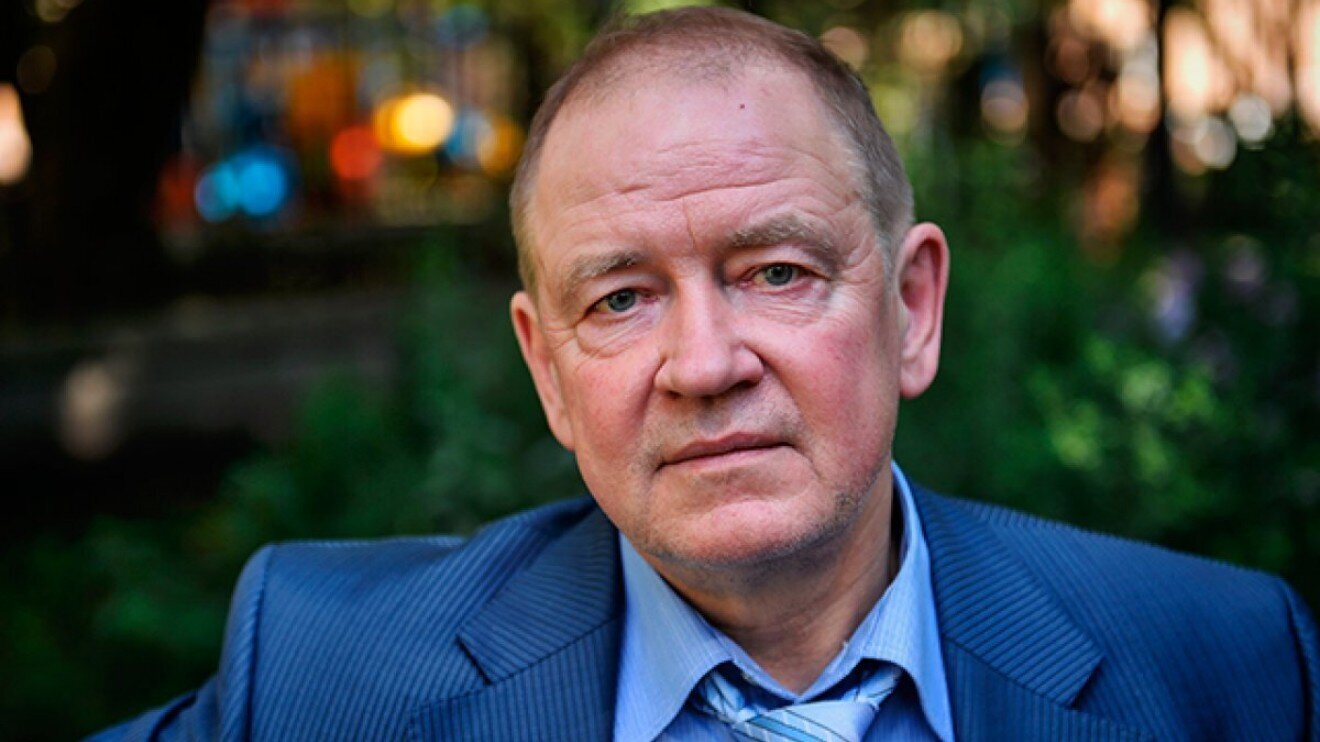
Sergei Borisovich Stankevich became one of the most controversial figures in Russian politics of the late 1980s and early 1990s. A historian by training, with a candidate of sciences degree in history, he became a symbol of the perestroika era, though his political career was later marred by scandal and accusations of corruption.
His political rise
Born on February 25, 1954, in Shchyolkovo, outside Moscow, Stankevich graduated from the history department of the V.I. Lenin Moscow Pedagogical Institute in 1977. After defending a 1983 dissertation on political struggle in the US Senate, he became a recognized specialist in American political history, writing more than 30 works on the subject.
Paradoxically, the future democratic leader joined the Communist Party (CPSU) in 1986, explaining this as a desire to support Gorbachev's reforms. At the Brezhnevsky district committee in Moscow, he even ran a "Young Communist School," and later headed a counter-propaganda group. At the same time, Stankevich was becoming one of the leaders of the Moscow People's Front — an informal movement demanding democratic reform.
In 1989, riding the wave of perestroika sentiment, Stankevich was elected a USSR People's Deputy from Moscow's Cheryomushkinsky district, winning 57% of the vote in the runoff. He joined the famous Inter-Regional Group of Deputies, which brought together democratically minded delegates, including Andrei Sakharov, Boris Yeltsin, and Anatoly Sobchak.
At the height of power
From March 1990, Stankevich was simultaneously a deputy of the Moscow City Council (Mossovet) and first deputy chairman under Gavriil Popov. This appointment was, in some sense, a compromise — by some accounts, Stankevich himself had a real chance of heading the Mossovet, but was forced to defer to the more experienced Popov.
During this period, Stankevich took an active part in the symbolic actions of the new authorities. He helped arrange for the installation of the Solovetsky Stone on Lubyanka Square, in memory of the victims of political repression, and served on Yeltsin's campaign staff for the 1991 presidential election.
The high point of his political career came with the events of August 1991. During the GKChP coup attempt, Stankevich was among Yeltsin's closest circle, and on August 22 it was he who oversaw the removal of the monument to Felix Dzerzhinsky on Lubyanka Square. The crowd had been ready to tear down the monument on its own, which could have damaged the metro structures underneath, but Stankevich managed to organize an orderly removal using cranes.
Corruption scandals
Yet it was precisely at the height of his political influence that Stankevich became entangled in dubious dealings that would later destroy his career.
The first scandal concerned the apartment of Nikolai Semyonovich Patolichev, the former USSR Minister of Foreign Trade. After the minister's death in 1989, his daughter and granddaughter continued living in his ministerial apartment, a 100-square-meter unit on Alexei Tolstoy Street. When they approached the authorities to formalize their right to the housing, they were received, among others, by Stankevich. Rather than helping, he used his official position to obtain the warrant for the apartment for himself. The Patolichev family was repeatedly threatened with forced eviction, but the ensuing litigation dragged on, and the Stankeviches ultimately moved into the disputed apartment.
This episode carried a symbolic weight: the son of Civil War hero Brigade Commander Semyon Patolichev, who died fighting in the First Cavalry Army, became the victim of a new "democratic" official who, under slogans of fighting privilege, appropriated that very privilege for himself.
The second major scandal erupted around the festival "Red Square Invites," held in Moscow in July 1992. The event proved a flop, running up losses for the city budget, but its organizers, connected to Stankevich, managed to acquire large sums of foreign currency at a preferential government exchange rate amid galloping inflation, effectively pocketing an enormous profit at the budget's expense.
His fall and emigration
From June 1991 to December 1993, Stankevich served as political adviser to the Russian president, overseeing relations with political parties and public organizations. In December 1993, he was elected a deputy of the first State Duma on the list of the Party of Russian Unity and Accord.
By 1995, however, Stankevich had fallen out of favor with Yeltsin, reportedly over his support for Anatoly Sobchak's candidacy in the 1996 presidential election. In April 1995, the Prosecutor General's Office asked the Duma for consent to prosecute Stankevich. The pretext was a mysterious receipt for a bribe from the British firm Burson-Marsteller, connected to the presentation of the very same "Red Square" festival.
The Duma refused to strip Stankevich of his immunity, but in November 1995 he left Russia with his family. He lived briefly in the United States before settling in Poland, where he went into business. In February 1996, the Moscow prosecutor's office obtained a warrant for his arrest, and Stankevich was put on an international wanted list.
A Polish prison and his return
In 1997, Polish authorities arrested Stankevich at Russia's request. By a twist of fate, he spent about a month in the very same Warsaw prison where Felix Dzerzhinsky — the same revolutionary whose monument Stankevich had once dismantled at Lubyanka — had once been held.
Polish experts, examining the receipt submitted by the Russian side, concluded it was a forgery. In March 1998, a Polish court refused extradition, and in January 1999 Stankevich was granted political refugee status. Shortly afterward, the criminal case against him in Russia was dropped, and in November 1999 he returned home.
Attempts at a political comeback
In December 2000, Stankevich was elected chairman of the "Democratic Russia" party, but by May 2001 the party had dissolved itself. He then joined the political council of the "Union of Right Forces," but gradually withdrew from active politics, focusing on business instead.
In the 2000s, Stankevich held leadership positions at a number of large companies: he chaired the board of directors of the "Evroservis," "Baltimor," and "Agroinvestproekt" groups of companies. In 2016, he joined the council of the "Party of Growth" and ran for the Duma from the Cheryomushkinsky district, but was not elected.
His current activities
In recent years, Stankevich has been known primarily as a regular guest on political talk shows on federal television channels, appearing as a political analyst and expert. After the start of the special military operation in Ukraine, he began commenting on events regularly, leading to his inclusion on sanctions lists by Ukraine (January 2023) and Latvia (March 2023) for "spreading Kremlin propaganda narratives."
Sergei Stankevich remains a contradictory figure: on one hand, he was one of the architects of the democratic reforms of the early 1990s; on the other, his career was marred by corruption scandals that became a symbol of how quickly the new authorities adopted the very vices of the old system they themselves had criticized.