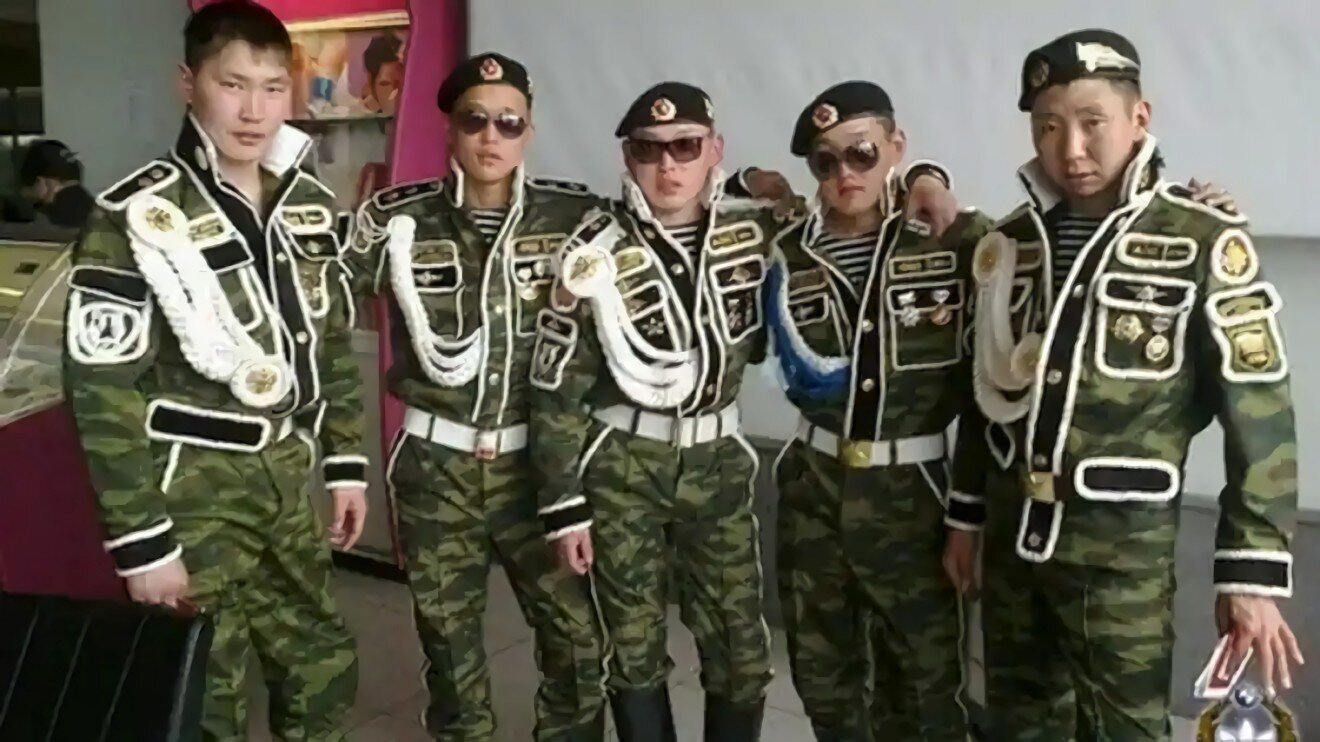
The text mentions traditional elements of military dress uniform — braid and aiguillettes. These pieces of military dress have a centuries-long history and serve as important insignia, indicating rank, position, or branch of service.
Braid: The Gold Thread of Military Glory
Braid (galoon, from the French galon) is a narrow, densely woven ribbon or trim, made from various materials — cotton or silk thread, often interwoven with metallic thread (gold, silver, aluminum) or metallized fibers. Braid is one type of "passementerie" — the general term for woven trimmings used to decorate clothing.
Braid is widely used in military insignia. Its best-known application is on shoulder boards, where the number, arrangement, and color of the braid indicate military rank. Officers’ shoulder boards were traditionally trimmed with gold or silver braid, creating the distinctive "stripe" — a lengthwise band that marked officer status.
Historical Background
Braid as a uniform element became widespread in European armies of the 18th and 19th centuries. In the Russian Empire, braid indicated regimental affiliation and military rank, with its color and pattern strictly governed by military regulations.
Beyond shoulder boards, braid decorated other parts of the uniform — sleeve patches, chevrons, cuffs, collars. In civilian life, braid was used on the uniforms of government officials, railway workers, and employees of various agencies.
The quality and material of the braid always mattered a great deal. Genuine gold and silver braid was the privilege of senior officers, while junior officers and non-commissioned officers wore braid made of gilded or silvered thread. Enlisted soldiers wore braid made of plainer materials — yellow or white cotton trim.
The Aiguillette: A Mark of Distinction on the Shoulder
The aiguillette (from the French for "little needle"; German Achselband, "shoulder band") is a distinguishing shoulder ornament in the form of a braided cord with metal tips, called "pencils." It attaches to the right (less often the left) side of a tunic, dress coat, or greatcoat, under the shoulder board or epaulette.
The aiguillette has an ancient and rather romantic history. The first aiguillettes appeared in Western European armies in the mid-17th century. Several theories explain their origin:
- The measuring-cord theory: one theory holds that the aiguillette originally served as a measuring cord, with the metal tips functioning as writing implements
- The symbolic theory: during the Dutch revolt against Spain, aiguillettes supposedly signified the rebels’ readiness to die, symbolizing hangman’s ropes
- The practical theory: aiguillettes are said to have evolved from coils of slow-match cord carried over the shoulder by soldiers armed with matchlock muskets
- The knightly theory: the most likely explanation ties the aiguillette’s origin to the braided cords medieval knights used to fasten pieces of armor
The Aiguillette in the Russian Army
In the Russian Empire, the aiguillette first appeared in 1762. Already by 1763, aiguillettes had been introduced to distinguish infantry regiments, for both musketeer and grenadier battalions. The system of aiguillettes in the Russian army was fairly elaborate, reflecting a strict hierarchy of military rank.
Officers’ aiguillettes were made of gilded or silvered thread, while soldiers’ versions were made of plain thread, simpler in execution. In the 19th and early 20th centuries, the aiguillette was mandatory dress for the following categories of servicemen:
Senior Ranks
- Adjutant generals
- Aides-de-camp to the Emperor (fligel-adjutants)
- General Staff officers
Adjutants
- Adjutants of all branches
- Regimental adjutants
- Divisional adjutants
One interesting detail was the use of a half-aiguillette with field uniform. The half-aiguillette was brown and had a pencil attached to its end, confirming the piece’s originally practical purpose.
"Officers’ aiguillettes on dress uniforms were gilded or silvered; soldiers’ were plain thread. With field uniform, the aiguillette was replaced by a brown half-aiguillette, with a pencil attached to its end."
The Soviet Period and the Tradition’s Revival
After the 1917 revolution, aiguillettes, like other elements of the tsarist uniform, were abolished. But the Soviet period saw a partial revival of the tradition. On February 16, 1971, aiguillettes were reintroduced in the Armed Forces of the USSR — but only for personnel of the honor guard companies and the combined band of the Moscow garrison.
The Soviet system of aiguillettes was simplified compared to its pre-revolutionary predecessor:
Officers’ Aiguillettes
A gold-colored braided cord with two metal tips and loops. Attached with a fabric tab on the right shoulder, under the shoulder board, with the braided ends fastened by loops to buttons under the right lapel.
Aiguillettes for Junior Ranks
For sergeants, warrant officers, soldiers, and sailors — a silver-colored cord with one gold-colored metal tip and loops.
Aiguillettes in Modern Russia
In the Armed Forces of the Russian Federation, the aiguillette remains part of the dress uniform for honor guard personnel and parade formations. The tradition of wearing aiguillettes has survived in ceremonial units, underscoring the solemnity and historical continuity of Russian military tradition.
International Traditions
Aiguillettes spread widely through the armed forces of many countries, with each national tradition adding its own particular twist.
The United Kingdom
The British system of aiguillettes is one of the most elaborate and detailed in the world, with four established classes:
| Class | Material | Worn By | Shoulder |
|---|---|---|---|
| First (Royal) | Gold wire | Field marshals, admirals of the fleet, royal physicians | Right |
| Second (Ministerial) | Gold, with branch-of-service color | Defence Council officials | Right |
| Third (Officers’) | Gold, with branch-of-service color | Officers, military attachés | Left |
| Fourth (Plain) | Plain cord | Household Cavalry corporals, bandsmen | With dress uniform |
Other Countries
Germany’s tradition features a distinctive "grip knot," where one of the plain cords is cinched across the other. In Canada, a thin cord forms a loop around the main braided cord. In Thailand, a red aiguillette worn on the left shoulder is part of standard police dress uniform.
Symbolic Meaning
Braid and aiguillettes carry deep symbolic weight in military culture. They’re more than decoration — they’re marks of military honor, service duty, and belonging to the military estate. Gold and silver braid has always been associated with valor, courage, and high standing in the military hierarchy.
The aiguillette, especially in Russian military tradition, became a symbol of adjutant rank — a mark of special trust from command and proximity to senior military leadership. The right to wear an aiguillette meant belonging to the army’s elite, to those who held particular trust and authority.
Cultural Significance
In Russian literature and art, braid and aiguillettes often became symbols of military valor and aristocratic bearing. They’re mentioned in the works of Pushkin, Lermontov, and Tolstoy as markers of the military caste, underscoring social status and membership in the officer corps.
Craft and Technique
Producing braid and aiguillettes demanded great skill and specialized technique. Braid was woven on special narrow looms with a Jacquard mechanism, capable of producing intricate patterns. A twisted-yarn core was wrapped with a finer decorative thread — gold, silver, or tinsel.
Aiguillettes were braided by hand from several threads, producing a sturdy, handsome cord. The metal tips were made of brass, bronze, or costlier metals, and often decorated with engraving or stamping. The quality of the weave and materials was strictly controlled, since these pieces needed to hold up over years of wear while keeping a presentable look.
Conclusion
Braid and aiguillettes represent a unique phenomenon in the history of military affairs and decorative arts. They embody centuries-old traditions of military culture, reflect social hierarchy, and serve as important insignia within the army.
Mentioning these elements of military dress in a work of fiction instantly evokes a vivid image, referencing the traditions of military service, martial honor, and the special status of servicemen in society. Braid and aiguillettes remain an important part of military symbolism and continue to be used ceremonially in many countries around the world.
Studying them helps illuminate not just the history of military affairs, but the cultural traditions, social structures, and evolving notions of military honor and dignity that surround them.