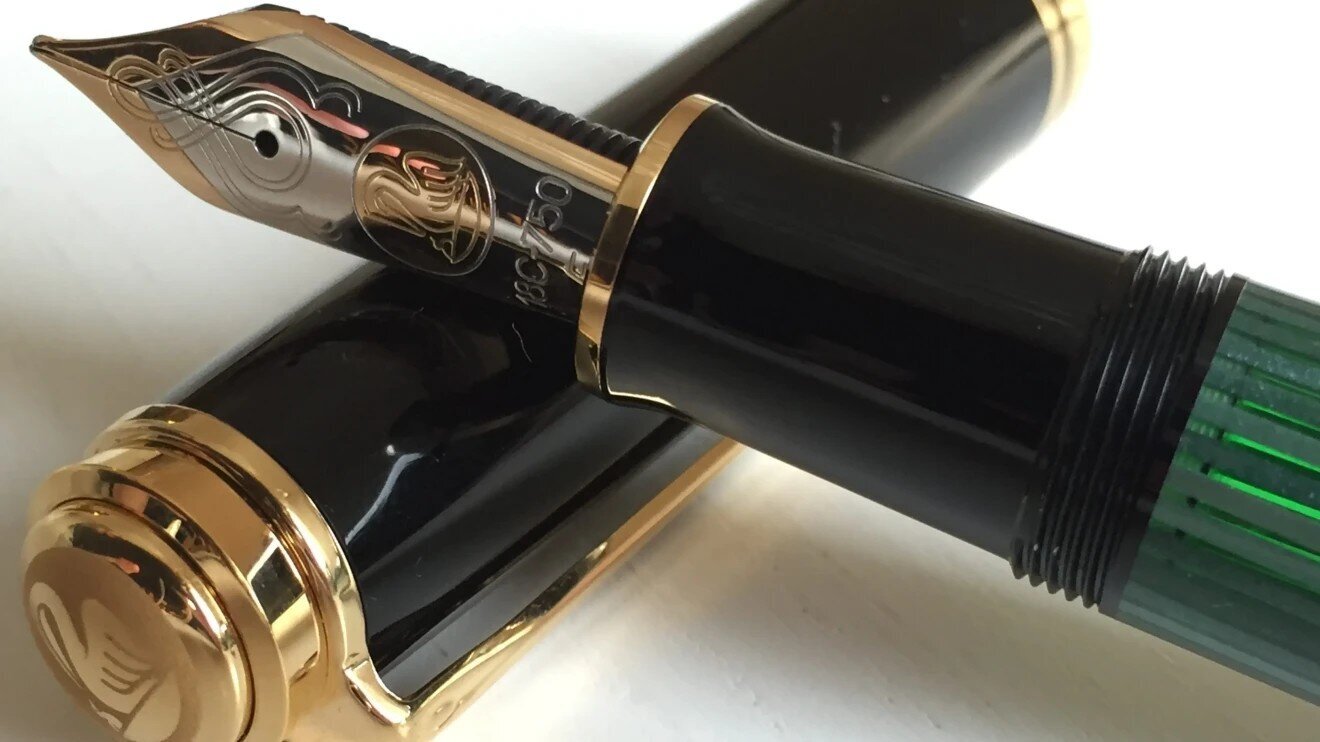
Pelikan is a German company founded in 1838 as a paint and ink factory in Hanover. The name and the pelican logo appeared in 1878, taken from the family crest of one of the company’s later owners. The Pelikan logo became one of the first German trademarks.
Company History
The company originally specialized in making paints and inks. In 1896 Pelikan began producing India ink, which brought considerable commercial success. The first fountain pen wasn’t made until 1929, by which point the company already had a solid reputation in writing instruments.
By 1913 the plant employed over a thousand people. Production of writing instruments was moved to a new town, since the Hanover facilities could no longer expand.
Technical Innovations
Pelikan is credited with inventing the differential piston-filling system — a revolutionary mechanism that greatly simplified filling a fountain pen with ink. This system became the standard for many writing-instrument makers.
In 1931 the company expanded its range, beginning production of watercolor paints, which strengthened the brand’s position in art supplies.
Classification of Pelikan Models
Pelikan’s fountain-pen lineup was traditionally divided into several categories:
School Models
Simple, affordable pens for learning to write.
Classic Models
Mid-range pens for everyday use by office workers and staff.
Premium Series
Collector’s pens for discerning buyers.
The «Pelikan Classic» Model
The «Pelikan Classic» was a typical mid-priced office fountain pen. This model was meant for everyday use by clerks, accountants, secretaries, and other office workers. By German quality standards it was reliable and functional, but it didn’t belong to the premium segment.
Technical Specifications
- Durable plastic body
- Standard-size steel nib
- Piston ink-filling system
- Standard ink reservoir capacity
- Pocket clip
The Fountain Pen’s Revival in the 1980s
The 1980s saw a revival of interest in fountain pens. Though they were no longer used as widely for everyday writing as before, fountain pens returned as a tool for personal correspondence, signing documents, and as a status symbol.
This shift was reflected in the pen designs. Fountain pens became more refined in appearance, with special collector’s series released. An everyday object turned into a collector’s item.
Real success in this revival came in the early 1980s with an updated version of the classic office-pen series, aimed squarely at a new generation of adult buyers.
How It Was Perceived in the Early 1990s
Amid the economic changes of the early 1990s, Western goods, including writing instruments, took on a special status. Even an ordinary office pen like the «Pelikan Classic» — considered a standard tool for the average clerk in Germany — was perceived as a symbol of quality and prestige.
Factors of Prestige
- German origin and a reputation for quality
- The recognizable pelican logo
- European traditions of writing
- Limited availability
Practical Qualities
- A reliable piston-filling system
- Quality ink
- A durable build
- Comfortable writing
Manufacturing Geography
Over the decades Pelikan changed hands and corporate structure several times, splitting into subsidiaries and, eventually, coming under Southeast Asian ownership by the mid-1990s.
Despite the changes in ownership, production of the main fountain-pen models continued in Germany, preserving the brand’s traditional quality and reputation.
Product Line
| Category | Products |
|---|---|
| Writing Instruments | Fountain pens, ballpoints, rollerballs, refills, inks |
| Art Supplies | Watercolors, paints, India ink, lacquers |
| Office Supplies | Stamp pads, ink, carbon paper |
| Accessories | Erasers, ink erasers |
Cultural Significance
In the period in question, a Pelikan fountain pen was more than a writing tool — it marked a certain social status and professional standing. It symbolized a connection to European clerical culture and education.
For the owner of such a pen, what mattered wasn’t just its practical qualities — reliability, writing quality, durability — but its symbolic meaning as an object. Pelikan was associated with German precision, tradition, and quality, which made even the basic models desirable.
Interesting Facts
- The Pelikan logo, featuring a pelican, is one of the oldest trademarks in Germany
- The company once manufactured playing cards
- The differential piston-filling system was revolutionary for its time
Conclusion
The «Pelikan Classic» was a textbook example of how an ordinary work tool can take on extra symbolic meaning depending on context. A reliable, mid-tier German fountain pen meant for everyday use by office workers became, under certain conditions, a symbol of status and of joining European business culture.
Combining practical qualities — reliability, comfortable writing, durability — with the symbolic weight of German quality and tradition made these pens desirable far beyond their core target audience. The Pelikan brand’s history, spanning more than a century and a half, confirms the staying power of a tradition of quality craftsmanship in writing instruments.