Background: The Mathias Rust Incident (1987)
The first major blow to the Soviet general corps actually came in 1987, after the scandalous landing of West German amateur pilot Mathias Rust on Red Square.
On May 28, 1987, 18-year-old West German pilot Mathias Rust flew an unauthorized route from Helsinki to Moscow in a light Cessna 172. Slipping past the entire Soviet air-defense system, he landed on Vasilyevsky Descent, right next to Red Square. The incident was a disaster for the prestige of Soviet defense and triggered the first large-scale purge of the general staff.
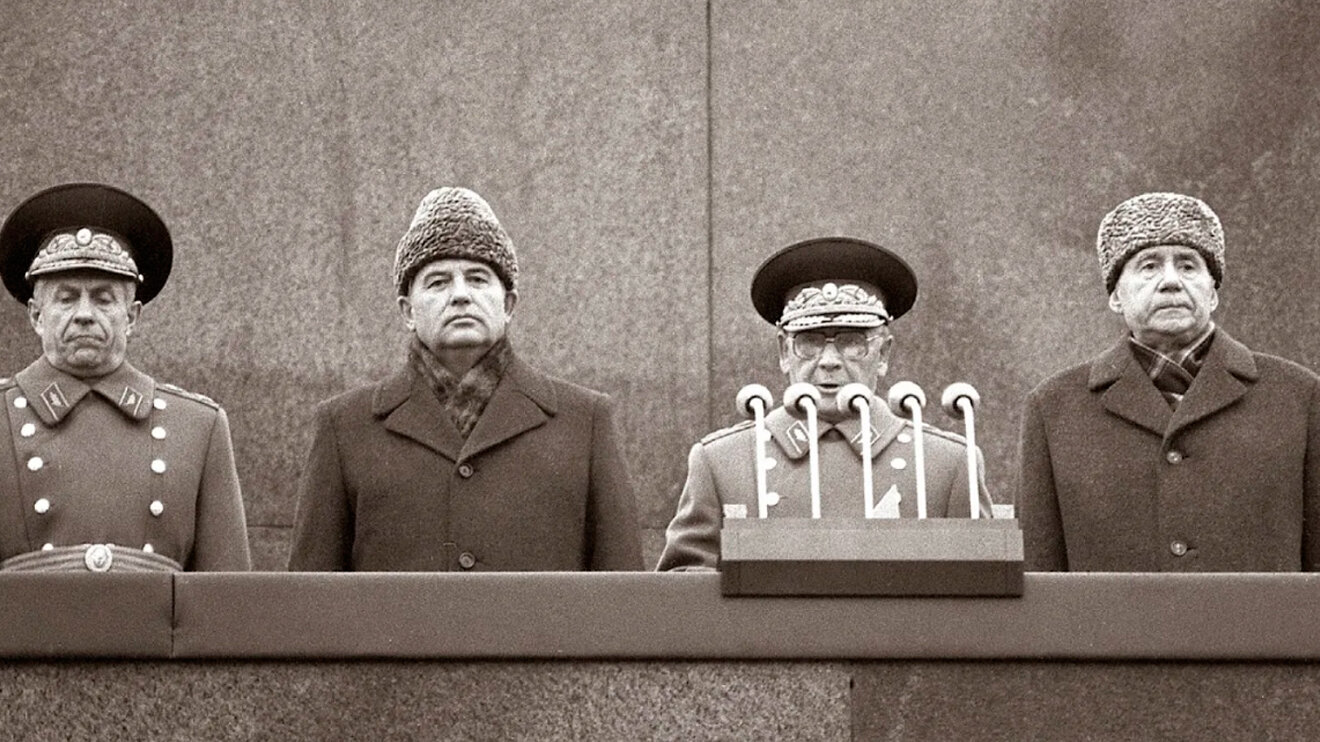
Following the investigation, Gorbachev dismissed around 300 generals and senior Soviet officers, including Defense Minister Marshal Sergei Sokolov, the Chief of the General Staff, and virtually the entire leadership of the air-defense forces.
1991–1993: Radical Cuts
After the USSR’s collapse, Russia’s new leadership faced the challenge of overhauling the enormous Soviet army, which numbered around 3.8 million personnel in 1991.
Key Decisions Under the Gaidar Government
- 1992: On the recommendation of Economy Minister Andrei Nechayev, Yeltsin ordered the army cut to 1.9 million personnel within a year
- An 80% cut in weapons procurement — keeping only the most critical production lines running
- A mass conversion of the defense industry — shifting defense plants to civilian production
Problems With Implementation
Despite ambitious plans, the reforms ran into serious obstacles: no funds for social guarantees to discharged officers, sabotage by military leadership, and, paradoxically, a growing number of generals even as the overall army shrank.
The Volkogonov Commission: The «Kompromat Factory»
Alongside the general cuts, sweeping personnel purges took place in the Defense Ministry and General Staff. A special commission led by Colonel General Dmitry Volkogonov was formed, one the military nicknamed the «kompromat factory.»
The commission vetted officers’ loyalty to the new regime, rooting out «accomplices of the August coup» and carrying out personnel reshuffles. Many career military officers were demoted or dismissed without solid grounds, their posts taken over by «democratically minded» officers.
Cuts in the Intelligence Services
The Foreign Intelligence Service (SVR), created in December 1991 from the KGB’s First Chief Directorate, also underwent significant cuts. Unlike army structures, the process in intelligence was more delicate, given the nature of the work.
Special Factors in SVR Cuts
- The need to preserve secrecy
- The challenge of employing personnel with highly specific skills
- The risk of information leaking to foreign intelligence services
Common Second Careers
- Private security firms
- Commercial enterprises
- Consulting firms
The «Frozen Reform» Period (1994–1996)
By the mid-1990s, radical military reform had effectively stalled. Army numbers stabilized at around 2.1 million personnel, instead of the planned 1.9 million.
The General-Corps Paradox
Despite the overall cuts, the number of generals didn’t shrink — it grew. The USSR had about 2,500 generals; by the mid-1990s, Russia had more than 3,000. The ratio worked out to roughly one general per 650 servicemen (compared to one per 1,400 in the U.S.).
Social Consequences
The mass cuts to the general corps created a serious social problem. Many high-ranking officers, having served the state their entire lives, found themselves out on the street without adequate social support.
As Economy Minister Andrei Nechayev noted: «Almost no housing is being built for those who need to be discharged into the reserves; the money allocated for that purpose has for years been spent inefficiently, and with significant abuses besides.»
Alternative Career Paths
Amid the crisis, many discharged generals were forced to look for ways to put their skills to use in the private sector. Especially in demand were roles in:
| Field | Positions | Advantages of Former Officers |
|---|---|---|
| Private security | Security directors, heads of protection services | Experience managing personnel, knowledge of operational work |
| Commercial enterprises | Executive drivers, personal assistants | Discipline, loyalty, resilience under stress |
| Government agencies | Advisors, consultants | Knowledge of the state apparatus, connections |
The Situation by 1996
By 1996, when the novel is set, the situation with discharged generals had stabilized. Most had already adapted to the new conditions, finding a place for themselves in various fields.
A defining feature of the era was that many former high-ranking military officers and intelligence officers worked in relatively modest roles — as drivers, security guards, consultants. This created a distinctive atmosphere, where yesterday’s generals might find themselves working under young entrepreneurs.
Historical Significance
The general-corps cuts of the 1990s became one of the symbols of the sweeping changes in Russian society. They demonstrated the painful nature of the transition from the Soviet system to the new reality, and created an entire social class of people forced to radically rebuild their lives in middle age.