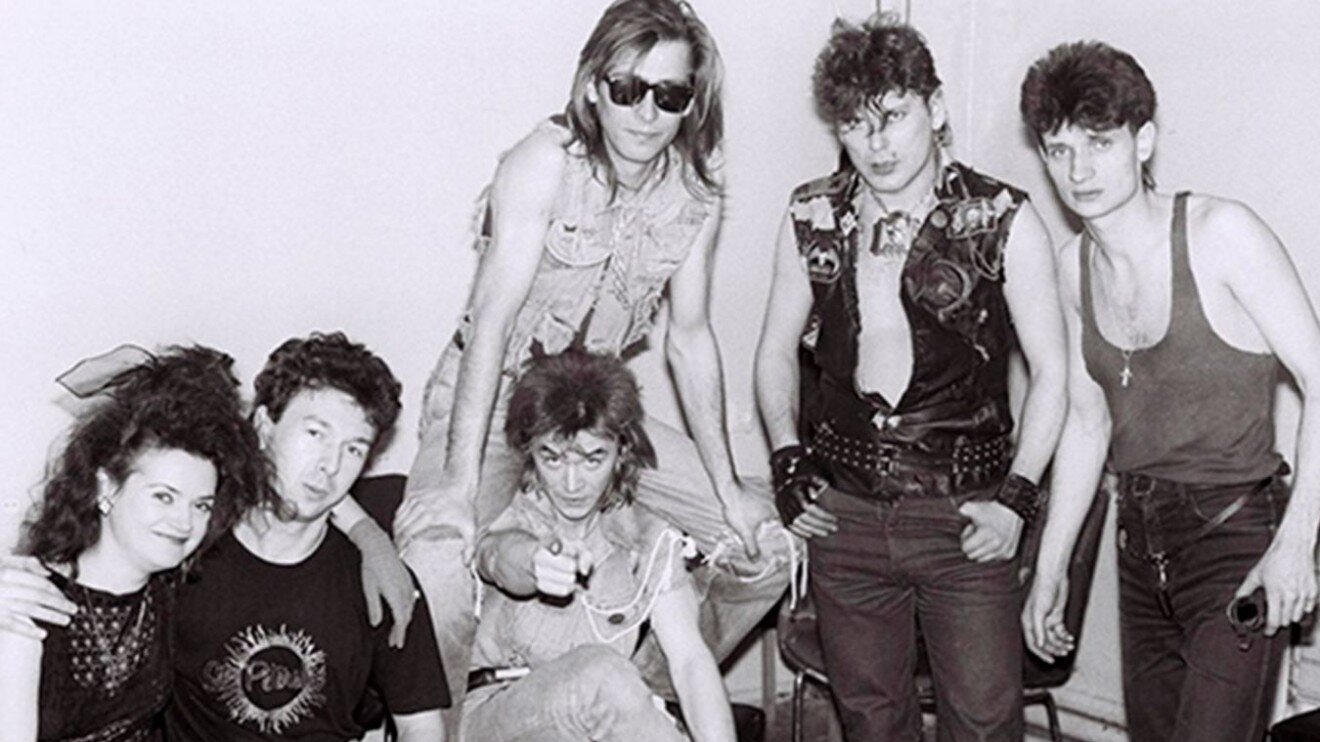
The story of the song that became the calling card of the legendary Russian rock band Sektor Gaza.
The Song "Kolkhoz Punk"
The song "Kolkhoz Punk," opening with the line "Of all the collective-farm youth, I was the only one who went punk," became one of the most recognizable tracks in the history of Russian rock music. Written by Sektor Gaza frontman Yuri Klinskikh (known as Yuri Khoy), it captured the spirit of the late 1980s and early 1990s, as punk culture made its way into provincial Russia.
The track was first recorded in 1989 as part of a self-titled cassette album, then rerecorded in August 1991 for the official release. The song tells the story of a young man from the countryside who discovers punk culture and decides to leave his home village for city life and music.
The lyrics are full of vivid images of provincial life, contrasting traditional collective-farm existence with the new musical culture. One verse mentions Andrei «Svinya» Panov, an actual Soviet punk musician and founder of the band Avtomaticheskiye Udovletvoriteli, lending the song extra authenticity within the context of the Russian punk scene.
The Album "Kolkhoz Punk" (1991)
The album "Kolkhoz Punk" was a turning point in Sektor Gaza’s history. Recorded in August 1991 at "Gala Records" — the Soviet Union’s first independent record label — it was officially released in 1992 on vinyl with a pressing of 100,000 copies through the "Melodiya" label.
The album drew on material from two 1989 cassette releases — "Kolkhoz Punk" and "Plugi-Vugi" — but the musical and instrumental side underwent radical improvement. It was on this album that the band’s signature style largely took shape, a sound Yuri Khoy himself described as "fusion" — a blend of different musical directions.
Track List and Notable Features
The album opens with a track called "Intro" (titled simply "Queen" on the first vinyl pressing) — a cover of Queen’s famous song "We Will Rock You," but with Yuri Khoy’s own original lyrics. This track set the tone for the whole album, showing the band’s approach to reworking Western musical models.
Other notable tracks on the album included:
- "Kolkhoz Punk" — the title track, which became the band’s calling card
- "Plugi-Vugi" — a track using an altered quote from Mikhail Naumenko’s song "Boogie-Woogie Every Day"
- "The Drowned Man," "The Junkie," "The Patriot," and other songs that shaped the band’s characteristic style
The Music Video and Popularity
Between August and October 1991, the band shot its first music video for the album’s title track. Aired on Central Television as part of the program "50×50," the video brought the band nationwide fame almost overnight. This moment proved a turning point in Sektor Gaza’s career — they went from a local Voronezh band to a nationwide phenomenon.
The History of Sektor Gaza
Founding and Early Years
Sektor Gaza was founded on December 5, 1987, in Voronezh. The name came from a joking nickname for the industrial part of Voronezh’s Left Bank district, where the local rock club was located. The district was called the "Gas Sector" for its many smoking factories, and also in reference to events in the Middle East frequently mentioned in Soviet media at the time.
The band’s founder and frontman, Yuri Klinskikh, got the nickname "Khoy" entirely by chance — people started calling him that after he frequently let out a characteristic punk yell while performing on the local rock club’s stage. Originally, Sektor Gaza was a solo project, with Klinskikh performing with just a guitar.
Developing a Style
Sektor Gaza’s musical style took shape under a wide range of influences. Yuri Khoy was drawn to many musical currents — from punk and hard rock to rap and Slavic folk. He spoke openly about his musical tastes: as a young man he’d listened to Western rock, to Vladimir Vysotsky, and to the band Mashina Vremeni.
A hallmark of the band’s work was blending Russian folk music (chastushkas, folk songs) with the style of Western pop and rock culture. Many tracks amounted to melodic recitation or spoken word over distorted electric guitar. Khoy himself described the band’s style as "fusion," stressing that every Sektor Gaza song was done in a different style.
Themes
Sektor Gaza’s work reflected life in provincial late-Soviet Russia. The band’s songs offered stylized portraits of life among both the social underclass and the provincial working class. Yuri Khoy wasn’t shy about using vernacular and profane language, explaining it as a pursuit of maximum honesty and realism.
A significant share of the band’s output tackled the sharp social issues of the perestroika years, along with themes of the afterlife and the mystical. Song plots typically unfolded in the countryside or a provincial town, creating a distinctive atmosphere of Russian folk art.
"Kolkhoz Punk" as a Cultural Phenomenon
Reception of the Term
The term "kolkhoz punk," originally used by Yuri Khoy himself as a joke, later became a fixed label for the band’s style. But the term drew mixed reactions both from the punk community and from music critics.
The punk movement itself took a dim view of classifying Sektor Gaza’s music as punk rock. Representatives of "classic" punk felt the band didn’t grasp the true essence of punk culture. At the same time, other musicians credited Sektor Gaza with popularizing punk music in Russia and respected the band for its honesty and originality.
Criticism and Recognition
Sektor Gaza received mixed reviews from music critics. On one hand, the band was accused of low culture, promoting debauchery, and borrowing musical ideas. On the other, respected critics like Artemy Troitsky acknowledged Yuri Khoy’s talent and called Sektor Gaza the best representative of "Russian folk rock."
DK founder Sergei Zharikov compared Sektor Gaza to the Beatles, noting that the band, like the legendary Liverpool foursome, had managed to convert subcultural clichés into mainstream culture, becoming a genuinely popular band.
Commercial Success
Despite the criticism, the band achieved enormous commercial success. According to a survey of vendors at Moscow’s music kiosks, the band’s recordings ranked among the top sellers. In July 1991, Sektor Gaza entered the charts for the first time, placing 18th on Komsomolskaya Pravda’s ranking, and by year’s end had climbed to first place.
The magazine Pulse named the Voronezh band the best rock band of 1991. In 1992 the band played more than 150 concerts, a sign of its massive popularity across the country.
Legacy and Influence
The album "Kolkhoz Punk" and its title track became an important part of Russian musical culture in the 1990s. Sektor Gaza’s work reflected the spirit of the time — a period of sweeping social change, when old ideological structures were collapsing and new cultural forms were only just taking shape.
The band created a unique musical language, joining traditional Russian culture with contemporary Western influences. That synthesis proved enormously popular among broad segments of the population, especially in the provinces, where many people recognized their own lives and struggles in Sektor Gaza’s songs.
Despite mixed reviews from critics, Sektor Gaza remains one of the most significant phenomena in the history of Russian rock music. The song "Kolkhoz Punk," with its famous line "Of all the collective-farm youth, I was the only one who went punk," became a kind of anthem for a generation frozen between the Soviet past and an uncertain future.
Interesting Facts
- To rent the professional "Black Box" studio in 1990, Yuri Khoy sold his "Yava" motorcycle
- The album "Kolkhoz Punk" has been reissued several times, including a special 2022 vinyl edition on orange vinyl
- In 2021, a documentary about the band, "Khoy Is With You," was released
- The band’s songs remain popular in karaoke bars across Russia today