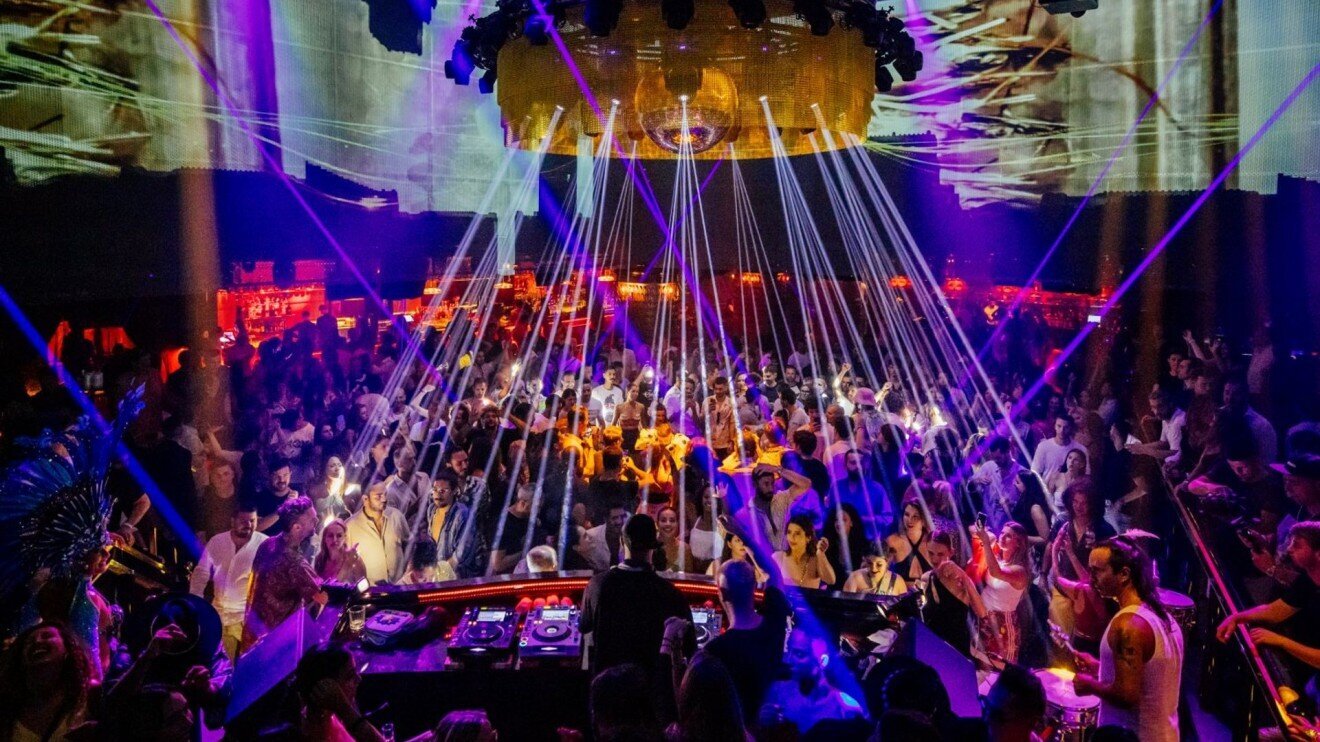
The mention of an island made up of «pubs, discos, and youthful crowds» points to Ibiza – a small Spanish island in the Mediterranean that, by 1997, had already spent more than two decades as a genuine mecca for European youth and the epicenter of world club culture.
Geography and Climate
Ibiza (Spanish: Ibiza; Catalan: Eivissa) is the third-largest island of Spain’s Balearic archipelago. The island covers 571 km², with a population exceeding 130,000 by the late 1990s. Thanks to its Mediterranean climate, with mild winters (around 15°C) and hot summers (up to 30°C), plus an absence of frost and snow, the island became an ideal year-round destination, though the peak tourist season runs from May to September.
From Phoenicians to Hippies: Historical Background
The island’s history as a magnet for free spirits began long before the club era. As early as 1936, Ibiza became a refuge for opponents of Franco’s regime. In the 1960s, the island was claimed by hippies, who turned it into a symbol of counterculture and freedom. The «flower children» built communes here, practiced crafts, threw open-air parties, and turned watching sunsets into a kind of mystical ritual.
By the early 1970s, Ibiza’s reputation as an island of freedom had drawn in the creative intelligentsia. Films were shot here (including the cult 1969 picture «More»), and albums were recorded. Pink Floyd wrote the soundtrack for «More» right on Ibiza, and their catalog gained a song called «Ibiza Bar.» The island was visited by the Bee Gees, Cat Stevens, and later Thin Lizzy, Duran Duran, Nick Cave, and Bob Marley.
The Birth of a Club Empire
Ibiza’s first genuine nightclub, Pacha, opened in 1973. It was an exclusive venue with strict door policy, where parties were held mostly poolside. Pacha laid the groundwork for what would later grow into a global entertainment industry.
A revolutionary moment came in the late 1970s with the arrival of Pikes Hotel, built by Australian Tony Pike. The place quickly became legendary for its wild parties. It was here that Wham! filmed the video for their hit «Club Tropicana,» and in 1987 Freddie Mercury celebrated his 41st birthday with a grand party for 700 guests, including 500 celebrities. At that party, Mercury performed «Barcelona» live for the first time, in duet with Montserrat Caballé.
The Superclub Era
The 1980s and early 1990s shaped Ibiza’s modern identity as the world capital of electronic music. The rise of superclubs — gigantic venues capable of holding thousands of guests at once — played a key role.
Amnesia, which opened back in the 1970s, had by the 1990s become one of the world’s most influential clubs, holding up to 5,000 people. It was here that the phenomenon of Balearic beat was born — a distinctive style of electronic music created by British DJs under the island’s influence.
A true giant was Privilege (originally called KU), which made the Guinness Book of Records as the largest nightclub in the world, capable of holding up to 10,000 guests at once. The club started out as a roofless restaurant, but in the 1990s was required to add a roof to comply with Spanish law.
A Musical Revolution
By the mid-1990s, Ibiza had become a laboratory for electronic music. Various styles blended here: from commercial house to progressive, from techno to psychedelic trance. British DJs, inspired by the island’s atmosphere, created new sounds that then conquered dance floors around the world.
The Balearic beat phenomenon rested on a particular DJing philosophy: the music was meant to reflect the island’s own rhythm of life, moving from calm sunset melodies to the night’s energetic beats and back to meditative dawn sounds. This created a unique atmosphere of continuous celebration of life.
Club Culture by 1997
By the time the novel is set, Ibiza had already been the center of European club culture for more than two decades. The season ran from late May through September, when clubs operated practically without a day off. Besides nightclubs, daytime beach parties — held right on the beaches — were also popular.
The main hubs of nightlife were the island’s capital, Ibiza Town, and the town of Sant Antoni. The Playa d’en Bossa district, in the capital, was considered the island’s «nocturnal heart,» home to its most famous clubs.
A defining feature of Ibiza’s club scene was its blend of exclusivity and accessibility. Alongside pricey venues like Pacha, with its strict dress code and steep prices, there were more accessible spots too. Take DC10, for instance — a former farmhouse near the airport that became a hub of underground electronic music, where parties were barely advertised at all: «whoever wants to come, will come.»
A Social Phenomenon
By 1997, Ibiza represented a unique social experiment. Every year, the island welcomed hundreds of thousands of young people from various countries, mostly British, German, and French. A distinct subculture took shape here, where social differences dissolved into a shared rhythm of dance.
Ibiza’s influence spread far beyond music. The island’s clothing style, known as «Adlib Fashion» (from the Latin for «at one’s pleasure, freely»), blended local practicality with hippie bohemianism. From here came the light, colorful dresses with tiered skirts, ethnic prints, straw hats, and espadrilles that later swept into world fashion.
Economic Impact
The club industry radically transformed the island’s economy. Where Ibiza had been a poor agricultural region in the 1960s, by the 1990s tourism had become the backbone of the local economy. The contrast between the traditional way of life and the new entertainment industry was so stark that the island earned the nickname «Ferraris versus tractors» — collisions between expensive cars and farm equipment really did happen regularly.
A Cultural Code
What set Ibiza apart was that it wasn’t simply a resort, but a pilgrimage site for a particular subculture. People came not for beach relaxation, but for a distinctive atmosphere of freedom and unity through music. Many visitors returned year after year, forming a kind of «summer republic» with its own rituals and traditions.
A typical day on Ibiza at the height of the season followed a cycle: it began with watching the sunset, continued with dinner, then «warming up» in the bars of the town center, and ended at one of the superclubs, where the party could run until 8 a.m. the next morning.
By 1997, Ibiza had firmly established itself as the world capital of club culture, setting trends in electronic music, fashion, and lifestyle for an entire generation of European youth. It was precisely this phenomenon that the novel’s characters witnessed, finding themselves at the epicenter of a cultural revolution that defined the face of youth culture at the turn of the millennium.