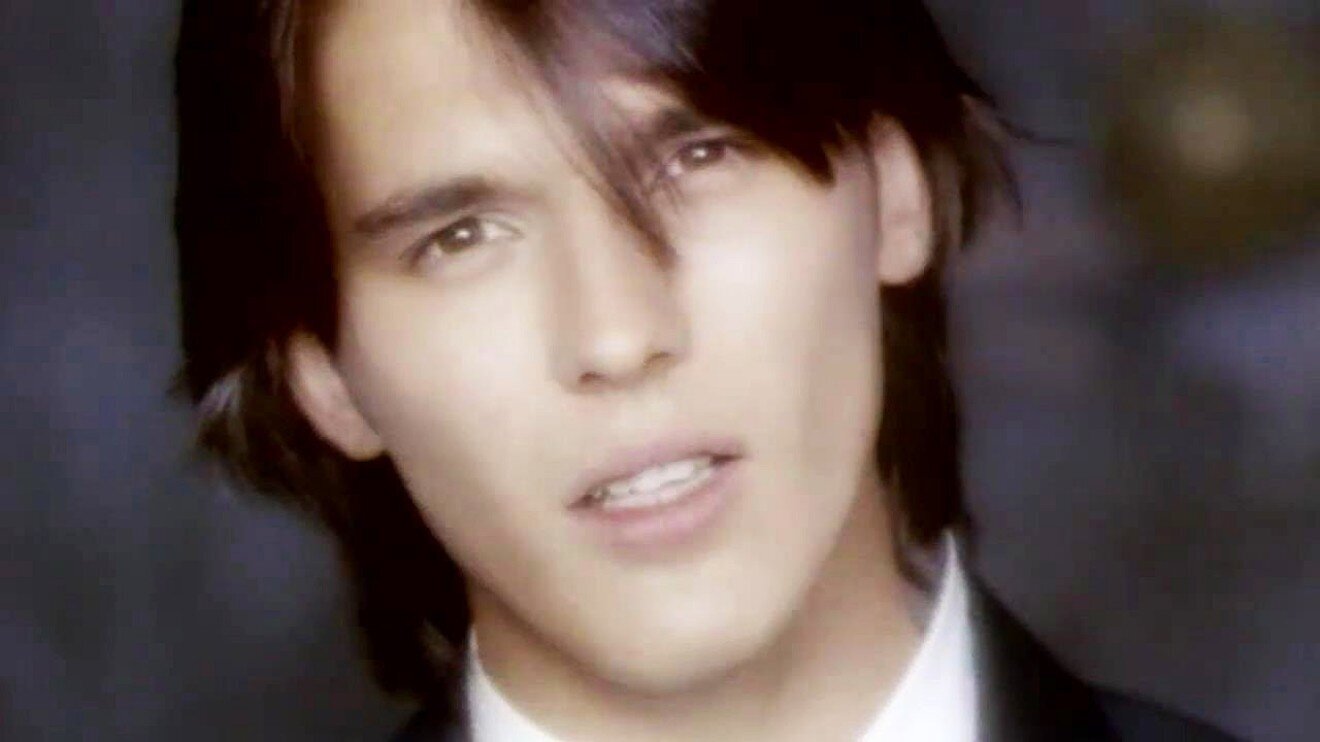
Vlad Stashevsky and the Hit «Love No Longer Lives Here»
By 1996, «Love No Longer Lives Here» had already been one of the biggest hits on Russian pop radio for two years, and its performer, Vlad Stashevsky, had turned into a genuine phenomenon of the domestic show-business scene.
Vladislav Tverdokhlebov Becomes Vlad Stashevsky
Vladislav Stanislavovich Stashevsky was born January 19, 1974, in Tiraspol, into a family that soon fell apart. His father, Stanislav Semyonovich Gronchak, left the family before the boy turned two. Vladislav was raised by his mother, Natalya Lvovna Tverdokhlebova, and grandmother, Maria Timofeyevna Tverdokhlebova – both accountants by trade.
The family moved to Crimea, where the future star spent his childhood. Vladislav grew up an exceptionally active kid: he did artistic gymnastics, track and field (reaching second-tier junior rank in sprinting and hurdles), competitive rowing (also second-tier junior rank), skydiving (sixteen jumps), and martial arts.
Despite his athletic pursuits, music held an important place in the teenager’s life. Vladislav graduated with honors from music school in piano, which later proved decisive for his fate. After eighth grade, he tried to get into a Suvorov military school but lasted only a month before leaving.
His path eventually led him to Moscow, where he enrolled at a trade-and-commerce college to study «merchandising and organization of food-product trade.» Even in college, his musical leanings showed – Vladislav sang and played bass in a student ensemble. After the college, he continued his education at the Moscow State University of Commerce, in the department of trade-enterprise management for the service sector.
A Star Born «On a Bet»
The story of how Vlad Stashevsky came to the stage is wrapped in legend, but at its core lies a real bet between two leading producers of the era. Yuri Shmilyevich Aizenshpis, creator of projects like the bands Tekhnologiya and Dinamit, told his colleague Bari Karimovich Alibasov that he could make a star out of anyone. The object of the experiment was Vladislav Tverdokhlebov, a student at a Moscow trade-and-commerce college.
The meeting took place in 1993 at the Moscow club Master, where the 19-year-old student was celebrating passing his exams with classmates. Vladislav was playing piano and singing blatnyye songs, which caught the attention of Aizenshpis, who was there with the band Yung Ganz, whom he was producing. The producer left the young man his card, and a week later they recorded the first song, «Roads We Walk,» written by Vladimir Matetsky.
On August 31, 1993, at the «Sunny Adjara» festival in Batumi, the singer performed for a wide audience for the first time under the stage name Vlad Stashevsky – a name invented for him by Aizenshpis to replace the less mellifluous surname Tverdokhlebov.
Bari Alibasov later admitted: «He seemed so awkward to me, so unstageworthy. Not a performer — street riffraff! I said: ‘This will never work. Look at him, it’s a disaster.’ I’m rarely wrong, and that was the stupidest mistake of my life.»
A Dizzying Rise, 1994–1996
1994 turned out to be a turning point in the artist’s career. His debut album, «Love No Longer Lives Here,» came out and brought the singer national fame. At the «White Nights» festival in St. Petersburg, Stashevsky placed second, confirming his growing popularity.
In 1995 came a second album, «Don’t Believe Me, Darling,» cementing the artist’s success. But the real triumph came in 1996, with the release of the album «Vlad-21.» A readers’ poll by the newspaper Moskovsky Komsomolets named Vlad singer of the year. His hit «Call Me in the Night» won the «Ovation» award in the «Song Hit of 1996» category, and the music video for the song aired on major TV channels more than 500 times.
By this point, Stashevsky was popular enough to be named the most-pirated artist on the Russian pop scene — unofficial recordings of his songs circulated in huge numbers. In 1996, Svetlana Belyayeva joined his creative team as a backing vocalist; she later became a soloist of the group Litsey.
The song that became the artist’s calling card at the start of his career was written to order by a team of professional songwriters. The music was composed by Arkady Ukupnik, a composer known for his ironic hits but capable of writing serious lyrics for other artists too. The words belonged to the poet Kirill Krastoshevsky.
The song’s creation was carefully thought through. The songwriters were tasked with writing something simple to perform but hit-worthy. The title line, «Love No Longer Lives Here,» was set in advance, and the writers worked backward from it. Krastoshevsky later called the resulting song a story about «the lawlessness of loneliness.»
Producer Aizenshpis was actively involved in the creative process. At his insistence, the line «I have no friends and no enemies» was kept, even though the poet had objected to it. Krastoshevsky explained: «When a person renounces his enemies, that’s understandable, but when a person renounces his friends, that’s not quite the right stance.»
A Groundbreaking Music Video
Much of the song’s success came from a lavish music video that outscaled most music videos of the era. Filming took place at Mosfilm studio, in specially built sets. The narrative video, with its medieval atmosphere, costumes, and sets, felt more like a short film than an ordinary music video.
Casting the female lead was done with particular care – more than a dozen portfolios were reviewed before the choice fell on model Polina Tasheva. Enormous resources, by the standards of the time, went into the video, reflecting how serious the producer was about turning the project into a large-scale commercial success.
Debut at «Song of ‘94»
«Love No Longer Lives Here» is often called the starting point of the artist’s career. It was with this hit that Vlad Stashevsky debuted at the prestigious «Song of ‘94» festival, the main platform for introducing new performers and songs.
The song became the title track of the singer’s debut album, also called «Love No Longer Lives Here.» The album was released in 1994 and instantly brought the artist nationwide fame.
The Phenomenon of His Popularity
By 1996, Vlad Stashevsky was already a recognized superstar of the Russian pop scene. Aizenshpis’s project turned out to be incredibly successful – the singer filled arenas of thousands, and his songs constantly played on radio and television. His popularity was especially vivid among young audiences.
Music critic Artur Gasparyan explained the phenomenon this way: «Pubescent girls with pimples that haven’t healed yet make up the fan base of every young performer. They need idols to worship. It doesn’t matter to them how he sings. He might not even sing at all.»
Aizenshpis himself stressed that from the start he’d bet on visual impact: «I noticed right away that Vlad was capable of a spectacular effect, and for a pop singer that matters more than having a classically trained voice.»
The Technology of Making a Star
Vlad Stashevsky’s success demonstrated the possibilities of the new Russian show business. Aizenshpis built artists according to a «precisely honed technology,» comparing the process to industrial manufacturing. The student Tverdokhlebov wasn’t just given a resonant stage name, «Stashevsky» – a whole image was built for him, that of a young, romantic hero.
The producer later said: «So I wanted not just to make a star out of Vlad Stashevsky, but to show how significant a role the producer plays in an artist’s success.» This experiment clearly demonstrated how, under the new market conditions, a popular performer could be built up practically from scratch.
Cultural Context
«Love No Longer Lives Here» fit perfectly into the mood of the mid-1990s. Lyrics about loneliness, lost friends, and lost love resonated with what many people were going through during a period of drastic social upheaval. A simple but memorable melody made the song accessible to the broadest possible audience.
MUZ-TV host Nyuta Kirsanova aptly described the song as «a coup de grâce to girls’ hearts.» Indeed, Stashevsky’s romantic image and his mournful ballads about unrequited love won over the hearts of thousands of female fans.
Influence on the Industry
The success of the Vlad Stashevsky project laid the groundwork for the modern Russian pop-music industry. It demonstrated the algorithm for building a commercially successful artist: a talented producer, professional songwriters, high-quality music videos, and savvy promotion on radio and television.
By 1996, «Love No Longer Lives Here» had become a kind of benchmark for the Russian pop ballad. It kept regularly playing on radio stations and TV channels, remaining one of the defining hits of the era when Russian show business was taking shape.