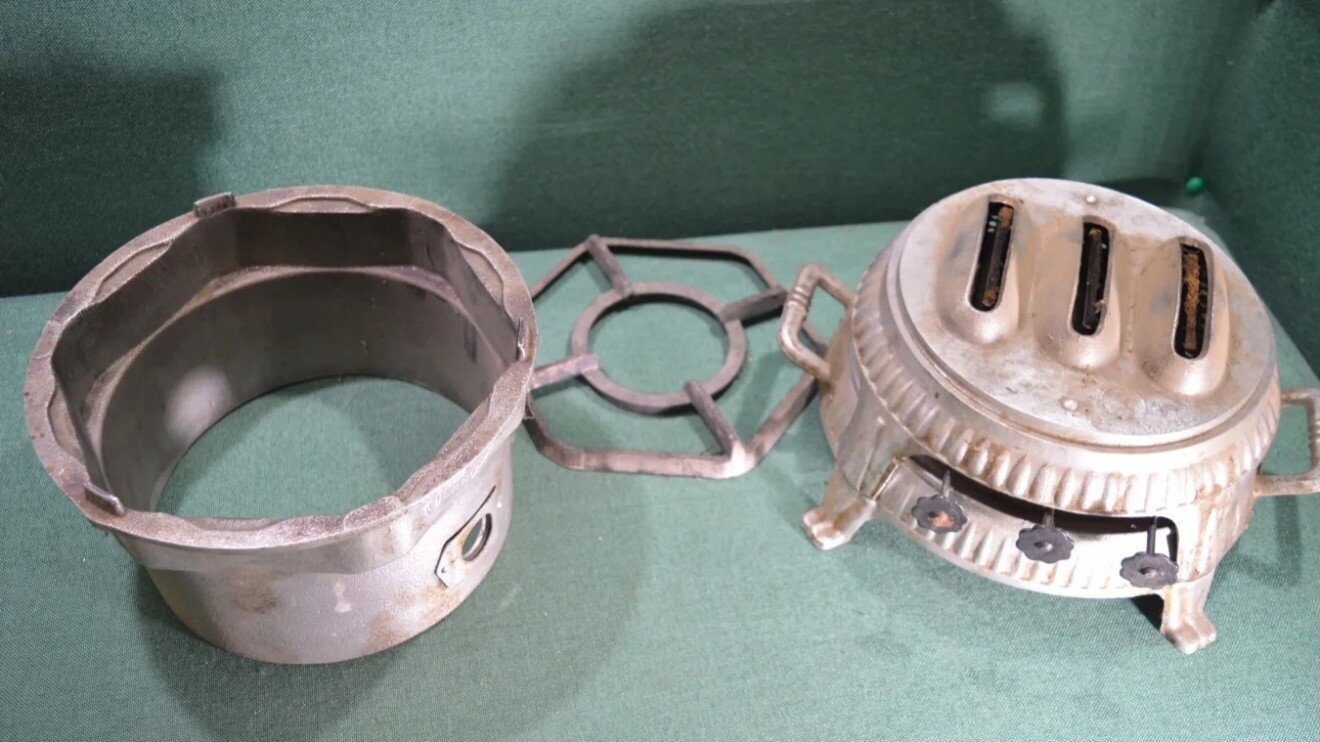
The kerogas was a household kerosene-burning heater popular in the USSR from the 1930s to the 1960s. Its name comes from a combination of the words "kerosin" (kerosene) and "gaz" (gas).
The kerogas consisted of a metal housing with a kerosene reservoir, a burner with nozzles, and a pump to build pressure. It worked as follows: kerosene under pressure was fed into the burner, where it vaporized and burned, releasing considerable heat.
Origin
The first prototype kerosene burners appeared in the late 19th century. In the USSR, mass production of the kerogas began in the 1930s, during a period of active industrialization and electrification. The kerogas became an alternative to wood stoves amid shortages of electricity and gas, especially in rural areas and small towns.
By the 1950s, the kerogas was widespread in Soviet households. It was relatively cheap, compact, and more efficient than traditional stoves. In the postwar years, the kerogas became a fixture of Soviet daily life.
As centralized gas supply and electrification spread in the 1960s-70s, the kerogas gradually fell out of mass use, though it continued to be used in dacha communities and rural areas.
Operational quirks
The kerogas was known for its distinctive traits:
- A strong smell of kerosene
- Noisy operation with a characteristic drone
- Soot buildup if improperly adjusted
- The need for regular cleaning and refueling
Context in the novel
In the text of the novel, the phrase "the last dose turned out to be pure kerogas" is used as a metaphor pointing to the extremely poor quality of the alcohol consumed. This comparison carries several layers of meaning:
First, kerosene has a sharp, distinctive smell and acrid taste, drawing a parallel with bad, "bootleg" vodka. Second, ingesting kerosene is extremely dangerous and can cause severe poisoning with characteristic symptoms — nausea and vomiting — matching the character's state ("puking his guts out"). Third, the kerogas, as an outdated household object, symbolizes something low-quality and "cheap," falling short of modern standards — just as the last round of alcohol fell short of the character's expectations.
Using this comparison also gives the text a temporal and cultural marker, hinting at a Soviet or post-Soviet setting, when the kerogas still lingered in the population's cultural memory as a household item of the recent past.