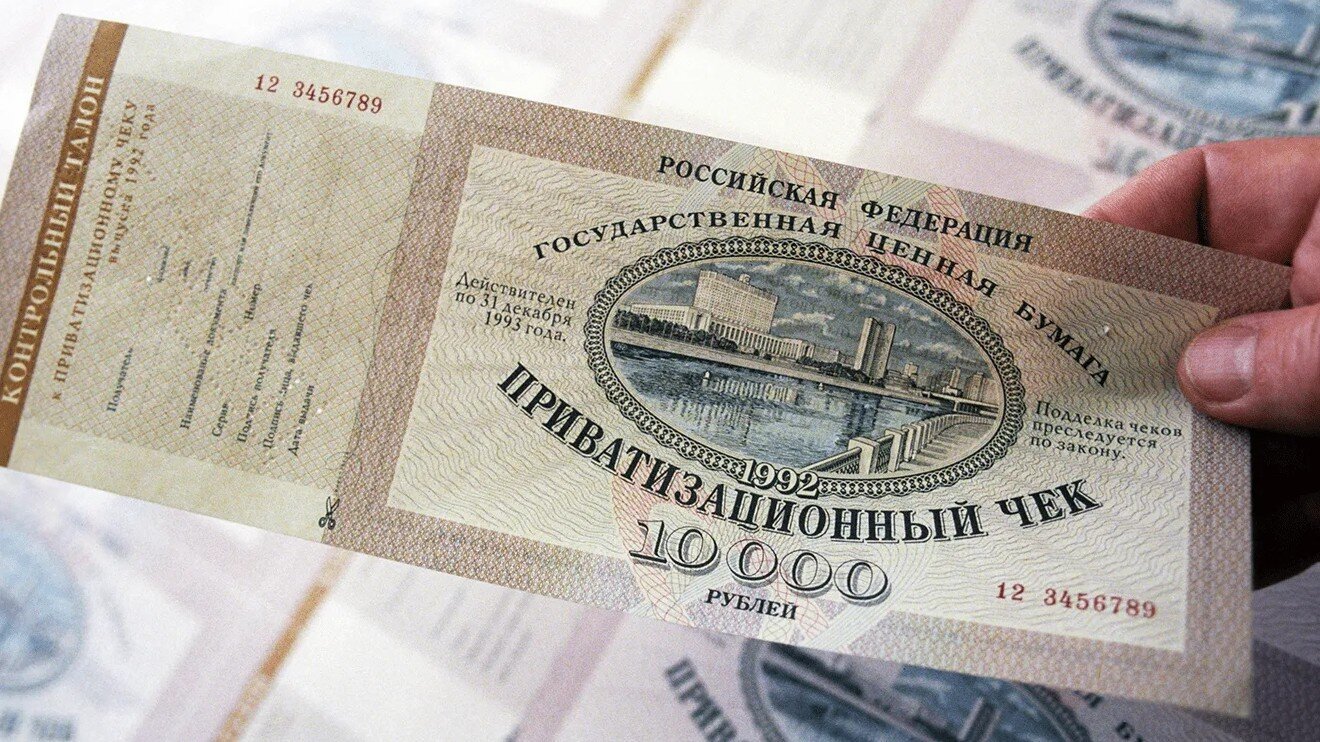
A voucher is a document with a certain stated face value, entitling its holder to purchase specified goods or services.
The history of the voucher
The voucher as a financial instrument has an ancient history. Forerunners of the modern voucher appeared as far back as medieval Europe, in the form of promissory notes and trade bills of exchange. The voucher in its modern sense, however, began to take shape in the 18th and 19th centuries.
The first official vouchers appeared in Great Britain in the late 18th century, as a means of targeted distribution of goods. The government used them to distribute food to the poorer segments of the population.
In the United States, vouchers became widespread in the 1930s during the Great Depression, when the government began issuing food stamps to support low-income citizens.
Types and uses of vouchers
Modern vouchers are used across various fields:
- Consumer vouchers (gift certificates, discount coupons)
- Education vouchers (for paying for educational services)
- Social vouchers (for providing social assistance)
- Privatization vouchers (for participating in the privatization of state property)
- Travel vouchers (confirming payment for tourist services)
Voucher privatization in Russia
The best-known example of mass voucher use in Russia is the privatization program of 1992–1994, one of the largest economic experiments of the 20th century.
In 1992, the Russian government, led by Yegor Gaidar and Anatoly Chubais, launched a program of mass privatization of state enterprises. Every Russian citizen received a privatization certificate (voucher) with a face value of 10,000 rubles. A total of 144 million vouchers were issued.
Officially, a voucher was a bearer security that could be:
- Invested in shares of the enterprise where the citizen worked
- Invested in shares of any other enterprise being privatized
- Handed over to a check investment fund (CHIF)
- Sold to another person
In theory, each Russian voucher entitled its holder to ownership of property worth about 10,000 rubles (at 1992 prices). Anatoly Chubais, head of the State Property Committee, claimed a voucher was equivalent to two Volga cars — though this estimate was later judged overly optimistic.
The results of voucher privatization in Russia
The outcome of voucher privatization proved contradictory. On one hand, it achieved the goal of quickly transferring a significant share of state property into private hands, laying a foundation for a market economy. On the other, the process was accompanied by numerous problems:
- Most citizens had no idea how to make effective use of their vouchers
- Many sold their vouchers for a pittance (often for food or alcohol)
- A large share of vouchers ended up concentrated in the hands of a small group of enterprising individuals
- Many check investment funds went bankrupt or disappeared along with investors' money
By 1994, when the voucher program concluded, about 70% of Russian enterprises had passed into private ownership. However, a large part of the population saw no tangible economic benefit from privatization, breeding distrust of market reforms.
The phrase "voucher privatization" became a byword in Russia, symbolizing the difficult, painful transition to a market economy. Economists and historians still debate the merits of the chosen method of privatization and its long-term consequences for Russia's economy and society.
Historical significance
Despite its contradictory results, voucher privatization became a pivotal stage in Russia's economic transformation, shaping patterns of ownership and economic relations for decades to come. The experience of Russia's voucher privatization is actively studied by economists around the world as an example of large-scale, rapid economic transformation.