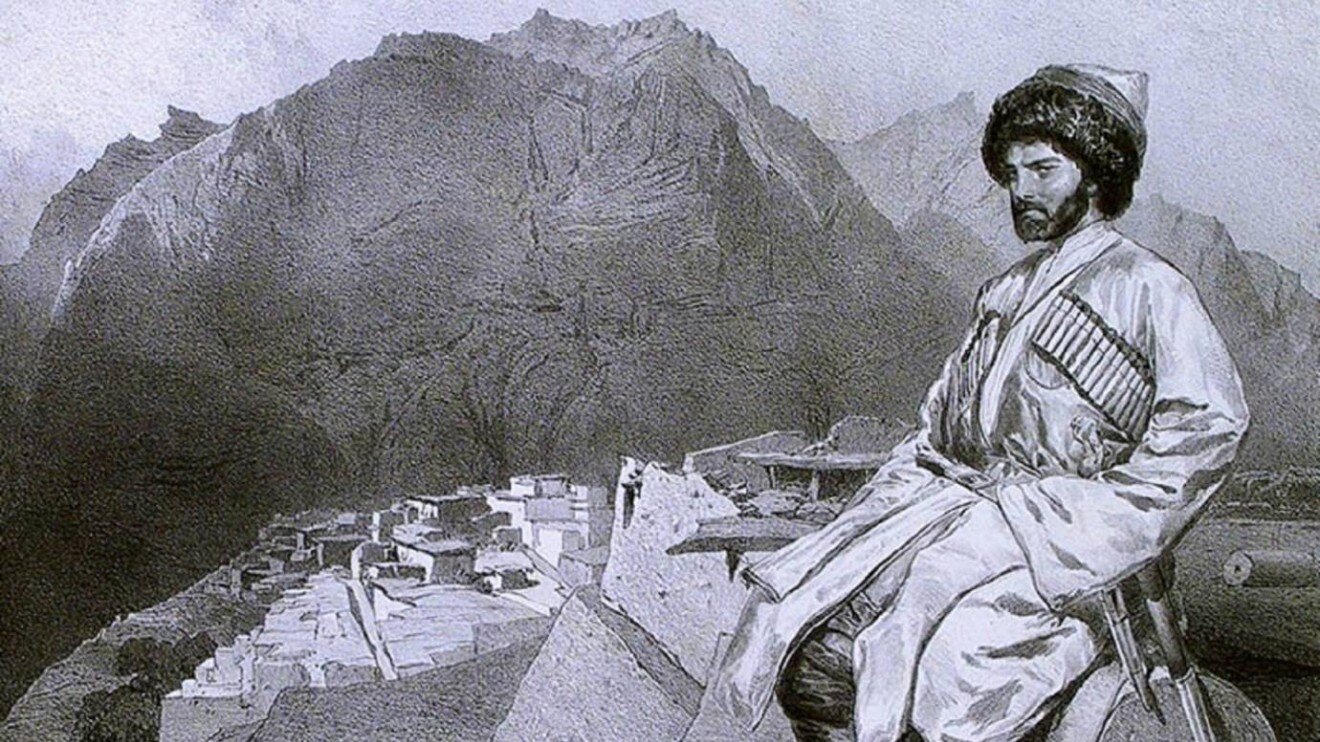
The novella "Hadji Murat" is one of the last and most significant works of Leo Tolstoy, completed in 1904 and published posthumously in 1912. The work is a unique synthesis of historical document and literary prose, based on real events of the nineteenth-century Caucasian War.
The Historical Basis of the Work
The novella is based on the true story of the Avar military commander Hadji Murat, who in 1851-1852 defected to the Russian side in his conflict with Imam Shamil, and later died tragically while attempting to return to the mountains. Tolstoy knew the Caucasus firsthand, having served there in his youth from 1851 to 1853, and those impressions underlie a number of his works.
The author scrupulously studied historical materials, eyewitness accounts, and archival documents. He spoke with participants in those events, which let him create a strikingly authentic picture of the era and its characters. At the same time, Tolstoy doesn’t merely reproduce historical events but subjects them to profound philosophical reflection.
«…A terrible crimson thistle head, whitened slightly at the center, its straight petals jutting out of the black earth. ‘What energy!’ I thought. ‘It has conquered everything, destroyed millions of blades of grass, and still this one won’t give in.’»
Artistic Features
In "Hadji Murat," Tolstoy achieves a remarkable concision and precision of language. The novella is marked by a distinctive style: despite the complexity of its themes, the text has no excess description or digression. Every detail here is functional, serving to reveal character or the work’s deeper meaning.
The novella’s composition rests on a contrasting juxtaposition of two worlds: the mountain world and the Russian world. The author masterfully shifts the narrative between different storylines, building a full picture of a contradictory historical reality. Hadji Murat is shown surrounded by Russian officers, soldiers, and representatives of the tsarist administration on one side, and by Shamil’s murids and mountain people on the other.
Philosophical Aspects of the Work
The novella "Hadji Murat" reflects the mature philosophical views of the late Tolstoy. At the center of the work is the confrontation between natural life force (embodied by the protagonist) and a false civilization (represented by Emperor Nicholas I and his entourage).
Tolstoy speaks out against war and colonial policy, exposing its inhuman nature. The novella condemns violence on both sides of the conflict: Shamil’s cruelty is no less repugnant to the author than the soulless policy of Russian autocracy.
The image of Hadji Murat becomes a symbol of unconquered vital force, of naturalness and love of freedom. Like the thistle from the novella’s introduction, he resists every attempt to break him or bend him to an alien will.
Key Characters of the Novella
- Hadji Murat — an Avar naib who defected to the Russian side because of his conflict with Imam Shamil
- Emperor Nicholas I — a symbol of the soulless state machine
- Imam Shamil — the leader of the mountain peoples, portrayed as a despot no less cruel than the Russian tsar
- Maria Dmitrievna — the wife of a company commander, who shows genuine humanity toward Hadji Murat
- Sado — a kunak (friend) of Hadji Murat’s, who risks his life out of loyalty
Literary Significance
"Hadji Murat" is one of Tolstoy’s most accomplished works in terms of artistic form. Maxim Gorky called the novella "a miracle of art," noting its exceptional power and concision. The novella had a significant influence on the development of Russian and world literature.
The work embodies the mature views on art held by the late Tolstoy: a rejection of excessive means of expression, a striving for maximum truthfulness and precision, and a deep penetration into the psychology of characters from different cultures and social strata.
"Hadji Murat" represents the pinnacle of Leo Tolstoy’s work. The work unites historical authenticity, artistic perfection, and profound philosophical concerns. The protagonist’s fate becomes a metaphor for the tragic collision between a freedom-loving individual and cruel, inhuman state systems. This novella is not merely a historical narrative but a profound meditation on human nature, freedom, violence, and dignity that remains relevant in every age.