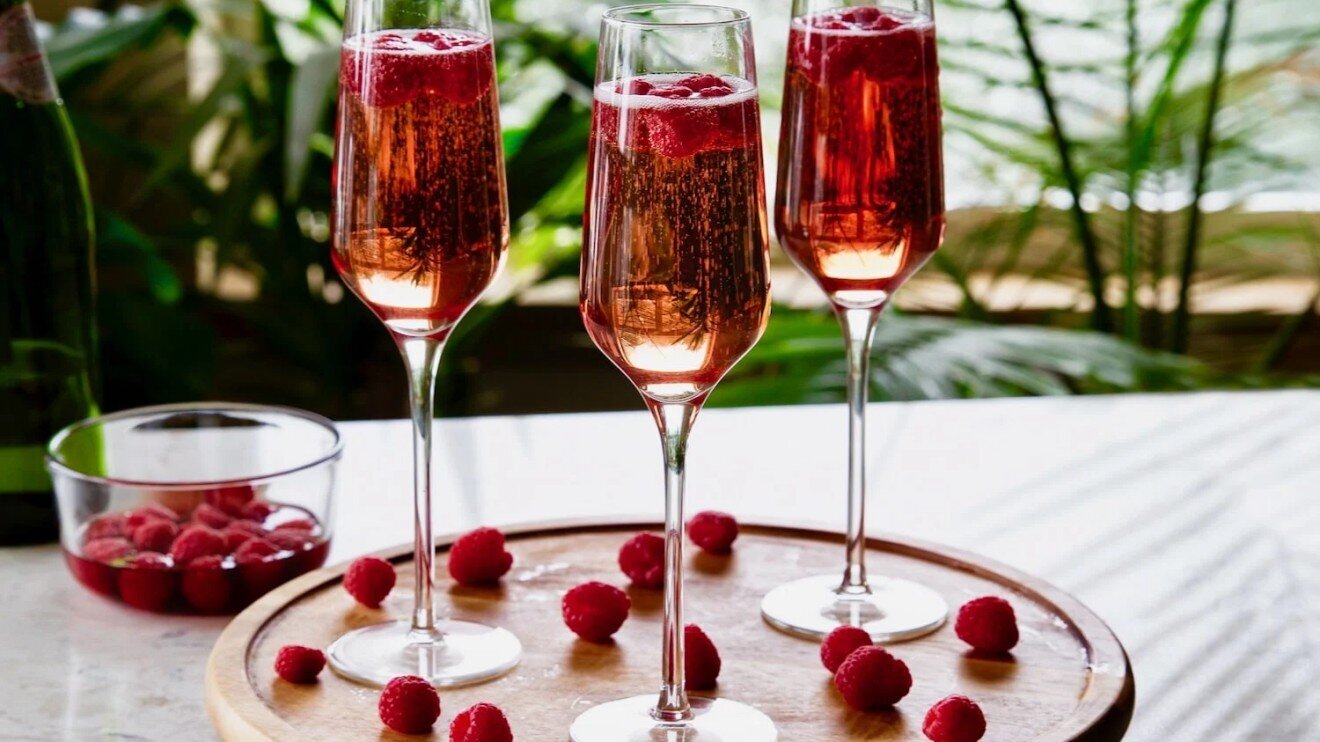
A French cocktail with a rich history
Origin story
Kir Royal is an elegant variation on the classic French Kir cocktail, in which ordinary white wine is replaced with champagne or another sparkling wine. This drink became a symbol of French refinement and an integral part of apéritif culture.
The cocktail’s history is inseparable from the name of Félix Kir (1876–1968), a priest and the mayor of Dijon from 1945 to 1968. The drink was originally called “blanc-cassis” and was simply a mix of white Burgundy wine with crème de cassis, the blackcurrant liqueur.
A wartime legend
A romantic legend holds that Félix Kir remembered the old blanc-cassis recipe during the Second World War, when German occupying forces confiscated all the stocks of red Burgundy. By adding blackcurrant liqueur to white wine, he produced a dark pink drink reminiscent of a pale Pinot Noir. In this telling, the cocktail became a symbol of the French Resistance.
A more prosaic version, however, suggests that the priest was simply trying to improve the taste of the white wine, which turned out especially sour and flavorless in the cold war years. The sweet liqueur softened the sharp acidity and made the drink more pleasant to drink.
Quick facts
- Origin: Burgundy, France
- Type: Apéritif
- Main ingredients: Champagne, crème de cassis
- Served in: A flute or wine glass
- ABV: 8–12%
Commercial success
In 1951, Lejay-Lagoute, the largest producer of crème de cassis, approached Mayor Kir for permission to use his name commercially. That’s how the classic blanc-cassis finally acquired its modern name. Félix Kir was a fervent champion of local products and actively promoted them on the international stage.
The mayor of Dijon was among the founders of the twin-town (sister-city) concept, so delegations from around the world frequently visited. Kir made a point of treating every guest to the legendary cocktail that shared his name, which helped spread its international popularity. Later he allowed other liqueur producers to use the name as well, by then already a household word.
Composition and proportions
The classic recipe
The classic French Kir Royal recipe calls for the following proportions:
- 90 ml champagne or sparkling wine
- 10 ml crème de cassis (blackcurrant liqueur)
- Garnish: a sprig of blackcurrants or a strip of lemon zest
In the nineteenth century the proportions were different: the liqueur’s share ran as high as a third, which would strike a modern drinker as excessively sweet. The International Bartenders Association (IBA) recipe calls for only a tenth part crème de cassis.
Preparation technique
- Pour the liqueur into a chilled flute
- Slowly add the champagne, tilting the glass
- Stir gently with a bar spoon
- Garnish with a sprig of currants or a twist of zest
Choosing ingredients
Sparkling wine
Various kinds of sparkling wine can be used to make a Kir Royal:
- Champagne – the classic choice, lending the drink particular elegance
- Crémant – a French sparkling wine made using the traditional method
- Cava – a Spanish sparkling wine, a more affordable alternative
- Prosecco – an Italian sparkling wine with fruity notes
Crème de cassis
A good-quality blackcurrant liqueur is decisive for the cocktail’s flavor. The classic Burgundian crème de cassis recipe includes:
- Blackcurrant berries
- Fruit distillate
- Spring water
- Refined sugar
- Currant blossoms for aroma
Well-known crème de cassis producers include Lejay-Lagoute, Joseph Cartron, Gabriel Boudier, and Edmond Briottet. Each house has its own production quirks, which shape the liqueur’s final flavor.
The culture of serving it
Kir Royal is traditionally served as an apéritif – a drink meant to stimulate the appetite before the main meal. In French culture the apéritif is an entire ritual, a time for unhurried conversation and getting ready for the meal to come.
Serving temperature
6–8°C (43–46°F) is the ideal serving temperature. Glasses are pre-chilled in the refrigerator or freezer.
Time of day
Traditionally served between 5 and 7 p.m., during the French apéritif hour. Ideal for gatherings and social occasions.
What to serve alongside
Served with light snacks: olives, nuts, canapés with pâté or cheese.
Cocktail variations
The Kir family of cocktails includes many variations, each with its own twist:
Core variations
- Kir – the classic version, made with white wine
- Kir Royal – made with champagne
- Kir Pétillant – made with any sparkling wine
- Kir Impérial – made with raspberry liqueur and champagne
Regional versions
- Kir Breton – made with Breton cider
- Kir Normand – made with Norman cider
- Communard – made with red wine
- Kir Berrichon – made with red wine and blackberry liqueur
Today and current trends
In today’s bar culture, Kir Royal remains a popular cocktail, especially at upscale venues. Bartenders experiment with different sparkling wines and liqueurs, crafting their own interpretations of the classic recipe.
Popular contemporary variations include the use of craft liqueurs, organic sparkling wines, and the addition of fresh berries and herbs to intensify the drink’s aromatic profile.
Etiquette and tradition
Drinking Kir Royal comes wrapped in certain French cultural traditions:
- The drink is sipped slowly, savoring every mouthful
- It’s not customary to order more than two servings over the course of one apéritif
- The cocktail is accompanied by light conversation on neutral subjects
- In formal settings it’s served as a welcome drink
- Drinking Kir Royal during the main meal itself is considered out of place
Conclusion
Kir Royal is more than a cocktail – it’s an entire cultural phenomenon, embodying French elegance and the art of savoring life. From humble blanc-cassis to an internationally recognized symbol of the French way of life, this drink has traveled a long road while holding onto its authenticity and refinement.
Today Kir Royal remains one of the most recognizable French cocktails in the world, symbolizing sophistication, tradition, and the French gift for turning simple pleasures into genuine art. Whether at a formal reception or a relaxed gathering with friends, this elegant drink always conjures an atmosphere of celebration and French savoir-vivre.
Note: This article is reference material about the Kir Royal cocktail and its cultural significance. The information is based on historical sources and contemporary bar traditions.