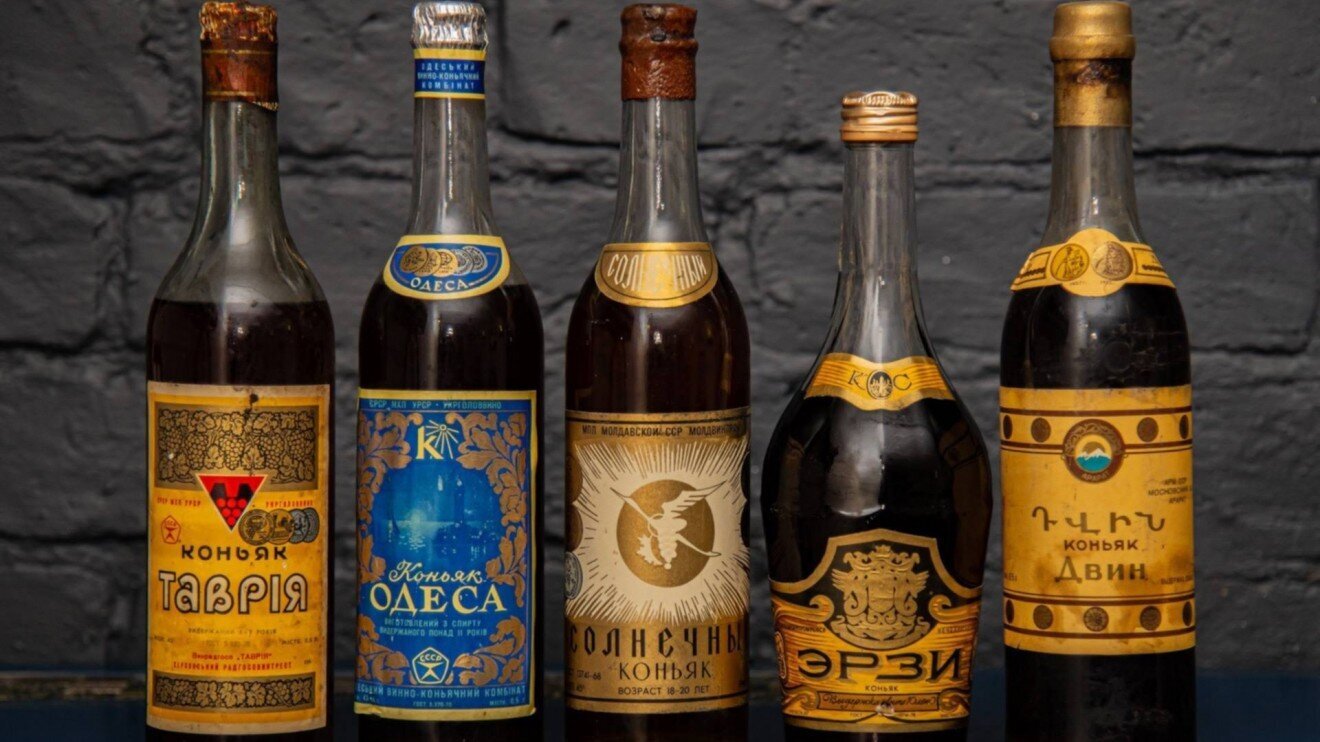
The expression "klopovnik" ("bedbug den") has several meanings in Russian, all tied to one shared feature — a sharp, distinctive smell. The word is applied to plants, to drinks, and even to rooms. But it gained its greatest fame in reference to cognac, becoming a kind of quality marker for Soviet alcoholic products.
Klopovnik as a plant
The word "klopovnik" originally has a botanical meaning. It's a collective folk name for a whole group of plants, united by one shared trait — a sharp, unpleasant smell resembling that of bedbugs. This category includes entirely different, unrelated species.
The best-known plant with this name is pepperweed (Lepidium ruderale), also known as stinkweed. It is an annual or biennial herbaceous plant of the mustard family, widespread across the Northern Hemisphere as a weed. The plant usually grows 10 to 30 centimeters tall, though under favorable conditions it can reach 55 centimeters.
The botanical features of pepperweed
The plant has an upright, densely branched stem covered in short hairs. The lower leaves are pinnately divided with linear lobes; the upper ones are narrow, linear, and entire. The flowers are very small, gathered into a corymb-like raceme that elongates as it fades. The corolla is usually absent or greatly reduced.
The fruits are small pods, 2-2.5 millimeters long, broadly elliptical in shape. The seeds are light brown, elliptical, up to 1.5 mm long. A single plant can produce about a thousand seeds, which explains its wide spread as a weed.
Origin of the name
The plant got its name "klopovnik" ("bedbug plant") from its practical use — it served as a folk remedy against bedbugs. The plant's sharp smell repelled these insects, which was especially relevant in times when bedbugs were a serious household problem.
Pepperweed is a European species that, over time, spread to many temperate regions. In Russia, it is found across almost the entire European part of the country, in southern Siberia, in the Ciscaucasia, and in the north up to the Arctic Circle. It grows as a ruderal plant along roadsides and other disturbed ground in the forest zone, and on saline soils in the steppe zone. It was introduced to North America, Africa, and Australia, where it has naturalized.
Its value as forage
Interestingly, despite its unpleasant smell, pepperweed has a certain value as forage. In spring and summer, camels eat it readily, goats and sheep eat it adequately, and horses and pigs eat it poorly. When pastures burn out, pepperweed stays green and is eaten by sheep, but the meat of animals that have eaten it takes on an unpleasant smell that isn't removed even by boiling or frying.
An interesting experiment was carried out with rabbits: one group was given a thousand grams of hay and 30 grams of pepperweed seed; a second, 100 grams of hay, 100 grams of beets, and 30 grams of oat seed; a third, a thousand grams of hay and 100 grams of beets. Over 20 days, the first group gained 128.3 grams; the second, 47.5 grams; while the third lost 130.7 grams. This showed pepperweed to be one of the best forage plants for rabbits.
Klopovnik as slang
In colloquial speech, "klopovnik" is also used for rooms heavily infested with bedbugs. This usage was especially common in prison slang, referring to cells or transit points swarming with these insects.
The term gained its greatest fame, however, as an epithet for cognac with an unpleasant smell. And here begins a separate story, tied to the quality of Soviet alcoholic products.
Why cognac smells of bedbugs
Descriptions of cognac's aroma as resembling the smell of bedbugs can be found as far back as 18th- and 19th-century Russian literature. In those days, bedbugs were frequent "guests" in homes, breeding in clothing, furniture, and other belongings. If a bedbug is crushed, it gives off a characteristic unpleasant smell, with notes of old walnut, wilted cilantro, or rotting raspberries.
So where could such an aroma have come from in cognac? Certainly not from bedbugs getting into the barrels. The causes were purely technological, tied either to violations of the production process or, conversely, to the particulars of long aging.
Causes of the "bedbug" smell
Cognac could acquire this distinctive aroma for several reasons:
- The wrong choice of wood: if cognac was aged in barrels made not from oak but from other kinds of wood, this could give the drink undesirable notes.
- Violated aging conditions: humidity too high or too low in the cellar, incorrect temperature — all of this could negatively affect the formation of the cognac's bouquet.
- The addition of flavoring agents: when a producer added flavorings to cognac that clashed with the natural grape distillate, this could create unpleasant combinations in the aroma.
- Failure to observe aging periods: if the distillate was aged for only a year and a half to two years, instead of the required three, it wouldn't have time to develop the proper bouquet, and could carry harsh, unpleasant tones.
- Poor barrel preparation: oak barrels that hadn't been properly treated could saturate the product with an excess of tannins, giving the cognac a coarse, sharp aroma.
The paradox of old cognacs
There was also an opposite explanation for the "bedbug" aroma, tied not to low quality but to an exceptionally high one. Top-category Soviet cognacs could be aged 20, 30, 50, or even 60 years. Unique varieties of oak and special techniques were used for such long aging.
With very long contact with the wood, cognac absorbed a large amount of tannins, sometimes acquiring an astringent taste and an aroma with a distant hint of crushed bedbugs. It's important to note that this smell wasn't harsh or unpleasant — it simply bore some resemblance to the insect's odor, showing up as one of many notes in a complex bouquet.
So the "bedbug" smell could be a sign of either very bad or very good cognac. The difference lay in the intensity and character of the aroma: in a low-quality product it was sharp and dominant; in an aged, elite one, a barely perceptible nuance within a many-layered bouquet.
Soviet cognacs: mass production and its consequences
The Soviet Union developed its own particular culture of cognac production and consumption. On the one hand, there were remarkable examples of the very highest quality, which won gold medals at international competitions. On the other hand, mass production gave rise to a great many drinks of dubious quality.
The problems of mass production
The main problem with Soviet cognac production was the attempt to meet enormous demand with limited production capacity and raw material. This led to various technological shortcuts and violations:
- Accelerated aging: underripe grape product was placed in barrels or vats with chipped wood, making the maturation process artificial and sped up. This inevitably affected the quality of the bouquet.
- The use of additives: the lack of color in such a quick-aged drink was masked with food additives, and its smell was "refined" with synthetic flavorings.
- Insufficient barrel treatment: under mass production, it wasn't always possible to properly prepare oak barrels, causing the cognac to become oversaturated with tannins.
- Violation of distillation technology: distilling at an excessively high temperature made the drink stronger, but lost the subtle, barely perceptible notes of taste and aroma.
The result of all these violations was that a significant share of mass-produced Soviet cognacs really did have a harsh, unpleasant smell, earning the folk nickname "klopovnik." The characteristic "candy-like" aroma of cheap cognac, created by synthetic additives, did nothing to help either.
The culture of consumption
It's no surprise that a particular culture of drinking cognac arose in Soviet times, mentioned in the novel: the drink was heavily chilled in the refrigerator and eaten with lemon. These measures helped mask the unpleasant smell and taste of a low-quality product. Cold reduced the volatility of the aromatic compounds, and lemon overrode the aftertaste.
Such a way of drinking would have been sacrilege for genuine quality cognac, whose bouquet unfolds at room temperature and requires no "masking" at all. But for the mass-produced output of the 1970s and '80s, it was the only way to make the drink even somewhat palatable.
Elite Soviet cognacs
For all the problems with mass production, the USSR also produced truly outstanding cognacs, highly valued both at home and abroad. The main centers of quality cognac production were the Armenian SSR, the Georgian SSR, the Moldavian SSR, the Azerbaijan SSR, and the Dagestan ASSR.
Armenian cognacs
Armenia was, and remains, the main center of cognac production in the post-Soviet space. The tradition of cognac-making there goes back to tsarist times, when the Shustov trading house actively exported its products to Europe.
After the revolution, the "Ararat" Wine-and-Cognac Trust was formed, uniting the main production facilities. The jewel of the trust was the Yerevan Cognac Factory (YCF), which produced most of the best-known brands of Armenian cognac. The blends included spring water from the Katnaghbyur source near Yerevan, giving the drinks a distinctive softness.
Otborny ("Select") — one of the oldest brands, produced since 1901. This is a vintage KV-category cognac (aged cognac), made from spirits aged 6 years. It had a golden color, 42% alcohol, and was awarded three gold medals.
Yubileiny ("Anniversary") — a vintage KS-category cognac (old cognac), produced since 1937. Made from spirits aged over 10 years. It had a dark golden color with a brown tint, and 43% alcohol. A collector's variant was produced by aging the finished cognac an additional 10 years in oak barrels.
Armenia — a vintage KS-category cognac, produced since 1940. Made from spirits aged over 10 years, from European grape varieties. It had a dark golden color, a harmonious bouquet with a pronounced vanilla note, and 45% alcohol. Awarded 5 gold, 4 silver, and bronze medals.
Dvin — a vintage KS-category cognac, produced since 1945. Made from spirits aged 10 years. It had a dark golden color and high strength — 50%. According to legend, it was one of Winston Churchill's favorite drinks. Awarded 10 gold medals.
Prazdnichny ("Festive") — a vintage KS-category cognac, produced since 1957. Made from spirits aged more than 15 years. It had a golden color and 42% alcohol. Awarded 10 gold and 2 silver medals.
Nairi — one of the best Armenian cognacs, produced since 1965. Made from spirits aged 20 years. It had a dark amber color, a bouquet with a vanilla note, and 41% alcohol. Awarded 2 gold and 1 silver medal.
Akhtamar — a vintage KS-category cognac, produced since 1967. Made from spirits aged 10 years. It had a golden color and 42% alcohol. Awarded 3 gold medals.
Vaspurakan — the "youngest" of the Soviet Armenian cognacs, produced since 1980. Made from spirits aged 18 years. It had a dark golden color and 40% alcohol.
Besides these vintage cognacs, the more affordable "Ararat," with various numbers of stars (3, 4, 5), was widely available, along with the anniversary editions "30 Years," "40 Years," "50 Years," and simply "Yerevan."
Georgian cognacs
Georgia, too, had a long tradition of cognac production, tracing back to the work of David Sarajishvili.
Cognac OS (Ochen' Stary, "Very Old") — the oldest Georgian brand, created by David Sarajishvili and produced since 1901. This is a vintage KS-category cognac, made from spirits aged 12 years. It had a dark golden color, a bouquet of vanilla notes, and 43% alcohol. Awarded 6 gold medals.
Kazbegi — a vintage KS-category cognac, produced since 1943. Made from spirits aged 10 years. It had a golden color, a rich and complex bouquet, a soft taste, and 45% alcohol.
Vardzia — a vintage KS-category cognac, produced since 1966 in honor of the 800th anniversary of the Georgian poet Shota Rustaveli. Made from spirits aged 20-30 years. It had a golden color, a soft, harmonious taste, a subtle bouquet with a vanilla note, and 43% alcohol. Awarded 5 gold medals.
Vartsikhe — a vintage KV-category cognac, produced since 1954. Made from spirits aged 6-7 years. It had a light golden color, a full and soft taste, and 42% alcohol. Awarded 3 gold and 2 silver medals.
Gremi — a vintage KVVK-category cognac (Aged Cognac of the Highest Quality), produced since 1961. Made from spirits aged 8-9 years. It had a light golden color, a soft, pleasant taste, and 43% alcohol. Awarded 4 gold and 2 silver medals.
Eniseli — the pride of Georgian cognac production. A vintage KS-category cognac, released in 1946 to mark the 25th anniversary of the establishment of Soviet power in Georgia. Made from spirits aged 12-15 years, from grapes grown in the Eniseli district. It had a dark golden color and 43% alcohol. Awarded 9 gold and 3 silver medals, and received the State Quality Mark. The author of its production technology, V.D. Tsitsishvili, was awarded the Stalin Prize in 1947.
Tbilisi — a vintage KS-category cognac, produced since 1958 to mark the city's 1,500th founding anniversary. Made from spirits aged 17 years. It had a dark golden color, a soft, harmonious taste, a complex bouquet with pronounced resinous-vanilla notes, and 43% alcohol. Awarded 8 gold medals and a silver medal. It was named best at the 1966 International Leipzig Fair and awarded a gold medal.
How to judge cognac quality
Being able to tell a quality cognac from a "klopovnik" was an important skill in Soviet times, and remains useful today. There are several ways to assess a drink's quality.
Assessing the aroma
Aroma is the main indicator of a cognac's quality. For a proper assessment, the drink is poured into a glass, filling it about a third full, and left to stand for 5-10 minutes so that excess volatile compounds can dissipate.
The assessment is done in three stages, or "three waves":
- The first wave is sensed from 5-10 centimeters away from the rim of the glass. Here, vanilla comes to the fore — if the cognac is of good quality.
- The second wave is assessed close to the glass. Here, fruity and floral notes can be detected.
- The third wave reveals the woody and spicy nuances that aging gives the spirit. At this stage, the glass is held at some distance from the nose, to assess the drink as a whole.
The aroma of a good cognac changes and unfolds fully only after the drink has stood in the glass for 10-15 minutes. The smell of a poor-quality product stays the same, carrying harsh alcoholic or chemical notes, and the characteristic "candy-like" tone of synthetic flavorings.
Signs of low-quality cognac
- A sharp, unpleasant smell, reminiscent of crushed bedbugs
- A dominant "candy-like" aroma of artificial additives
- A lack of complexity in the bouquet, a one-dimensional smell
- Harsh alcoholic or chemical notes
- An unpleasant aftertaste
- A smell that doesn't change over time in the glass
Signs of quality cognac
- A multifaceted, evolving aroma
- The presence of floral, fruity, woody, and spicy notes
- A harmonious bouquet with no harsh tones
- A soft, velvety taste
- A pleasant, long finish
- An aroma that unfolds gradually in the glass
Genuine French cognac
To complete the picture, a few words are in order about genuine French cognac, which Anton compares his "Otard" to in the novel's scene.
Cognac is not simply a strong grape-based spirit, but a product with a strictly defined geographic origin and tightly regulated production technology. The very name "cognac" is protected under French law, and can be applied only to drinks produced in the department of Charente, in the region around the town of Cognac in western France.
The six subregions of the cognac region
The cognac-producing territory is divided into six subregions, or crus, differing in soil and climate:
- Grande Champagne — the most prestigious subregion. Its spirits are delicate and light, with predominantly floral aromas.
- Petite Champagne — spirits similar to Grande Champagne, but with more pronounced fruity notes.
- Borderies — the smallest subregion. Its spirits are valued for a rounded, soft taste and a rich floral aroma, especially violet.
- Fins Bois — a subregion stretching along the Atlantic. Its spirits reach maturity quickly, and their proximity to the ocean gives them notes of seaweed, iodine, sea salt, and minerality.
- Bons Bois — the largest cru. Its spirits have a rounded, rich taste with notes of fresh grape, and a fruity bouquet with light floral aromas.
- Bois Ordinaires — its spirits are known for their directness and sharpness. They are self-assured even when young, carrying grape notes over a light sea aroma.
The production of French cognac
Cognac begins with grapes — the ideal varieties have high acidity and low sugar. The undisputed leader is Ugni Blanc (known in Italy as Trebbiano), accounting for 98% of the plantings in the region. The grapes are made into white wine, which then undergoes double distillation in a Charentais pot still, heated over an open flame.
The resulting cognac spirits (eaux-de-vie) must spend at least two years in oak barrels. Moreover, the barrels must be new, toasted, of 270 to 450 liters in volume, and made only from oak felled in the forests of Limousin or Tronçais.
The classification of French cognacs
Cognacs are classified by the age of the youngest spirit in the blend:
- VS (Very Special) — a minimum of 2 years' aging
- VSOP (Very Superior Old Pale) — a minimum of 4 years' aging
- XO (Extra Old) — a minimum of 10 years' aging
- XXO (Extra Extra Old) — a minimum of 14 years' aging
Modern French cognacs are drinks with a multifaceted aroma, including fruity, floral, woody, and spicy notes. Young cognacs (VS, VSOP) have a lighter, fresher smell, with predominantly floral and fruity notes. Aged cognacs (XO and older) acquire a complex bouquet with notes of tobacco, leather, sandalwood, and overripe tropical fruit.
It is precisely such cognacs — like the "Otard" mentioned in the novel, one of the oldest cognac houses, founded in 1795 — that stand in complete contrast to the Soviet mass-produced "klopovnik." Their aroma is often compared to perfume, for the diversity of its notes and undertones.
The current situation
Today it can be said with confidence that the era of cognacs smelling of bedbugs is a thing of the past. Modern producers, whether in Russia and the countries of the former USSR or in France, carefully observe production technology. Oak barrels are properly treated, aging periods are respected, and quality is controlled at every stage.
Modern cognacs, when properly aged and produced according to correct technical standards, should not have a sharp, unpleasant smell. A quality drink is marked by a complex bouquet with notes of fruit, chocolate, vanilla, spice, tobacco, pastry, or walnut — but never bedbugs.
If a modern consumer comes across a cognac with a sharp "bedbug" smell, this is an unambiguous sign of low product quality. Such a drink could be the result of a violated production process, improper aging, or the addition of foreign ingredients that shouldn't be present in natural cognac. Consuming such a product is not advisable — it could cause poisoning or an allergic reaction.
Conclusion
The history of the term "klopovnik," as applied to cognac, is the history of Soviet mass alcohol production, where high technological standards were often sacrificed for volume. Alongside the outstanding vintage cognacs that won international acclaim, there existed a mass of low-quality products with a characteristic unpleasant smell.
This smell, which really did resemble crushed bedbugs, arose from various technological violations: improper barrel treatment, accelerated aging, the use of synthetic additives, and violations of temperature control. The only way to make such a drink even somewhat tolerable was heavy chilling and a slice of lemon.
Interestingly, a certain "bedbug" undertone could also be present in very old, elite cognacs of many years' aging — but there it was a barely perceptible nuance within a complex, many-layered bouquet, not a dominant, harsh tone.
Today the situation has changed radically. Modern cognacs, both domestic and imported, are produced in compliance with every technological requirement. The "bedbug" smell has gone the way of the Soviet era of shortages and mass production at any cost.
The term "klopovnik" itself remains in the Russian language as a reminder of a time when a drink's quality had to be judged literally by its smell, and when a genuine bottle of French cognac appearing on the table — as in the novel's scene set in 1993 — was a real event, marking the line between "the sticks" and sophistication, between a mass-produced "Napoleon" out of a Polish shed and an "Otard" shipped directly from the Cognac region.