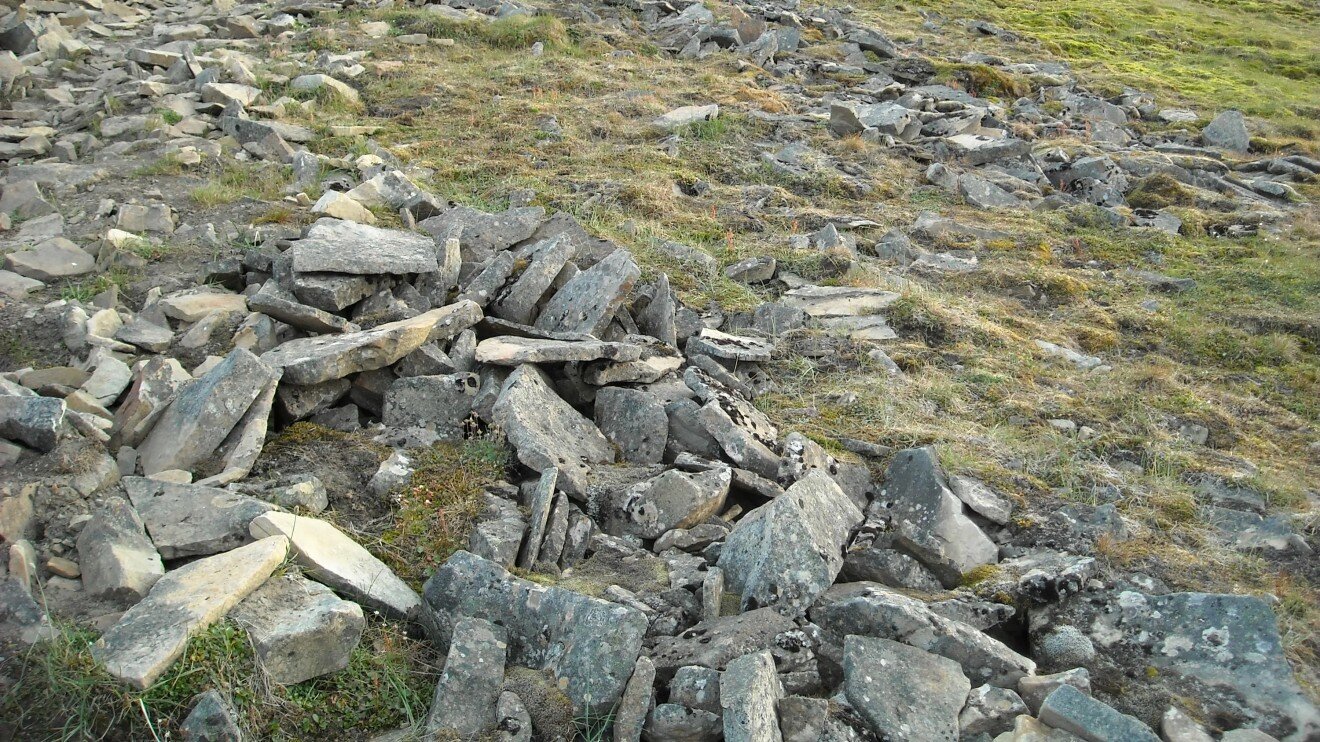
Kurums are distinctive boulder fields that form on mountain slopes through the weathering of bedrock.
In geology and physical geography, the term «kurum» (from the Evenki word for «boulder field») refers to accumulations of angular rock fragments of various sizes covering mountain slopes and the bases of elevations.
How Kurums Form
Kurums form mainly under sharply continental climate conditions, with significant daily temperature swings that drive frost weathering. Water seeping into microcracks in rock expands when it freezes, breaking the rock apart into fragments.
Kurums form especially actively in permafrost regions, where the seasonal thawing of the upper soil layer creates favorable conditions for the slow downhill movement of rock material.
Classification and Types
By pattern of movement, kurums are divided into:
- Mobile kurums — actively moving stone streams, shifting at up to several tens of centimeters a year
- Stabilized kurums — relatively motionless formations, often covered in lichen and moss
By morphology, they include:
- Stone seas — broad, flat boulder fields on gentle slopes and plateaus
- Stone rivers — tongues of debris stretched along a slope
- Stone streams — elongated accumulations of debris in gullies and valleys
Their Importance for Nature and People
Kurums play an important role in high-mountain ecosystems, creating unique habitats for specialized plant and animal species. They also serve as indicators of climate change and weathering processes in mountain regions.
In practical terms, kurums pose real difficulties for building roads, pipelines, and other engineering structures in mountainous terrain. Crossing kurums is difficult and dangerous for hikers and climbers, given the instability of the rocks and the risk of injury.
Interesting fact: Some kurums can make distinctive sounds as they shift or as the temperature changes — anywhere from a light crackle to a booming rumble — which gave rise to various beliefs and legends among the peoples who inhabit mountain regions.
Where Kurums Occur
The most typical regions where kurums form:
- The mountains of Siberia and the Russian Far East
- The Altai
- The Sayans
- The Urals
- Transbaikalia
- The mountain systems of Central Asia
Size and Composition
Fragments in kurums vary widely in size:
| Category | Size (cm) |
|---|---|
| Small | 10-30 |
| Medium | 30-70 |
| Large | 70-150 |
| Boulders | >150 |
The composition of kurums depends on the local bedrock — most often granite, gneiss, sandstone, quartzite, and other durable rock types.