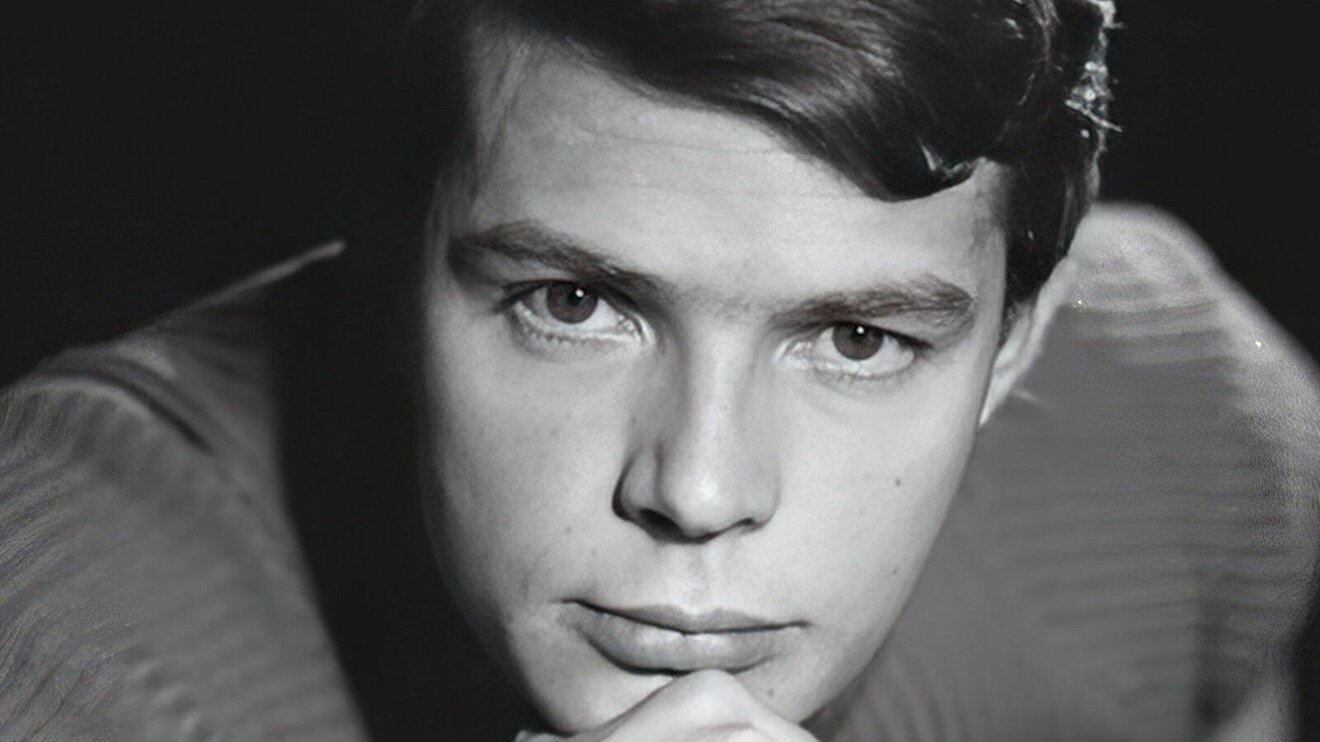
People’s Artist of Russia, stage and film actor, painter, poet
A Brief Biography
Lev Georgievich Prygunov was born April 23, 1939, in Alma-Ata. His father, Georgy Prygunov, a botanist and naturalist and veteran of the Great Patriotic War, died tragically on a solo expedition in 1949. His mother, Tamara Nikolayevna, taught Russian language and literature at a secondary school. On his mother’s side, his grandfather was a priest who was killed in 1918.
From childhood, Lev showed an interest in the natural sciences — drawn to botany and ornithology, and learning to shoot under his father’s guidance. After school, he studied biology for two years at the Alma-Ata Pedagogical Institute, then radically changed course.
Theater Training and Early Career
In 1962, Prygunov graduated from the Leningrad Institute of Theatre, Music, and Cinematography, studying under the celebrated teacher T. G. Soinikova. Already in his third year, he began appearing in films, foreshadowing his future screen career.
His stage career developed in stages: in 1963–1964 he worked at Moscow’s Central Children’s Theatre, then moved to the Stanislavsky Drama Theatre. The most significant period was his work at the Film Actor’s Studio Theatre from 1969 to 1992 — it was here that his distinctive acting style took shape.
Film Fame
By 1993, Lev Prygunov was already well known to Soviet audiences. His charismatic roles as villains and adventurers brought him particular popularity. The actor had a rare gift — he could play negative characters in a way that made audiences sympathize with them. His characters were complex, multifaceted, far from primitive villains.
Audiences especially remembered his role as Bonivur — a charming rogue and adventurer, which became the actor’s signature part. That role showed Prygunov’s ability to find the human element in the most morally ambiguous characters. Unlike many of his peers, he didn’t chase ostentatious luxury and didn’t flaunt imported goods — even playing thugs and hooligans, he remained natural and lifelike.
Personality and Character
By the early 1990s, Prygunov had established himself as a vivid creative personality. He was known for his intelligence and education — he was friends with Joseph Brodsky even before the poet’s emigration, kept up correspondence with him, and even stayed with him in the U.S. This friendship marks the actor as a man of high culture, capable of sustaining relationships with outstanding figures in the arts.
In daily life, Prygunov was known for his modesty and lack of showy luxury. That was especially valued in an era of chronic shortages, when many people were eager to display access to imported goods. The actor stayed true to the principles of the Soviet intelligentsia, for whom inner substance mattered more than outward shine.
Creative Range
Beyond acting, by 1993 Prygunov had already spent more than twenty years painting. He started painting in 1971, having learned the basics as a child. His first solo exhibition took place in 1983, evidence of how seriously he took the visual arts.
Prygunov also wrote poetry, rounding out the image of a multifaceted creator. This versatility — actor, painter, poet — was characteristic of members of the Soviet creative intelligentsia, who aspired to well-rounded personal development.
Family Life by 1993
The actor’s personal life held both happiness and tragedy. His first wife, Eleonora Romanovna Umanets, died in a car accident in Riga in 1977. That marriage produced a son, Roman (born 1969), who later became a film director.
In 1986, the actor entered a second marriage, to Olga, who worked as an assistant director. By 1993, their family life was well established, giving Prygunov stability and support in his creative work.
His Standing in the Film Industry of 1993
1993 was a pivotal year for Russian cinema. The Soviet studio system was collapsing, and new opportunities for international collaboration were opening up. Prygunov was at the forefront of these changes — from the 1990s on, he began appearing in foreign, mostly American, films.
His type — the charismatic «Russian villain» — turned out to be in demand in Hollywood cinema. That let the actor not only support himself financially in difficult times, but also showcase Russian acting craft to a Western audience. Prygunov became one of the first Soviet actors to work successfully in international film.
Worldview and Public Stance
By the early 1990s, Prygunov had become a committed anti-communist. His political views were radical — he considered Soviet power a catastrophe for Russia. This stance was typical of part of the creative intelligentsia, disillusioned with the Soviet project.
Such views didn’t stop the actor from working in Soviet cinema and enjoying audience popularity. Prygunov knew how to separate personal conviction from professional work, a sign of his maturity as both a person and a professional.
Craft and Reputation
By 1993, Prygunov was recognized as one of the most vivid character actors in Soviet cinema. He stood out for his ability to create memorable characters even in small roles. The actor had a special gift — he could play antiheroes in a way that made audiences feel for them.
Prygunov was never a «pretty boy» in the traditional sense, but his charisma and acting skill made him incredibly compelling on screen. He knew how to find the human element in the most unappealing characters, which won him the love of audiences across generations.
The Cultural Context of the Era
1993 was a time of radical change in Russia. The familiar world was collapsing, values and reference points were shifting. In that situation, actors like Prygunov became symbols of continuity — a link between the Soviet past and an uncertain future.
His popularity with the older generation (like the novel’s protagonist’s mother) rested not only on his acting skill but on his human qualities. In an era when many people chased outward shine, Prygunov stayed true to principles of authenticity and naturalness.
Influence on His Contemporaries
Prygunov was more than an actor — he was a cultural phenomenon. His roles shaped audiences’ ideas about masculinity, nobility, and human dignity. Even playing negative characters, he demonstrated the complexity of human nature.
Meeting a man like that at a banquet at TsDKh (the Central House of Artists) would have been an event for any film fan. Prygunov was known for his openness and readiness to talk with people, which made him especially appealing to Moscow’s creative intelligentsia.
His Place in the History of Russian Cinema
By 1993, Lev Prygunov had already entered the history of Russian film as the creator of a unique gallery of character roles. His acting style — a blend of realism with romantic charm — became a model for many of his peers.
The actor managed to avoid the clichés and stereotypes typical of many performers of villain roles. His characters always remained living people, not schematic vessels of evil. That humanity is what made Prygunov a favorite of audiences across generations.
Conclusion
In 1993, Lev Georgievich Prygunov was at the peak of his creative maturity. At 54, the actor had enormous experience, public and critical acclaim, and had successfully adapted to the changing conditions of Russian cinema. His encounter with the novel’s protagonist at a banquet at TsDKh symbolizes the connection between generations and the continuity of cultural tradition in a difficult era of change. Prygunov embodied the best qualities of the Soviet creative intelligentsia — professionalism, humanity, and fidelity to high artistic principles.