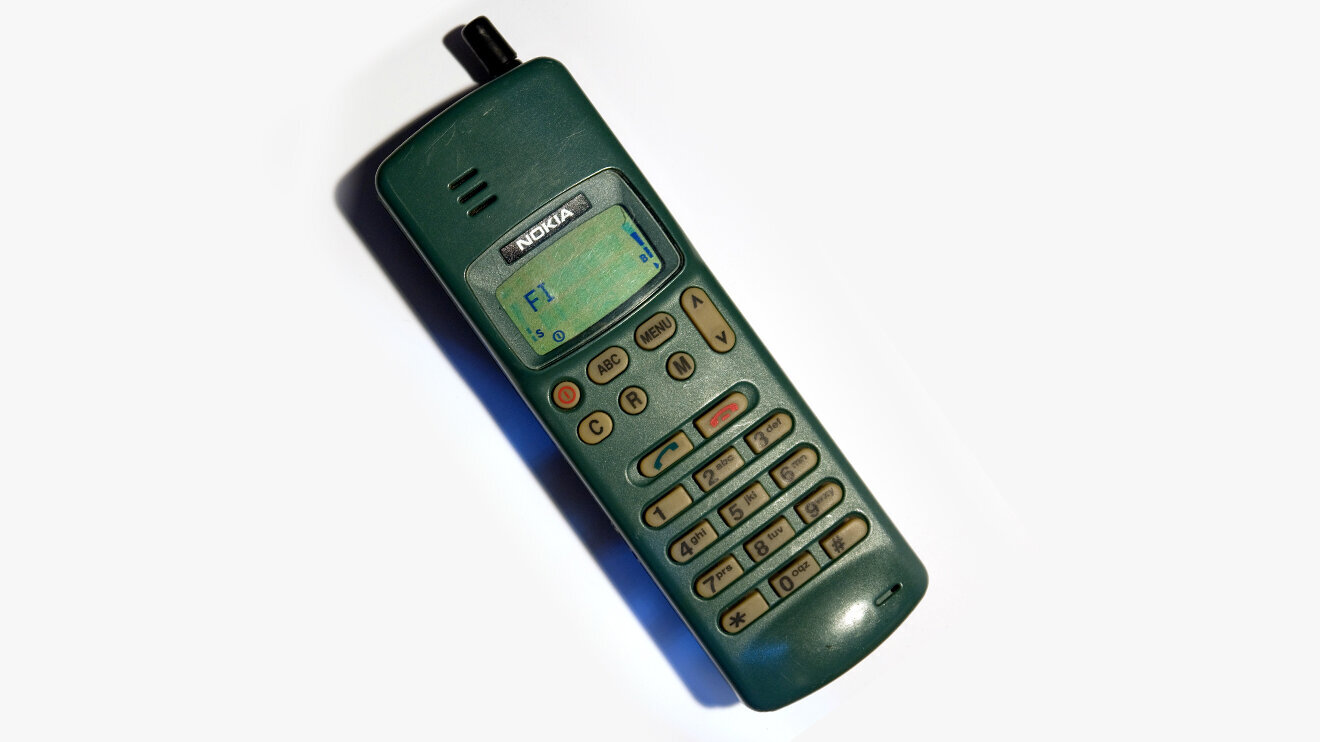
The Nokia 101, launched in 1992, was one of the first genuinely pocket-sized GSM-era mobile phones, and a strikingly rare sight in Russia in 1993, when the country’s first GSM networks were only just being switched on in Moscow and St. Petersburg. Before phones like it, mobile connectivity in the USSR and early post-Soviet Russia typically meant a Mobira-branded car phone — bulky Nokia-made units, often literally carried in a briefcase, tethered to a car battery or a hefty external pack, that had circulated among Soviet officials and enterprises since the 1980s. Owning any mobile phone at all in 1993 was a mark of serious status, but insiders already understood the joke the narrator is let in on here: contrary to the instinct that bigger meant more important, the smaller and more inconspicuous the handset, the higher the owner’s actual standing.
The Nokia 101: a Revolutionary Phone of the Early 1990s