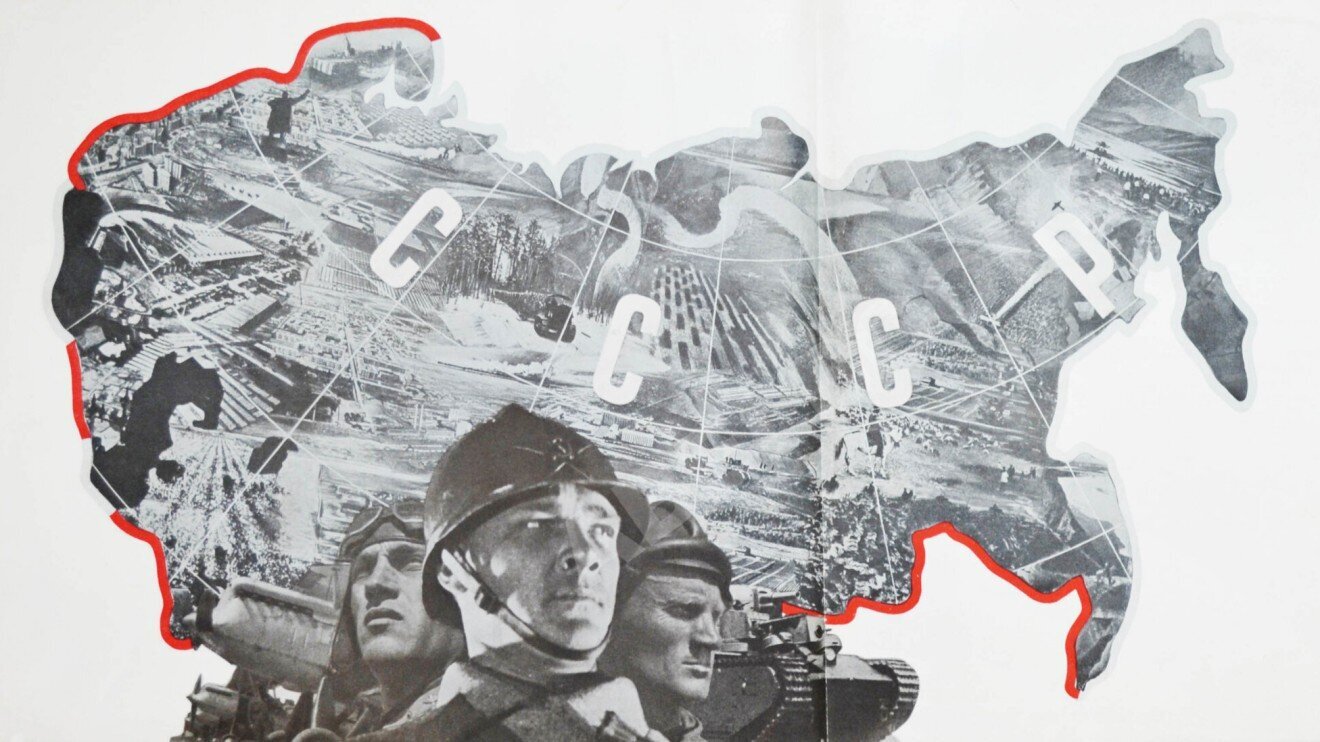
The poem «February,» written by Samuil Yakovlevich Marshak in 1926, became one of the poet’s best-known works for children. These eight lines, simple in form but rich in meaning, fuse a winter landscape with patriotic themes, painting a vivid picture of Russia in February.
The Poem
The winds blow wild in February,
Howling loud in every flue.
A light snow-drift, like a serpent,
Skims across the ground and flew.Above the ancient Kremlin wall,
Squadrons of planes cut the sky.
Glory to our native army
On the day it first stood by!
Historical Context
1926 was a turning point in Marshak’s career. The poet firmly established himself as a children’s writer, producing several landmark works during this period. «February» appeared as Soviet children’s literature was taking shape, at a time when authors faced the task of raising a new generation of citizens for the young republic.
The poem was written eight years after the end of the Civil War, when the country was actively building a new life. Marshak, who had lived through all the hardships of the revolutionary era — from working in Yekaterinodar under the pen name «Doctor Friken» to organizing children’s institutions in the postwar years — understood well the importance of patriotic upbringing.
Artistic Analysis
Structure and Composition
The poem consists of two quatrains, each forming a complete image. The first paints a winter landscape; the second, a solemn military-parade scene. This structure creates a cinematic shift of scenes — from a wide shot of nature to a close-up of a specific event.
The poem’s rhythm is built on trochee with pyrrhic substitutions, lending the text an energetic, march-like quality. The rhyme scheme is cross-rhymed (ABAB), simple and memorable — especially important for children’s poetry.
Imagery
The central image of the first stanza is the drifting ground snow, which «skims across the ground like a serpent.» The image works on several levels: on one hand, it’s a precise observation of a natural phenomenon; on the other, a metaphor for dynamism, movement, a life force that doesn’t stop even in the depths of winter.
The image of the serpent is ambivalent in Russian culture, but in the context of Marshak’s children’s poem, it carries no negative connotation. The «little snake» of drifting snow is playful, lively — it animates the winter landscape, gives it motion.
The sound imagery of the first stanza («blow,» «howl») conveys the force of February winds, creating an atmosphere of a harsh but majestic Russian winter. The alliteration reinforces the effect through sound.
The Turn from Nature to Society
The second stanza radically shifts the poem’s tone. The poet moves from natural imagery to a social theme. The Kremlin wall — a symbol of Russian statehood — becomes the backdrop for a display of the young Soviet state’s military might.
«Squadrons of planes» is an especially striking image for the 1920s, when aviation was still a relatively new and thrilling phenomenon. For children of that era, planes represented a symbol of technological progress and national strength.
The Patriotic Element
The poem closes with a direct patriotic call: «Glory to our native army / On the day it first stood by!» These lines refer to the celebration of Red Army Day, marked on February 23. Established in 1922, the holiday was already firmly fixed on the Soviet calendar by 1926.
Marshak masterfully wove together the natural and the patriotic, showing that love of the homeland includes both love of its nature and pride in its achievements. The February frost doesn’t get in the way of the celebration — if anything, it underscores the people’s resilience and strength.
Its Place in Marshak’s Body of Work
«February» is characteristic of Marshak’s creative method in the mid-1920s. During this period, the poet actively developed the genre of civic lyric poetry for children, combining accessible language with serious content. Similar themes appear in his other works from this period.
The poem shows the hallmarks of Marshak’s style: precision of detail, vivid imagery, musicality of verse, and the ability to talk to children about serious things in simple, clear language. The poet doesn’t simplify the content, but makes it accessible without lowering its artistic level.
Its Pedagogical Function
As an educator and theorist of children’s literature, Marshak understood well the educational function of poetry. «February» doesn’t just introduce children to natural phenomena and expand their vocabulary — it also shapes their emotional relationship to their homeland.
The poet avoids direct moralizing, letting patriotic feeling arise naturally, through the perception of concrete images. Marshak’s method — from the particular to the general, from observation to generalization — proved highly effective.
Biographical Context
By 1926, Samuil Yakovlevich Marshak (1887–1964) already had a rich life behind him. Born to a Jewish family in Voronezh, he received an excellent education, studied literature at the University of London, and lived through the revolution and the Civil War.
In Yekaterinodar, in 1919–1920, Marshak worked for the newspaper «Utro Yuga» under the pen name «Doctor Friken,» criticizing the Bolsheviks. After Soviet power took hold, he managed to adapt to the new conditions, finding his calling in children’s literature and theater.
Moving to Petrograd in 1922, Marshak threw himself energetically into building a new children’s literature. He founded the children’s almanac «Vorobey» («Sparrow,» later «The New Robinson»), and brought in talented writers, among them Boris Zhitkov, Vitaly Bianki, and Yevgeny Schwartz.
Coming Into His Own as a Children’s Writer
1923–1926 was a period of intense creative growth for Marshak as a children’s poet. This was when «Children in a Cage» (1923), «The Tale of the Foolish Little Mouse,» «The House That Jack Built,» and other works appeared — works that defined the face of Soviet children’s poetry.
«February» fits naturally into this period, showing the poet’s skill at creating vivid, memorable images capable of both entertaining a child and shaping their worldview.
Literary Tradition and Innovation
In «February,» Marshak drew on the traditions of Russian landscape lyric poetry, adapting them for a young audience. The imagery of winter, wind, and drifting snow traces back to classic examples of Russian poetry, but takes on new resonance in Marshak’s hands.
The poet’s innovation lay in fusing nature lyricism with contemporary themes. Planes over the Kremlin are an image of a new era, of technological progress, folded naturally into a traditional winter landscape.
The Influence of the English Poetic Tradition
The two years Marshak spent in England (1912–1914) had a significant influence on his poetics. His familiarity with English folk ballads, children’s verse, and the works of Robert Burns enriched the poet’s artistic toolkit.
In «February,» you can see the influence of the English children’s poetry tradition, with its precision of imagery, musicality, and its ability to talk to children as equals, without condescension.
Reception and Influence
«February» quickly became popular and entered the golden fund of Russian children’s poetry. It’s studied in schools and included in countless anthologies and readers.
The image of the snake-like snowdrift became a recognizable poetic symbol that other writers have drawn on. The line «skims across the ground like a serpent» is often cited as an example of a successful poetic metaphor.
Musical Interpretations
The poem’s musicality caught the attention of composers. Songs were written to Marshak’s text and performed by children’s choirs. The poem’s rhythmic structure and march-like character make it especially well suited to musical interpretation.
Conclusion
«February» is a characteristic example of the work of Samuil Marshak, a master of children’s poetry who managed to create a piece that is artistically accomplished, pedagogically effective, and patriotically meaningful all at once.
These eight lines hold a whole world of images and meanings — from precise observation of natural phenomena to the shaping of civic feeling. Marshak showed how to talk to children about serious things — love of homeland, pride in one’s country — in language that’s simple and accessible, but never dumbed down.
Today, nearly a century after it was written, the poem has not lost its relevance. It continues to introduce new generations of children to the beauty of the Russian winter and teaches them to love their homeland, however harsh it may be.
Within Marshak’s body of work, «February» holds an important place as a piece that shows the maturity of the author’s poetic craft and his grasp of what children’s literature is meant to do. It’s a vivid example of how a great poet can create a work that’s accessible to a child, yet still engaging for an adult reader.