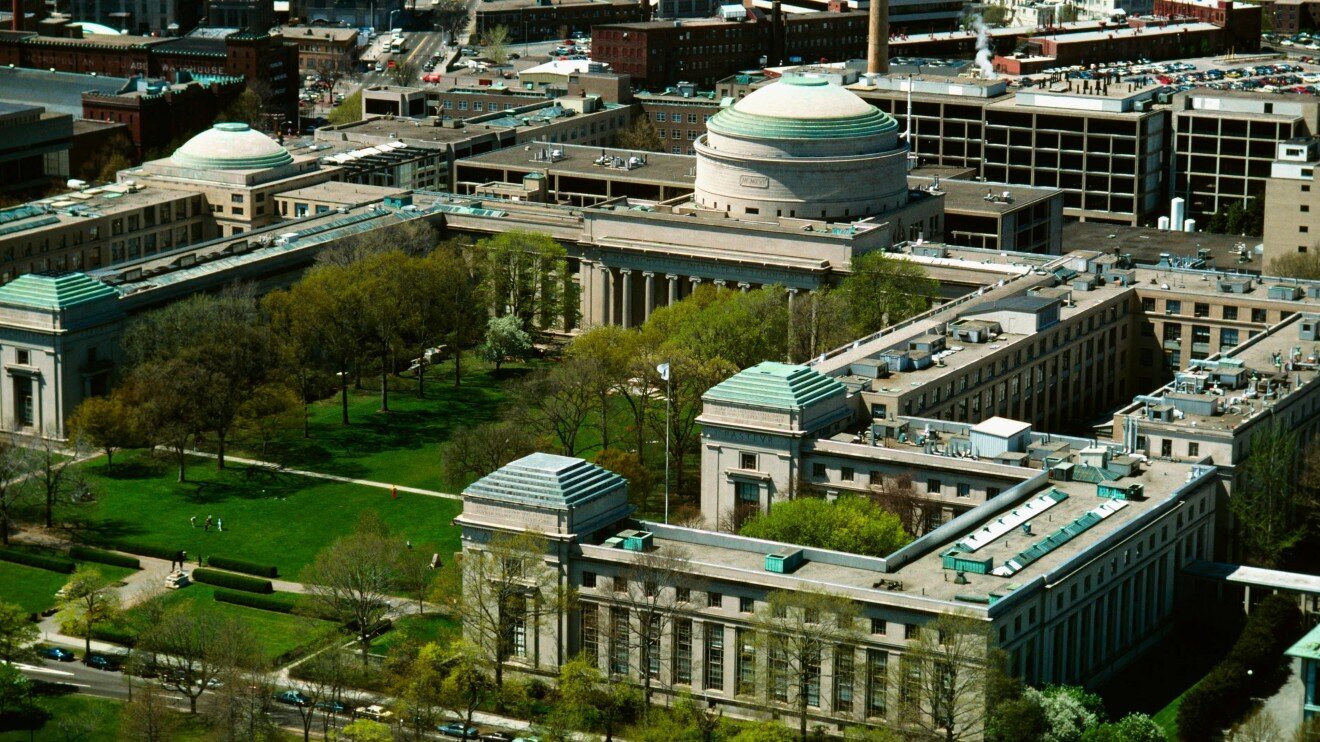
The Massachusetts Institute of Technology (MIT) is one of the most prestigious technical universities in the world, located in Cambridge, a suburb of Boston. By 1993 the institute had already spent more than a century as a symbol of American technological supremacy and innovative thinking.
Location: Cambridge, Massachusetts
Motto: «Mens et Manus» (Mind and Hand)
Students (1993): about 10,000
History and Founding
The institute was founded in 1861 by William Barton Rogers, who sought to create a new form of higher education capable of answering the challenges of rapidly advancing mid-nineteenth-century science. Rogers’s philosophy rested on three principles: the educational value of useful knowledge, the need to learn by doing, and the union of professional and liberal-arts education.
Originally located in Boston and known as «Boston Tech,» the institute moved in 1916 to its current campus on the Charles River in Cambridge. That relocation marked a new era in MIT’s development.
Military Research and the Cold War
MIT played a special role during World War II, when the institute became deeply involved in military research. Its wartime leadership headed the National Defense Research Committee, later the Office of Scientific Research and Development, responsible for the Manhattan Project.
An Interesting Fact: During the Cold War, MIT had more names on President Nixon’s so-called «enemies list» than any other organization, including the institute’s own president and a famous linguistics professor.
MIT by 1993
By the early 1990s MIT held a firm position as a world leader in technological education and research. The institute was a recognized innovator in robotics and artificial intelligence, and its programs in engineering, information technology, physics, chemistry, and mathematics were consistently ranked among the best in the U.S.
Comparison with MIFI
Mentioning MIT in the same breath as MIFI, the Moscow Engineering Physics Institute, in a 1993 context is quite telling. MIFI was one of the most prestigious technical schools in the USSR, training personnel for the nuclear industry and the defense sector. For a Soviet person, especially of the technical intelligentsia, this comparison was the highest praise — an acknowledgment that American MIT stood on the same level as the best Soviet technical institute.
MIT by the Numbers (1993)
- • Dozens of Nobel laureates among graduates and faculty
- • The largest volume of military R&D of any university in the world
- • Consistently ranked in the world’s top five universities
- • A research budget exceeding $400 million a year
Famous Divisions
- • Lincoln Laboratory (military R&D)
- • The Artificial Intelligence Laboratory
- • MIT Sloan School of Management
- • The Media Lab, founded 1985
Culture and Traditions
MIT was known for its distinctive culture. The institute never awarded honorary degrees — the only way to earn an MIT diploma was to work for it. This is where the modern hacker movement and the very term «hacker» were born, and student pranks, known as «hacks,» became legendary. The famous markings on the Harvard Bridge, measured in a student-invented unit of length, still serve as a landmark today.
1993 Context: For the novel’s protagonist, a Russian member of the intelligentsia in the early 1990s, MIT embodied Western technological might and scientific freedom — everything the best of the Soviet scientific-technical intelligentsia had aspired to in the era of perestroika and the USSR’s collapse.