German cars in early-1990s Russia
The early 1990s brought radical change to Russia's auto market. After the fall of the "Iron Curtain" and the start of market reforms, a flood of foreign cars, mostly secondhand, poured into the country. German cars enjoyed particular prestige, earning the collective nickname "bundesmobili" (from the German "Bundesrepublik Deutschland," the Federal Republic of Germany).
Mercedes-Benz automobiles became a genuine symbol of status and prosperity in post-Soviet Russia. They were associated with the new business elite, often called the "New Russians." The street slang of the time produced distinctive nicknames for various Mercedes models, reflecting both their technical designations and the cultural context of the era.
Mercedes-Benz models mentioned in the text
"Murz" (slang for Mercedes)
The origin of the term "murz" is tied to the phonetic resemblance between the brand name "Mercedes" and the word "murza" (a title held by Tatar and Nogai nobility). Another theory holds that the name comes from a shortening of "MERCedes," which was transformed into "murz" in colloquial speech. In the early 1990s, the word was used mainly for the Mercedes-Benz W124, or other popular mid-range models.
"Ruble Forty" (Mercedes-Benz W140)
The Mercedes-Benz W140 was the brand's flagship executive sedan, produced from 1991 to 1998. Its unofficial nickname, "ruble forty," came from combining the word "ruble" with the number "140" (the model's designation). The W140 was the most technologically advanced car of its time, fitted with powerful gasoline engines (including a 6.0-liter V12), a full electronics package, and innovative safety systems. In Russia, this model became a symbol of wealth and power, often driven by senior officials and businessmen.
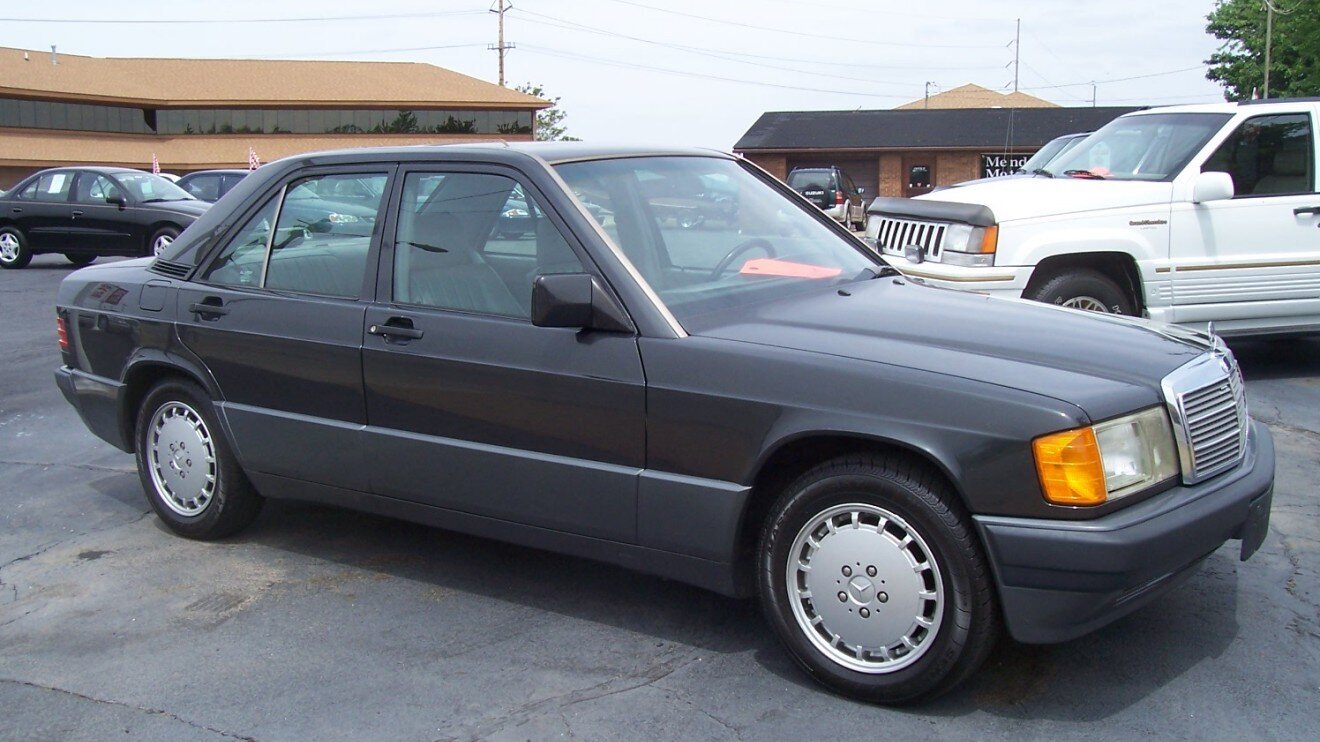
"The One-Ninety" (Mercedes-Benz W201/190)
The compact Mercedes-Benz W201 sedan, officially called the "190," was produced from 1982 to 1993. It was the most affordable model in the Mercedes-Benz lineup at the time, which made it popular among less well-off buyers. The W201 was known for its clean, understated design, high build quality, and reliability. In Russia, the "one-ninety" was often bought as a first mid-range foreign car, within reach for many members of the emerging middle class.
"The One-Twenty-Four" (Mercedes-Benz W124)
The Mercedes-Benz W124 was a mid-size E-Class car produced from 1984 to 1997. This model is considered one of the most reliable and durable in the brand's history, which made it enormously popular in 1990s Russia. The W124 was offered in various body styles: sedan, wagon, coupe, and convertible. Diesel-engine versions were especially prized for their fuel economy and longevity. The "one-twenty-four" became a true legend of Russian roads, a benchmark for reliability and prestige that remained popular even decades after production ended.
Cultural context
German cars, and Mercedes-Benz in particular, were more than just transportation in early-1990s Russia — they were an important sociocultural phenomenon. They symbolized a new era, open borders, and a striving toward Western standards of living. In the popular culture of the time, the image of a businessman in a Mercedes became a settled cliche, reflecting both admiration and society's wariness toward compatriots who had grown rich overnight.
Owning a "Mercedes" was often associated with the criminal world, something reflected in the cinema and literature of the period. At the same time, for many ordinary citizens, a German car remained a symbol of aspiration, a benchmark of quality and engineering excellence set against the products of the domestic auto industry.