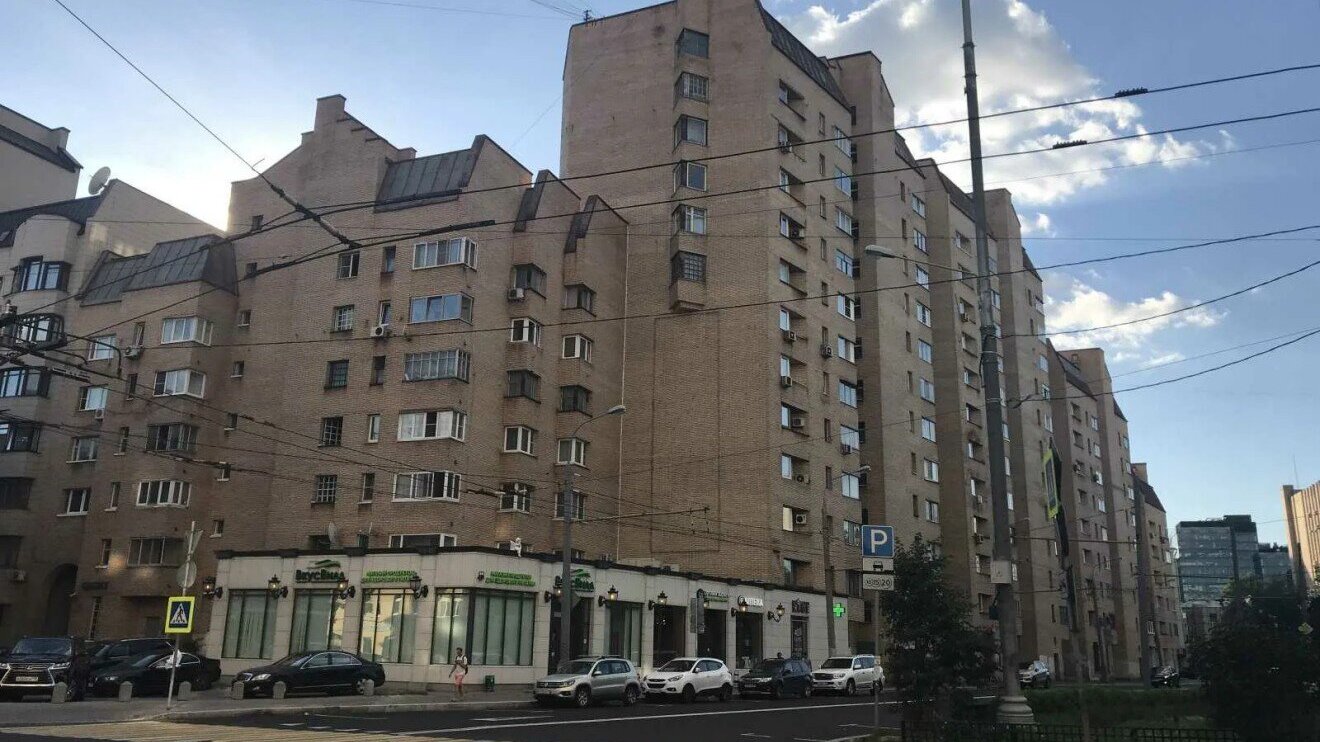
Alexander Nevsky Street, mentioned in the novel, is a small but notable street in central Moscow, located in the Tverskoy District of the Central Administrative Okrug. Spanning only a few hundred meters, it runs between Chayanova Street and Lesnaya Street, placing it within one of the capital's most prestigious districts.
The History of the Name
Until 1952 the street was called Alexandro-Nevskaya, a name it received in the 1880s after the nearby Alexander Nevsky Cathedral, then under construction near Miusskaya Square. Before that, the area was known as the 5th Miussky Proyezd, after the nearby Miussky Field. The street's modern, simplified name honors Prince Alexander Yaroslavich Nevsky (1220-1263), an outstanding military commander and statesman of medieval Rus.
Architectural Character
By the mid-1990s, Alexander Nevsky Street presented a mix of architectural eras. Stalin-era buildings from the 1930s stood alongside later Soviet residential complexes, such as the former Presnensky District Council building (now Moscow's Department of Finance). Particularly notable was the residential complex at building No. 1, built 1985-1990 by architects A. Meerson, E. Podolskaya, and O. Paley.
It was precisely in these «elite brick buildings,» as they were known colloquially, that apartments for high-ranking officials and their families were located. The buildings stood out for their higher-than-usual comfort, quality materials, and, crucially for understanding the context of the novel, commercial space on their ground floors.
The Retail Landscape of the 1990s
During the period in which the novel is set, the ground floors of residential buildings on Alexander Nevsky Street were actively being converted into shops and retail outlets. This was a defining feature of the time — in prestigious central Moscow neighborhoods, modern (by the standards of the day) retail space was springing up, offering imported electronics and goods that had previously been unavailable to the Soviet consumer.
Buying a television, a VCR, and a refrigerator «casually,» as described in the novel, reflects the new economic realities of the mid-1990s, when it genuinely was possible, in central Moscow, to buy household appliances in a single visit that just a few years earlier would have been considered a luxury.
Notable Residents
Alexander Nevsky Street was known for its distinguished residents. Building No. 1 was home to V.F. Utkin, a designer of rocket and space technology. Buildings 19-25 were home to Soviet and Russian political figure A.N. Yakovlev and writer A.V. Sofronov.
Of particular note is the fact that Boris Yeltsin lived with his family in one of the buildings on this street for a time. This lent the street a special status in the political geography of 1990s Moscow. The presence of Russia's first president among its residents underscored the street's elite character and explained its high level of security and infrastructure.
A Lost Landmark
The street's history is inseparably tied to a lost architectural monument — the Alexander Nevsky Cathedral, after which it was originally named. The cathedral, under construction through the nineteenth century, was nearly complete, but the building was demolished in 1952. A Pioneer Palace for the Frunzensky District was built on the site instead (today the Palace of Children's and Youth Creativity «Na Miussakh»).
This loss symbolically reflects many of the historical processes that unfolded in twentieth-century Moscow, when architectural heritage was often sacrificed to new ideological and practical needs.
The Context of the Time
By the mid-1990s, Alexander Nevsky Street was a striking example of how Moscow was changing during the transitional period. While retaining its status as an elite district with high-quality housing for senior officials, it was simultaneously adapting to new market realities. The appearance of shops selling modern electronics on the ground floors of residential buildings was a vivid sign of the economic transformations unfolding across the country.