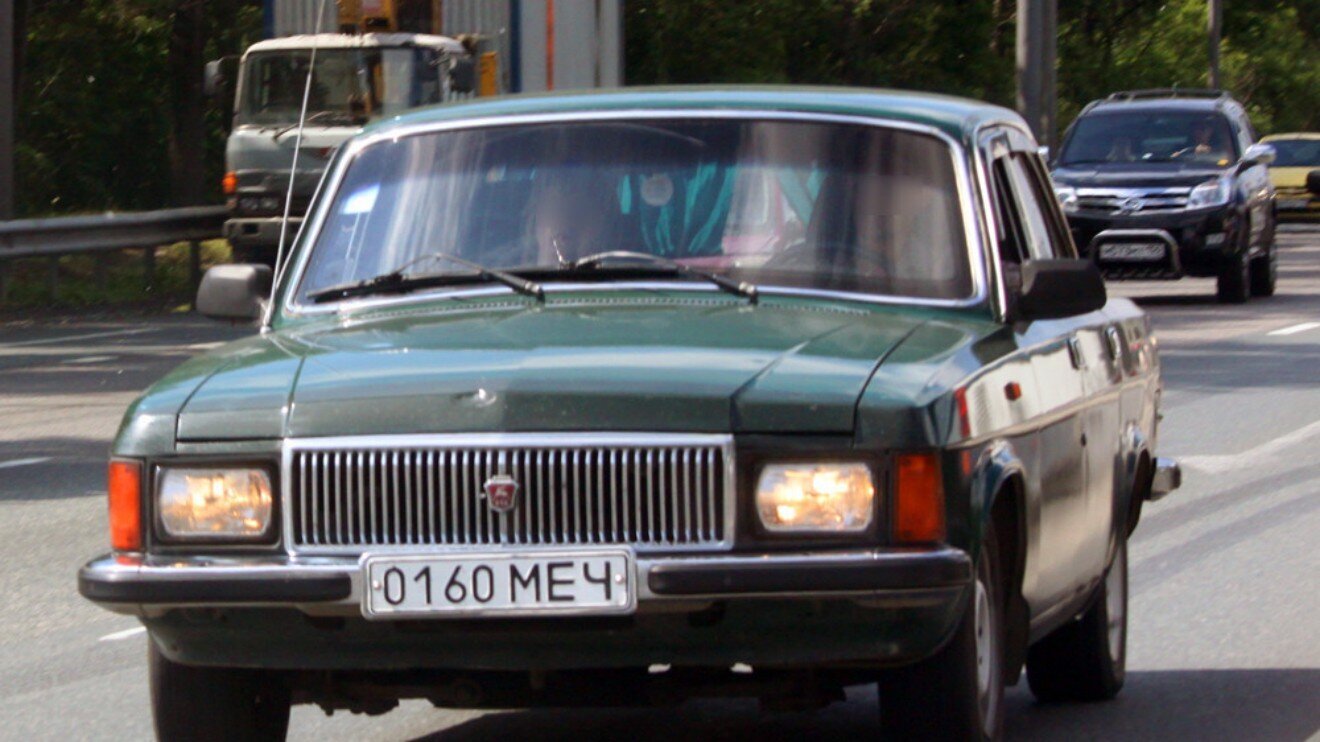
In 1993, the MECH series of license plates was one of the most prestigious symbols of power and immunity on the roads of Moscow Oblast.
History of the MECH series
The MECH series was introduced in Moscow Oblast in the early 1980s, at the same time as the general switch to white license plates ahead of the 1980 Moscow Olympics. Before that, the USSR had used black plates with white characters. This series was reserved exclusively for vehicles of the Moscow Oblast militia and fire services.
MECH-series plates followed the format: four digits + MECH (for example, 1234MECH). They belonged to the category of government plates issued to institutions, as distinct from private plates, which had letters at both the start and end (for example, aMO12bv).
Replacement by the MOM series
In the second half of the 1980s, the MECH series was replaced by MOM (Moscow Oblast Militia). This replacement happened gradually, and by the end of the Soviet period nearly all of the oblast militia's service vehicles had received new MOM-series plates. Later, in the post-Soviet period, the MOM series was in turn replaced by regional plates with the MO50 code.
Prestige and immunity
By the mid-1990s, MECH-series plates had become a symbol of special status. Traffic police officers practically never stopped vehicles bearing such plates, understanding that the driver was likely a member of the security services or someone connected to them. This created an atmosphere of untouchability around the owners of such plates.
Amid the social and economic upheaval of the 1990s, prestigious plate series became objects of special interest for "New Russians" and criminal bosses alike. Possessing MECH-series plates, or those of other special series, made it possible to move freely on the roads, avoiding checks and fines.
Other privileged series
Besides MECH, a number of other "untouchable" series existed in the Moscow region:
MKM — the series of the Order of the Red Banner Moscow Militia, used both as white plates on a black background and black on white. This series lasted longer than the others and remained active in the mid-1990s.
MOL — one of the most elite series, popularly deciphered as "My Okhranyayem Lyonyu" ("We Guard Lyonya," a reference to Leonid Brezhnev). Officially intended for the KGB of the USSR and its affiliated structures. In the 1990s, these plates could often be seen on vehicles of the FSB and organizations close to the security services.
MOS — the series of the USSR's highest party and state bodies: the CPSU Central Committee, the Council of Ministers, and the Supreme Soviet. A popular saying went: "Don't stick your nose into an MOS car." In the post-Soviet period it became the forerunner of the modern AMR97 series.
MOM — the series of the Moscow Oblast Militia, which replaced MECH. By 1996, it was the primary series for the oblast militia's service vehicles.
Illegal use
During the "time of troubles" of the early 1990s, the system for issuing and controlling special plates broke down. Prestigious series began appearing on the vehicles of private individuals with no connection to the relevant agencies. This happened through corrupt schemes within the traffic police, forged documents, or simply counterfeit plates.
Owning MECH-series plates in 1993 meant either genuine membership in the security services, serious connections within those circles, or involvement in criminal schemes to illegally obtain such plates. In any case, it was a clear sign that the vehicle's owner held special status in Russian society at the time.
The novel's mention of a desire to get "a black Volga with MECH plates" precisely captures the era's notions of the symbols of power and prestige. That combination — a high-class service car with privileged plates — was the dream of many Soviet and post-Soviet officials, symbolizing their status and untouchability.