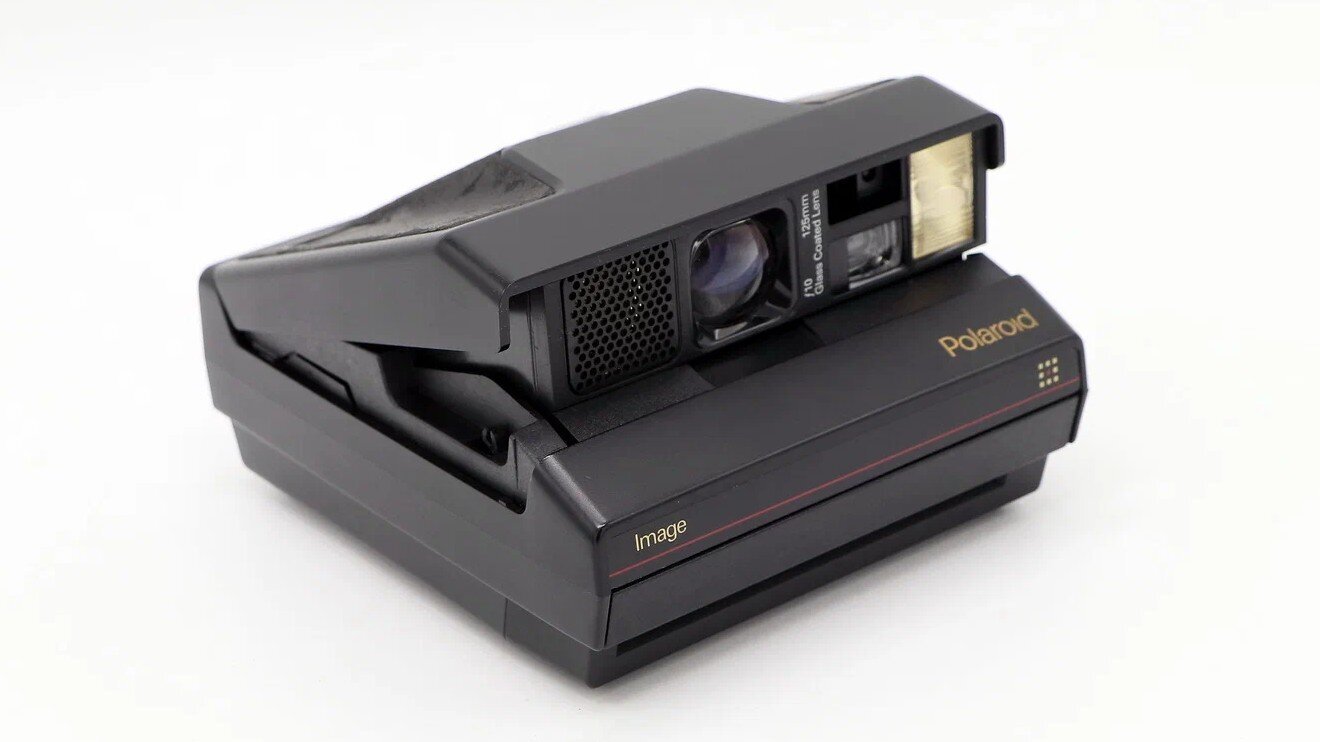
Polaroid Corporation was an American company whose name became synonymous with an entire technology. For decades, «Polaroid» was used as shorthand for instant photography itself and the prints it produced. The company made photographic equipment, consumer electronics, eyewear, and even reconnaissance and military hardware — but it was its one-step instant film kits and cameras that brought it worldwide fame.
Edwin Land: The Genius of Polarized Light
The company’s history is inseparable from its founder, Dr. Edwin Land. Born in 1909 in Bridgeport, Connecticut, to a family of immigrants from the Russian Empire — his grandparents, the Solomonoviches, had moved to the U.S. in the 1880s, founding the American branch of the family.
From early childhood, Edwin showed an extraordinary interest in optics, experimenting with light, kaleidoscopes, and stereoscopes — the foundation for his later discoveries. Already in 1929, as a Harvard undergraduate, he designed and built the world’s first commercially viable polarizing material. The discovery was revolutionary and set the company’s future course.
Land was the first to apply principles of polarized light across a range of consumer products — desk lamps, 3D glasses for cinemas, LCD screens for calculators and computers, and, of course, sunglasses. With 535 patents to his name, he ranked second in American history by number of inventions patented, behind only Thomas Edison.
For his outstanding contributions to American science, Land received the country’s highest civilian honor, the Presidential Medal of Freedom, in 1963.
The Company’s Birth and Early Success
Polaroid was officially founded in 1936, initially focused on products built around polarization technology. By the late 1930s, the first pair of Polaroid sunglasses had been sold. Demand for the innovative products grew quickly, and the company’s goods soon crossed U.S. borders into Europe and Asia.
The real breakthrough came in 1948, when Polaroid unveiled a fundamentally new kind of camera — one that produced a finished print immediately after the shot was taken, a technology that felt almost magical for its time. The company sold special cameras and matching film packs containing photographic material and chemical reagents that together produced a positive print on a paper backing.
How Instant Photography Worked
Polaroid’s one-step process was a revolutionary solution. Conventional photography of the era required developing film in a darkroom, using chemical reagents, and significant waiting time — the process could take hours or even days.
Polaroid’s system worked differently. A special cartridge contained not just light-sensitive material but all the chemical components needed for development and fixing. After the shutter was released, the camera automatically pulled the exposed frame through a set of rollers that burst pods of reagent and spread them evenly across the print’s surface. The chemical reaction happened right inside the print as it emerged from the camera.
Depending on the camera model and film type, the process took anywhere from a few seconds to a few minutes. Users would watch as a blurry image, then an increasingly sharp one, emerged before their eyes on a blank white sheet — a moment of magic and anticipation that became one of Polaroid photography’s most recognizable traits.
An «Invention Factory»
While instant photography brought the company its fame and commercial success, Polaroid had many other important inventions to its name. At its peak, the company earned the unofficial title of an «invention factory.» Among its developments:
- Thermal-imaging equipment for military and civilian use
- Infrared sights and night-vision devices
- Systems for three-dimensional aerial photography
- Optical homing heads for guided missiles
- Aerospace and aerial reconnaissance equipment
Many of these developments were critical to U.S. defense capability and were further developed in other fields of science and technology.
Polaroid’s Military Projects
The Missile Program
Few people know that Polaroid was involved in the American missile program from its earliest days. During and after World War II, the company developed guided air-to-surface missiles and guided bombs.
One of its most significant projects was the SX-70 Dove missile — one of the first infrared-homing missiles in military history, meant to arm carrier-based naval aircraft. Work began in 1943 at the company’s design bureau on Brookline Avenue in Boston. The federal government allocated seven million dollars for research and development — roughly $98.5 million in today’s money, the largest contract in the company’s history to that point.
Although the Dove missile never entered service and the project closed in 1946, its findings were passed on to Eastman Kodak and formed the basis for further development.
Another classified project, SX-68/SX-69 Podak, launched on December 18, 1943, jointly with Eastman Kodak — its name a combination of «Polaroid» and «Kodak,» reflecting the partnership between the two American photography giants in the military sphere.
By the 1950s, given the labor-intensive nature of missile manufacturing and the need to buy engines, fuel, and other components from other companies, Polaroid shifted away from its own missile projects toward developing and subcontracting optical components for other missile manufacturers.
Reconnaissance Equipment
Development of aerospace and aerial reconnaissance equipment began at the initiative of General James Doolittle, the legendary American pilot and military commander, who saw great potential in applying Polaroid’s technology to reconnaissance.
The company built equipment for three-dimensional aerial photography and stereoscopic image viewing for wartime bomber pilots, helping them better judge terrain and strike targets more precisely.
Polaroid also produced artillery-spotting equipment, infrared and night sights, and night-vision devices. Notably, its military-optics division grew out of a production line originally making sunglasses for skiers — another case of civilian technology finding military application.
The Cambridge School of Military Photographers
During the war, the company’s headquarters ran the Cambridge School of Military Photographers, known as the Polaroid War School, training personnel for U.S. Army Air Forces reconnaissance squadrons and other military specialties. By early 1944, more than five hundred cadets had been trained and examined.
Byproducts of the company’s military-lab research sometimes carried significance far beyond the military sphere. Two chemists from Polaroid’s military labs — William Doering and Robert Woodward (a future Nobel laureate in chemistry) — used synthesized quinine to develop anti-malaria treatments for American troops fighting in the Pacific and Burma theaters, among other useful medical and chemical innovations.
Police and Security Products
Beyond military contracts, Polaroid made specialized equipment for police departments and U.S. marshal services:
- Photo and video documentation tools for recording crime scenes
- Surveillance and security systems for protected and restricted facilities
The ability to get an instant print at a crime scene was revolutionary for the forensics of the day. Investigators could document evidence immediately, without worrying about film preservation or development delays.
The Golden Age of Instant Photography
Polaroid cameras peaked in popularity during the 1980s and ’90s. Instant photography became an inseparable part of mass culture — used at parties, weddings, on trips, for documents, in art photography, and even scientific research.
The SX-70 series, launched in the 1970s, and the later 600 and Spectra series were especially popular. The characteristic square Polaroid print with its white border became iconic and instantly recognizable worldwide.
Format Experiments
Polavision Movie Film
From 1977 to 1979, the company experimented with a Super 8 format, releasing a reversal movie film called Polavision — an attempt to bring the instant-result concept to home movies. But the product never caught on, hurt by its high cost and competition from videotape, which was just starting to conquer the home-video market.
Polachrome Film
Starting in 1983, Polaroid released a 35mm reversal film called Polachrome, an attempt to combine the convenience of standard 35mm format with instant-processing technology. Polachrome produced color slides that could be developed in minutes using a special processor.
The Digital Era and Crisis
By 2000, the photography market had changed dramatically. Digital photography was advancing rapidly, offering consumers instant previews, unlimited shots, and easy editing. Polaroid’s products could no longer compete with digital technology.
On October 11, 2001, Polaroid filed for Chapter 11 bankruptcy for the first time. Within a year, most of the business was sold to Imaging Corporation, owned by Bank One Corporation, in an attempt to save the brand and restructure it for the new market reality.
Attempts at Revival
Entering the Electronics Market
In 2003, the company tried to diversify by entering the consumer-electronics market, launching Polaroid-branded portable DVD players and LCD televisions — a strategic move meant to leverage the brand’s recognition in new market segments.
In April 2005, Polaroid acquired PGW for $426 million from Imaging Corporation, continuing its attempts to revive the legendary brand.
The Second Bankruptcy
On December 19, 2008, Polaroid filed for Chapter 11 bankruptcy again. Company representatives said the bankruptcy was a technical measure that would allow for financial restructuring, after which Polaroid would continue operating.
The Digital Era and New Products
The PoGo Instant Digital Camera
In January 2009, at CES, the company unveiled the Polaroid PoGo Instant Digital Camera, notable for its built-in color printer that let users print photos on the spot — an attempt to revive the instant-photography concept, adapted for the digital age.
Partnership With Lady Gaga
On January 5, 2010, the company made a surprise announcement: pop star Lady Gaga would become Polaroid’s creative director — a bold marketing move meant to draw a younger audience’s attention to the brand and give it a contemporary edge.
In January 2011, the partnership’s first fruits appeared: the new Polaroid Grey Label line and its first product, the Polaroid GL10 portable printer, which could print photos from smartphones and other digital devices while keeping the recognizable Polaroid look.
Return to the Russian Market
In 2012, the company returned to the Russian market with new instant cameras — the Polaroid Z340 and Polaroid PIC300 — along with the Polaroid GL10 pocket printer. The Z340 combined a digital camera with instant printing on special ZINK paper (Zero Ink), which used a thermochemical process to produce an image.
Sale of the Company
On December 22, 2014, 65 percent of Polaroid’s shares were sold for just $70 million. The buyer of what remained of Polaroid’s former greatness was the Minnesota-based Polad family, owners of the investment fund Marquette Companies — a symbolic end to an era, as a company once worth billions passed into private hands for a token sum.
Cultural Legacy and Influence
Despite its commercial troubles, Polaroid’s cultural influence is hard to overstate. Instant photography changed the very nature of taking pictures, making it more spontaneous and accessible. The distinctive visual style of Polaroid prints — their soft color rendering, white borders, and unique aesthetic — left a deep mark on art, fashion, and pop culture.
Many well-known photographers and artists worked with Polaroid cameras. Andy Warhol created a series of portraits using an SX-70. Helmut Newton, Robert Mapplethorpe, and many other masters of photography experimented with the technology.
Instant photography became an important part of documenting everyday 20th-century life — family albums, travel notes, scientific research, forensics, medical records — Polaroid cameras found a use everywhere.
Nostalgia and the Analog Revival
In recent years, interest in film and instant photography has been reviving. A new generation raised in the digital era is discovering the charm of physical prints, the unpredictability of chemical processes, and the tactile pleasure of holding a tangible photograph.
Polaroid, though not in its original form, continues to make instant cameras and film. New players have also entered the market, such as Fujifilm Instax, successfully reviving instant-photography culture.
Polaroid’s aesthetic continues to shape contemporary visual culture — countless smartphone apps imitate the distinctive look of Polaroid prints, with their vintage color rendering and white borders, a kind of tribute to a technology that once seemed like the future of photography.
Technological Legacy
Beyond its cultural influence, Polaroid left a substantial technological legacy. The company’s work in optics, light polarization, chemistry, and microelectronics underpins many modern technologies. The LCD screens we use every day in phones, computers, and TVs rely on polarization principles Edwin Land first applied commercially.
Polaroid’s military and intelligence work contributed to the development of optoelectronics, guidance systems, and reconnaissance equipment. Many solutions the company’s engineers found in the mid-20th century remain relevant today.
Conclusion
Polaroid’s story is one of technological revolution, commercial triumph, and dramatic decline — from Edwin Land’s pioneering work in light polarization, to the cult status of instant photography, to secret World War II military projects, to bankruptcy in the digital age. The company ran the full cycle from innovator to anachronism.
Yet Polaroid’s legacy endures. The company’s name is permanently woven into the cultural lexicon as a synonym for instant photography. The technologies developed in its labs continue to serve humanity across many fields. And the distinctive square print with its white border remains a recognizable symbol of an era when a photograph wasn’t just a file in a device’s memory but a physical object you could hold in your hands.
Author’s note: Today, with a smartphone camera in every pocket capable of taking thousands of photos and displaying them instantly, it’s hard to imagine what a revolution Polaroid technology once was. In the 1990s, there was exactly one way to get an instant photo: a Polaroid camera. It was real magic — press the button, pull the card out of the camera, wait a minute, and there’s your finished print. That’s exactly why «Polaroid» became not just a company name but a household word for an entire technology, a symbol of an era and a way of life.