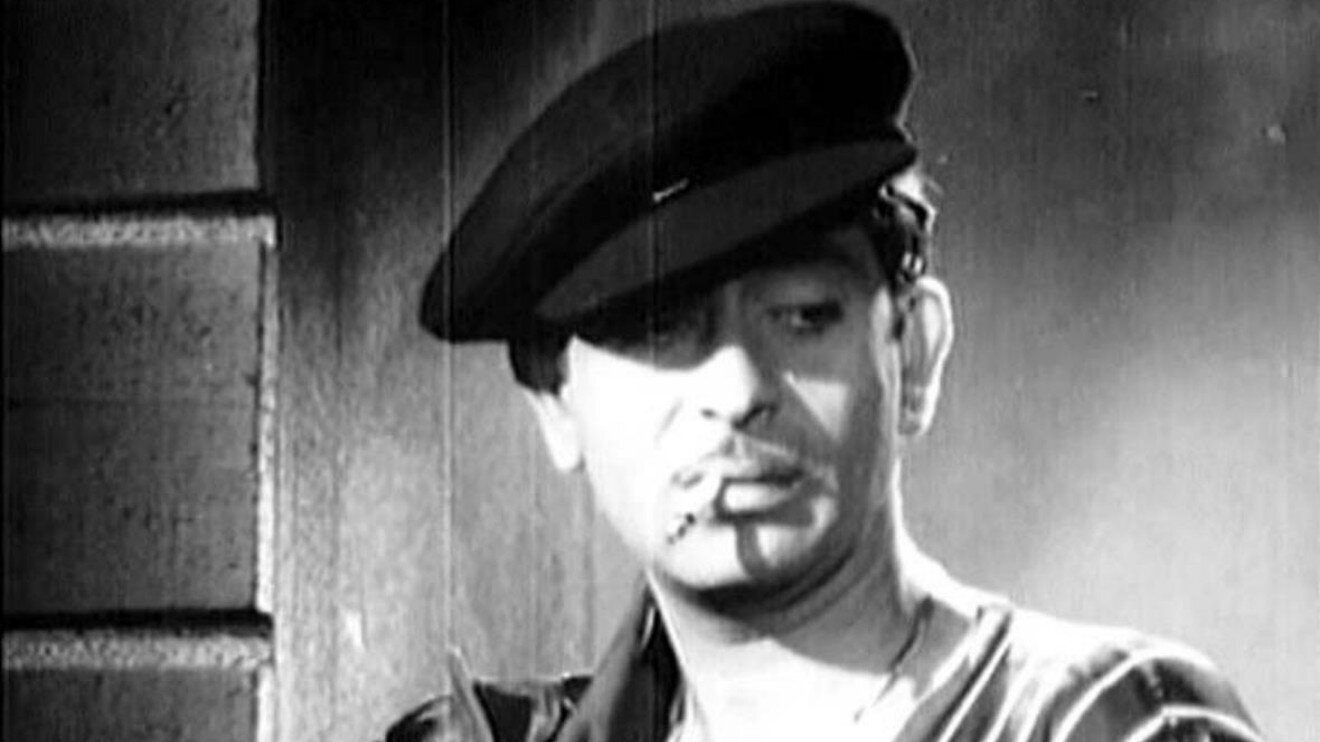
The term "brodyaga" (vagabond) in Russia's criminal milieu of the early 1990s denoted a special category of people occupying a high position in the informal hierarchy. Understanding this term is necessary for interpreting the phrase "poteret' za bazar s brodyagoy" ("to square it, talk it over, with a vagabond"), used in the commercial world of Moscow in 1993 as a tool for protection against provocateurs (see the article "So Who Are You, Really?").
Definition of the term
In the prison hierarchy*, a "vagabond" represented a category of inmates as close as possible to the "vory v zakone"* ("thieves-in-law"). A vagabond was an inmate who strictly observed the convict code* and was ready to defend the thieves' way of life* in the camp*, regardless of personal consequences.
The main characteristics of a vagabond:
- Strict adherence to the unwritten rules of the criminal subculture
- Refusal of any cooperation with the administration of places of confinement
- Refusal to work or hold official positions
- Readiness for physical resistance against attempts to break the thieves' order
- An active role in defending the interests of inmates
- Authority within the criminal milieu
Difference from a vor v zakone
The term "vor v zakone" ("thief-in-law") denoted the highest category of the criminal hierarchy — those crowned* to uphold the thieves' law* and recognized by the criminal community. The status of vor v zakone was conferred through a special procedure, and required meeting strict conditions.
The vagabond represented the next rung of the hierarchy. He possessed all the qualities of a vor v zakone, but had not gone through the crowning procedure. Candidates for vor v zakone were drawn from the ranks of vagabonds. Not every vagabond became a vor v zakone, but every vor v zakone had, in the past, been a vagabond.
The key difference: a vor v zakone had a voice at gatherings (skhodki)* and could influence the decisions of the criminal community. A vagabond had no such right, but enjoyed respect, and could act as an intermediary between the vory v zakone and the rest of the inmates.
The vagabond's functions in the camp
The vagabond performed the following functions in places of confinement:
- Spreading the thieves' word
- The vagabond conveyed the decisions of the vory v zakone to the rest of the inmates, and explained the rules of convict life, especially to "first-timers"* — people newly arrived at a place of confinement.
- Resolving conflicts
- In the absence of a vor v zakone, the vagabond could resolve disputes between inmates "according to the code"* — the unwritten rules of the criminal subculture.
- Organizing supplies
- The vagabond took part in organizing illegal supplies to the camp — food, tea, tobacco, alcohol — through connections with the outside world.
- Managing the obshchak
- In the absence of more authoritative figures, the vagabond could take part in managing the obshchak* — the inmates' common fund.
- Resisting the administration
- The vagabond led resistance to any attempt by the administration to establish control over the camp and break the thieves' order.
Origin of the term
There is a version according to which the term "brodyaga" entered domestic criminal slang from the Indian film "Awaara" ("The Vagabond"), starring Raj Kapoor, which was regularly shown in Soviet cinemas from 1954 onward. The film's protagonist — a man with no fixed abode, living by his own rules and rejecting social convention — matched the romanticized image of the criminal adventurer.
An alternative version links the term to its traditional Russian meaning — a person with no permanent residence, moving from place to place. In its criminal interpretation, this meaning was reinterpreted as a metaphor for a person unbound by material goods and social obligations.
The vagabond and non-acquisitiveness
A central element of the vagabond's status was non-acquisitiveness (nestyazhaniye) — a rejection of accumulating material goods and having a permanent residence. A vagabond owned no property, did not start a family, and did not seek comfort. His life was subordinated to observing thieves' law and serving the interests of the criminal community.
This principle set the vagabond apart both from criminal bosses who had amassed wealth and from ordinary criminals who sought material well-being after release. The vagabond embodied the ascetic ideal of the criminal subculture.
The transformation of the term in the 1990s
During the social transformations of the early 1990s, the meaning of the term "brodyaga" began to shift. A category of people appeared who called themselves vagabonds but did not fit the traditional definition.
The new "vagabonds" were criminal freelancers — people engaged in illegal activity who did not identify with the organized criminal world. They did not observe the strict discipline of the thieves' world, and did not follow its asceticism, but claimed independence from criminal authorities.
This transformation reflected the broader crisis of the traditional criminal hierarchy under a market economy. The growth of opportunities for illegal enrichment, and the weakening authority of the vory v zakone, created a niche for people unwilling to submit to a rigid hierarchy but still using elements of the criminal subculture.
The vagabond outside the camp
Unlike a vor v zakone, for whom thieves' law applied even at liberty, a vagabond could change his behavior after release. In the camp, he observed all the rules of convict life, but at liberty he might behave more freely — work, start a family, and not adhere to strict restrictions.
This flexibility made the status of vagabond appealing to people who respected the traditions of the criminal subculture but were not willing to devote their whole lives to it. A vagabond could move between the legal and criminal worlds, retaining respect in both.
The phrase "poteret' za bazar s brodyagoy"
In the context of commercial activity in Moscow in 1993, the phrase "poteret' za bazar s brodyagoy" was used as a tool for revealing the true status of provocateurs. "Poteret' za bazar" meant to justify one's words and actions before an authoritative figure.
Proposing that provocateurs "poteret' za bazar s brodyagoy" served several functions:
- It demonstrated connections to the criminal world and protection from authoritative figures
- It revealed the provocateurs' true status — serious criminals did not refuse to talk with a vagabond, while petty crooks avoided such contact
- It shifted the conflict into the sphere of criminal communication, where clear rules applied
- It protected businessmen from unfounded claims and psychological pressure
The vagabond, in this context, acted as an arbiter*, determining whether the provocateurs' claims were justified. If the claims were unfounded, or the provocateurs had no real status in the criminal world, the vagabond would put a stop to their actions.
Distinguishing the vagabond from other categories
It is necessary to distinguish the vagabond from other categories of the criminal hierarchy:
| Category | Characteristics |
|---|---|
| Vor v zakone | The highest category, having gone through crowning, with a voice at gatherings |
| Vagabond | An authoritative inmate, strictly observing the code, a candidate for vor v zakone |
| Blatnoy | A professional criminal with authority, not necessarily observing every requirement of thieves' law |
| Muzhik | An ordinary inmate, not belonging to the criminal elite, who works and accepts the authority of the blatnye |
| Kozel | An inmate who cooperates with the administration |
A psychological portrait of the vagabond
The vagabond was distinguished by the following psychological traits:
Strength of spirit. A vagabond might be physically weak, but had the capacity to withstand pressure from the administration and not depart from his principles.
Activeness. A vagabond did not take a passive stance, but actively took part in camp life, dominating conversations and defending the interests of inmates.
Self-sacrifice. A vagabond placed the interests of the criminal community above his own, and was ready to die for observing the code.
Uncompromising principle. A vagabond made no deals with the administration, and did not violate thieves' law under any circumstances.
The vagabond within the "roof" system
In Moscow in 1993, commercial structures needed protection from criminal gangs. Having a roof* — the patronage of authoritative criminals — protected against unfounded claims from other criminal structures.
A vagabond could serve as a representative of the criminal group providing the roof. He was not directly involved in collecting money or organizing security, but was present at commercial establishments and resolved conflicts.
His presence carried symbolic weight — it demonstrated that the businessmen had connections to serious criminals, and warned off petty crooks from attempting a "naezd" (shakedown)*. The offer to "poteret' za bazar s brodyagoy" meant a willingness to hand the matter over to the level of the criminal hierarchy, where small-time provocateurs had no chance.
Regional differences
The use of the term "brodyaga" to mean an independent criminal adventurer was characteristic of the Caucasus region. In Moscow's criminal milieu of the early 1990s, this term retained a more traditional meaning — an authoritative inmate who strictly observed the code.
This difference caused confusion in communication between representatives of different regions, and required clarifying which sense of the term was meant.
The vagabond and the "correct guy"
The term "pravilny patsan"* ("correct guy") denoted a person living by the code and observing the unwritten rules of the criminal subculture. The vagabond represented the highest degree of "correctness" — he not only knew the code, but was ready to die for observing it.
The difference between a vagabond and an ordinary "correct guy" lay in the completeness and consistency of his adherence to thieves' law. A correct guy could work, have a family, and compromise in certain situations. A vagabond allowed no departure whatsoever from thieves' law.
Use of the term in everyday speech
In Moscow in 1993, the term "brodyaga," in its criminal sense, was known to a limited circle of people connected to the criminal world or who had experience in places of confinement. Ordinary citizens and businessmen learned of this category through direct contact with the criminal world.
Uttering the phrase "poteret' za bazar s brodyagoy" in the presence of provocateurs immediately demonstrated the speaker's knowledge of the rules of criminal communication and his connections to authoritative criminals. This phrase functioned as a password, separating those who belonged to, or had ties to, the criminal world from those merely imitating such belonging.
The reaction of petty criminals
Youths from the outer Moscow suburbs, who shook down businessmen while posing as representatives of serious criminal groups, immediately revealed their true status when offered a meeting with a vagabond. Typical reactions included:
- Attempts to avoid the meeting under various pretexts
- A drop in aggression and a shift to a more conciliatory tone
- Quickly leaving the scene of the conflict
- Attempts to save face with empty threats of "we'll meet again"
This reaction stemmed from an understanding of the consequences of meeting a real representative of the criminal hierarchy. A vagabond would immediately expose the provocateurs' lack of real status and connections in the criminal world. The consequences for exposed impostors could be serious — ranging from public humiliation to physical punishment.
The hierarchy of criminal shakedowns
The "roof" system* in Moscow in 1993 had a clear hierarchy. Serious criminal groups, led by vory v zakone or authoritative blatnye, did not engage in petty racketeering*. They controlled major commercial structures, construction projects, and financial flows.
Petty shakedowns of markets, shops, and cooperatives were carried out by youths with no ties to serious groups. These youths used elements of the criminal subculture — clothing, slang, mannerisms — to intimidate victims, but held no real status in the criminal hierarchy.
Businessmen with connections to a vagabond or other authoritative figures became untouchable to petty crooks. Serious groups avoided conflict with one another over spheres of influence, and resolved disputes through negotiations at the level of authorities.
The evolution of the vagabond's status
By the mid-1990s, the traditional status of the vagabond had begun to erode. Several factors contributed to this process:
- The commercialization of the criminal world — a shift from thieves' romanticism to pragmatic business
- A decline in the authority of the old-school vory v zakone
- The emergence of new criminal leaders who had not gone through the prison school
- Changing economic conditions — growing opportunities for legal enrichment
- Reform of the penitentiary system — strengthened administration control over the camps
The term "brodyaga" gradually lost its original meaning, and began to be used more broadly for various categories of people who did not fit into the traditional criminal hierarchy.
The vagabond as intermediary between worlds
A unique feature of the vagabond was his ability to function as an intermediary between the criminal and legal worlds. He understood the rules of both worlds, and could communicate between them.
In the context of protecting commercial structures, this function was critically important. A vagabond could explain to businessmen the rules of criminal communication, warn them of possible threats, and resolve conflicts before they escalated. At the same time, he could represent businessmen's interests before criminal authorities, and justify the need for their protection.
The term "brodyaga" in the criminal hierarchy of Moscow in 1993 denoted an authoritative inmate, strictly observing the thieves' code and ready to defend the thieves' order. Use of the phrase "poteret' za bazar s brodyagoy" was an effective tool for protecting businessmen from petty provocateurs, by appealing to real representatives of the criminal hierarchy.