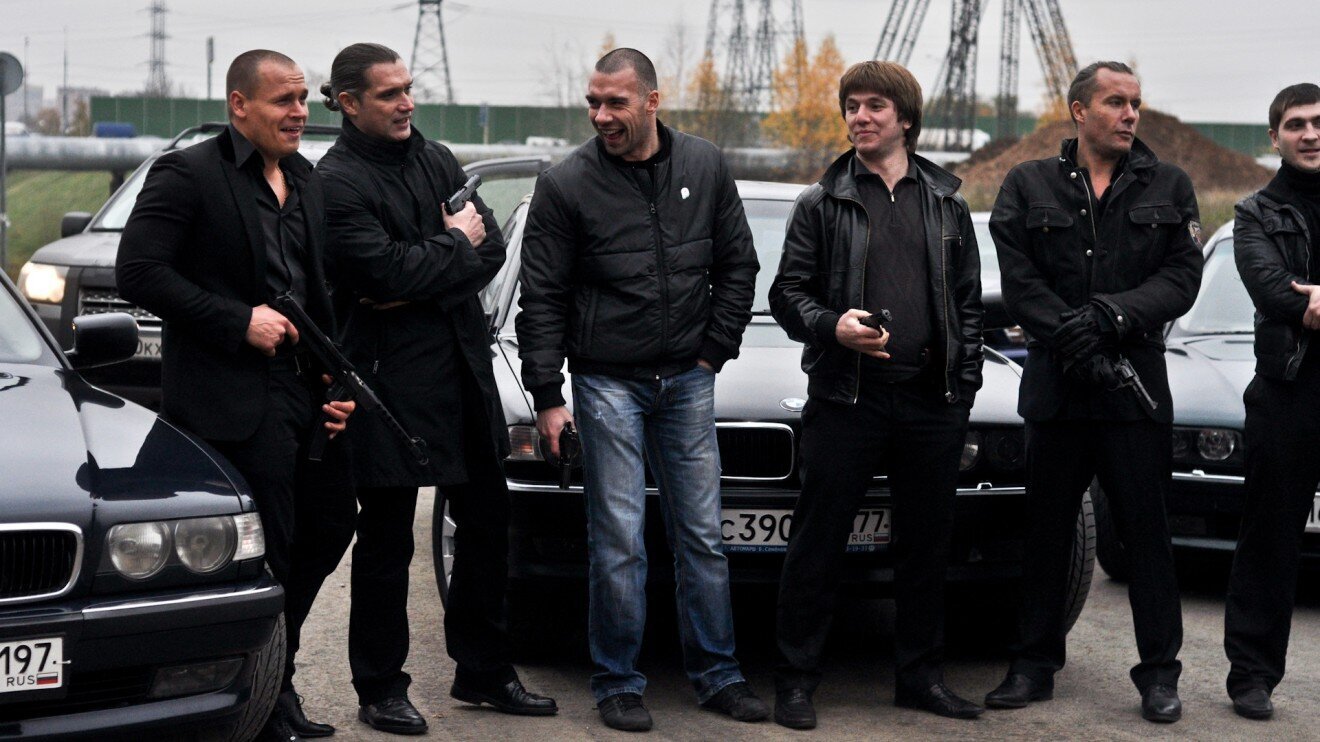
In Moscow in 1993, there existed a clear hierarchical system of relations between commercial structures and criminal groups. The phrase "authorized to have conversations on topics beyond the reach of us lowly folk" reflected a fundamental principle of this system: a businessman had no right to negotiate with representatives of the criminal world as an equal.
Social stratification and the criminal hierarchy
The early 1990s were marked by the collapse of old social structures and the formation of new ones. The criminal world developed its own system of social stratification, in which businessmen occupied a subordinate position relative to representatives of organized criminal groups*.
This hierarchy rested on several principles:
- Control over the use of force belonged to criminal structures
- Businessmen needed protection, and could not ensure their own safety
- Criminal authorities* held the right to resolve disputes and set the rules of doing business
- Businessmen were in the position of tribute-payers, paying dues for the right to conduct commercial activity
An attempt by a businessman to negotiate directly with criminal authorities, without intermediaries, was seen as a violation of the hierarchy, and could lead to serious consequences.
The institution of the "roof"
The "roof"* (krysha) was a system of protection for a commercial structure provided by an organized criminal group. This system included several components:
- Physical protection
- Preventing robbery, theft, and destruction of property by petty criminals and rival groups.
- Conflict resolution
- Settling disputes with suppliers, buyers, and competitors through mechanisms of criminal justice*.
- Protection from other criminal groups
- Representing the businessman's interests in dealings with other OPGs (organized criminal groups)*, and preventing attempts to establish an alternative "roof."
- Ties to law enforcement
- Ensuring minimal interference by the police in the commercial structure's activity, through corrupt connections.
The cost of a "roof" ranged from 10% to 30% of a commercial structure's profit, and depended on the scale of the business, the region, and the influence of the criminal group.
The shakedown ("naezd") as a tool for establishing control
A naezd* — a provocative action by criminal elements aimed at establishing control over a commercial structure, or extracting a one-time payoff. Shakedowns varied in character and purpose:
| Type of shakedown | Characteristics | Goal |
|---|---|---|
| Probivka (probing) | Peacefully determining a commercial structure's status, and whether it has a "roof" | Assessing the possibility of establishing control |
| Aggressive shakedown | A show of force, threats, psychological pressure | Intimidation, coercion into paying tribute |
| One-time shakedown | A demand for a one-time payment or property | Getting quick profit without establishing long-term control |
| Systematic shakedown | Consistent actions aimed at establishing permanent control | Bringing the commercial structure into a system of regular payments |
A typology of shakedown artists
Shakedowns were carried out by various categories of people, differing in status within the criminal hierarchy and in their methods:
Petty crooks from outside Moscow. Youths aged 16-25, imitating membership in serious criminal structures. They used elements of the criminal subculture — clothing (leather jackets, tracksuit pants with stripes*, slip-on shoes*, white socks*), slang*, and mannerisms. They had no real connections to authoritative criminals, and relied on victims' ignorance of the rules of criminal communication and fear of the underworld.
Mid-level crews. Organized groups of 5-15 people, with ties to more influential criminal structures but not part of a major OPG. They engaged in racketeering* of small and medium businesses, and could resort to physical violence. They had a certain territorial base and reputation in the criminal world.
Representatives of major OPGs. Enforcers acting on behalf of influential criminal groups (Solntsevskaya*, Izmailovskaya*, Podolskaya*, Balashikhinskaya*, and others). They possessed real force and connections in the criminal world. Their shakedowns were carried out in an organized manner, respecting the existing criminal rules and code*.
Rules of communication during a shakedown
A businessman confronted with a shakedown was in a difficult situation. The wrong moves could lead to escalation, physical violence, and destruction of property. Certain rules of conduct, however, applied:
- Don't negotiate personally. A businessman should not engage in a substantive discussion of terms, payment amounts, or deadlines. Any attempt to haggle or refuse was perceived as weakness, and provoked increased pressure.
- Immediately mention having a "roof." The phrase "we've got guys" or "we work with a crew" meant that the commercial structure was under the protection of a criminal group, and that further negotiations had to take place between representatives of criminal structures.
- Offer contact with authorized persons. The businessman had to offer the shakedown artists a chance to contact the representatives of the "roof," or to come to a designated place for negotiations with them.
- Stay calm and polite. Aggression, rudeness, or attempts to drive off the shakedown artists by force, without the resources to back it up, led to escalation.
- Don't show fear. Panic, fuss, or immediate agreement to any terms provoked further shakedowns and increased demands.
The role of intermediaries
In the situation described, Vadim performed the function of intermediary between the commercial structure and the criminal world. His actions followed established practice:
Vadim presented himself as the one in charge, but immediately redirected the shakedown artists to authorized persons. The phrase "we're just businessmen, that's our whole life" clearly marked out his social status, and the absence of any right to negotiate with criminal authorities as an equal. The offer to go down and see "the crew, open to business proposals" shifted the conflict into the plane of communication between representatives of the criminal world.
This strategy served several functions:
- It demonstrated the existence of a "roof," and the impossibility of establishing alternative control
- It avoided direct conflict between the businessmen and the shakedown artists
- It shifted the resolution of the matter to the level of the criminal hierarchy, where clear rules applied
- It revealed the shakedown artists' true status — serious OPG representatives agreed to negotiate with the "roof," while petty crooks avoided such contact
The strelka as a mechanism for resolving conflicts
A strelka* — a meeting of representatives of different criminal groups to resolve disputed matters. Strelki were "zabity"* (set up, arranged) in the following situations:
- A conflict over territory of influence or a specific commercial structure
- A violation of agreements between groups
- The need to divide spheres of influence
- Resolving a dispute over a particular person's status in the criminal hierarchy
Strelki varied in character and possible outcomes:
A peaceful strelka. A meeting to exchange information and confirm agreements. A typical scenario: representatives of two groups would establish that a commercial structure was under the protection of one of them, after which the second group would back off without conflict. Such strelki were brief and formal.
A conflict strelka. A meeting at which one or both sides believed their interests had been infringed. It could end in a razborka* — the use of physical violence. The sides arrived with armed backup, showed force, and tried to intimidate the opponent.
A multilateral strelka. A meeting of representatives of several criminal groups to resolve complex questions of dividing territories or spheres of influence. Such strelki often ended in mass brawls or shootouts.
The protocol of a strelka
Strelki were conducted according to certain rules, and violating them was seen as bespredel* ("lawlessness"), giving grounds for the use of force:
- The venue
- Strelki were arranged either in busy places (restaurants, cafes), where using weapons was difficult, or in secluded spots, where the sides could bring weapons without attracting attention.
- Arrival
- Sides arrived at a strelka in expensive cars, accompanied by an entourage, to demonstrate force and status. Not showing up was seen as a sign of weakness and defeat.
- Representation
- People who had the authority to make decisions on the group's behalf came to the strelka. An authoritative vor v zakone* might ignore a strelka with unknown figures, considering it beneath his dignity.
- Conducting negotiations
- The leaders of the groups would begin a "tolkovishche"* — a discussion of the disputed matters. The side with less real strength was forced to compromise and make concessions.
- The use of force
- If no agreement was reached, violence might follow. The outcome depended on the balance of forces: either victory was conceded immediately, or a shootout began.
The skhodka as the supreme organ of criminal power
A skhodka* — a gathering of influential figures of the criminal world to resolve fundamental questions. Unlike a strelka, a skhodka was attended by vory v zakone and authorities with a voice in the criminal community.
A famous skhodka took place in 1988 at the "Dagomys"* hotel complex, where vory v zakone and the leaders of influential criminal groups tried to establish rules of competition and divide spheres of influence in Moscow. The decisions of a skhodka were binding on the members of the criminal world.
At skhodki, the following matters were decided:
- The division of territories and spheres of influence among major OPGs
- The crowning* of new vory v zakone
- The resolution of conflicts between authorities
- Passing sentence on violators of thieves' law*
- Establishing general rules for dealing with commercial structures and the authorities
The hierarchy of the right to negotiate
In Moscow's criminal world of 1993, there was a clear hierarchy of people entitled to negotiate on a group's behalf:
- Vory v zakone. The highest category of the criminal hierarchy, having gone through crowning and recognized by the criminal community. They had the right to make final decisions on any matter.
- Authorities and vagabonds. Influential figures of the criminal world, strictly observing the code. They could negotiate on a group's behalf, but decisions on fundamental matters were made by the vory v zakone.
- Smotryashchiye and polozhentsy. People appointed by the vory v zakone to oversee a particular territory or area of activity. They had the right to resolve current conflicts within their authority.
- Brigadiers. The heads of individual crews within an OPG. They negotiated on matters concerning their crew's activities.
- Enforcers. Rank-and-file members of an OPG, with no right to negotiate, but who performed functions of backup and a show of force.
Businessmen stood outside this hierarchy entirely, and had no right to negotiate as equals with any of the levels listed.
The consequences of violating the hierarchy
An attempt by a businessman to negotiate with criminal authorities without intermediaries could lead to the following consequences:
Loss of face. A businessman who tried to negotiate as an equal was seen as not knowing his place in the hierarchy. This gave grounds for harsher demands and a show of force.
Conflict with the "roof." If a businessman had a "roof" but tried to negotiate on his own, this was seen as disrespect toward the group protecting him. The "roof" might withdraw its protection, or impose sanctions.
Escalating demands. A show of willingness to negotiate provoked an increase in the size of the tribute demanded, and the appearance of additional demands.
Physical violence. If demands were not met after negotiations had begun, the businessman was subjected to beatings, kidnapping, or destruction of property.
The economics of the "roof" system
The "roof" system in Moscow in 1993 represented a developed economic structure. According to various estimates, criminal groups controlled between 70% and 90% of the capital's commercial structures.
The structure of a "roof's" income included:
- Regular payments from protected commercial structures (10-30% of profit)
- One-time payments for resolving conflicts
- Income from control over certain types of business (markets, construction, fuel)
- A share in the profits of major commercial projects
A "roof's" expenses included:
- Maintaining enforcers and weapons
- Bribing law-enforcement officers
- Supporting imprisoned group members and their families (the obshchak*)
- The costs of resolving conflicts with other groups
- Representational expenses (a show of status)
Regional differences
The "roof" system and the rules of communication varied by region. In Moscow in 1993, several major OPGs operated, among which there was a relative balance of power. This required observing certain rules, and reduced the level of violence in resolving conflicts.
In St. Petersburg, the Tambovskaya* and Malyshevskaya* groups dominated, engaged in a fierce struggle for territory. In the regions, the situation depended on the presence of strong local groups and the degree of territorial control by the authorities.
The evolution of the system
By the mid-1990s, the "roof" system had begun to transform. Several factors contributed to this process:
- The strengthening of state institutions and increased control over criminal groups
- The legalization of part of the criminal structures through the creation of private security firms*
- The emergence of new mechanisms for protecting business through connections in law enforcement
- The transition of some criminal authorities into legal business
- Changing economic conditions, and increased opportunities for legal entrepreneurship
By the early 2000s, criminal "roofs" had, in most regions, been pushed aside either by state security agencies or by legal security firms. The system, in which a businessman could not negotiate with criminal authorities as an equal, gradually disappeared along with the dominance of OPGs in the country's economic life.
The system of criminal communication in Moscow in 1993 rested on a clear hierarchy, in which businessmen occupied a subordinate position. The institution of the "roof" provided protection for commercial structures, but at the same time denied them the right to negotiate independently with representatives of the criminal world. Those authorized to talk business represented the interests of the groups at strelki and skhodki, where matters of territorial division and conflict resolution were decided.