Rocks and Collins Glasses: Bar Culture in the Mid-1990s
This scene of the novel mentions two types of cocktail glassware – rocks glasses and Collins glasses – which by the mid-1990s had become an inseparable part of Russian bar culture. These terms reflect more than just types of glassware; they point to an entire drinking culture that was actively taking shape in post-Soviet Russia.
The rocks glass – a tumbler for whiskey
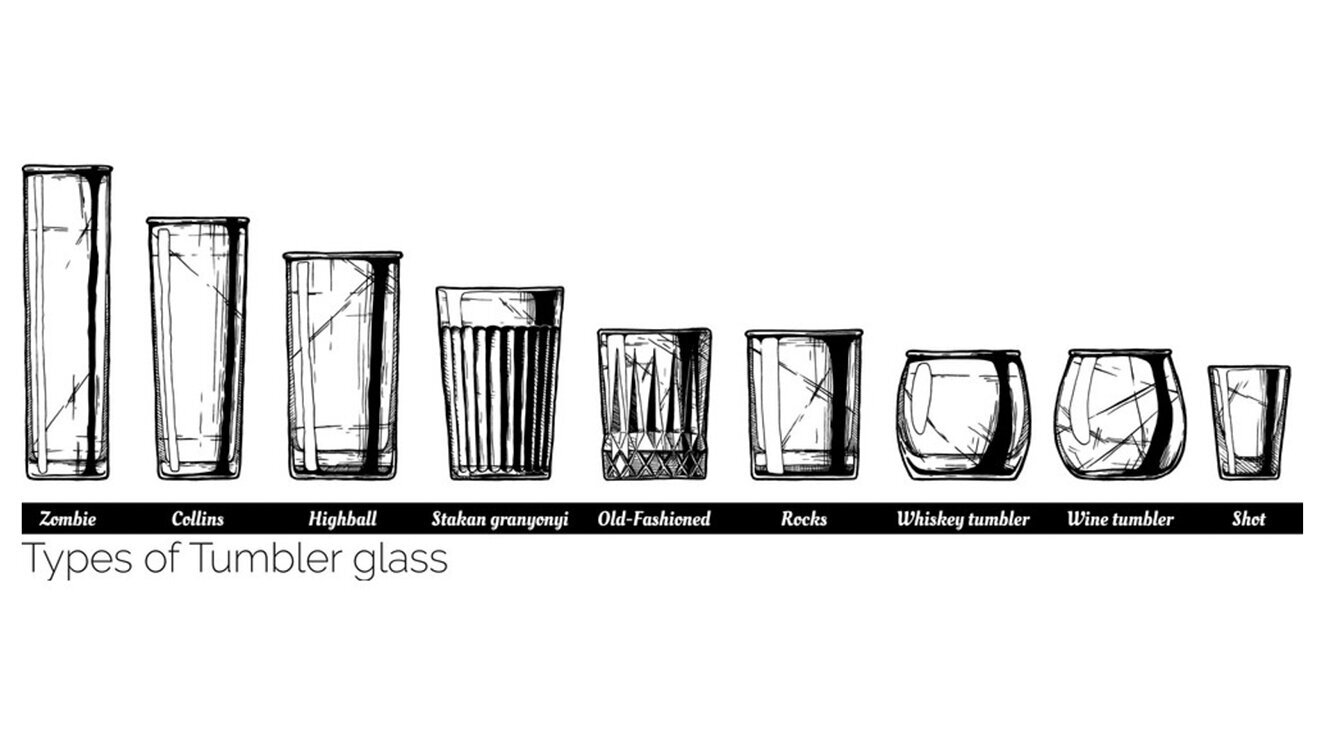
A rocks glass is a short, wide tumbler, also known as an old fashioned glass or lowball glass. The name «rocks» comes from the phrase «on the rocks,» meaning a drink served over ice.
A classic rocks glass holds 180 to 300 milliliters (6–10 ounces) and is defined by a wide rim and a thick base. That design isn’t accidental – the thick base lets a bartender «muddle» ingredients like sugar, fruit, or herbs right in the glass, using a special muddling tool.
Historically, the rocks glass traces back to the seventeenth and eighteenth centuries, when its ancestor was the Scottish quaich – a shallow, two-handled vessel made of wood, silver, or leather. In the nineteenth century these ornate cups were gradually replaced by glass tumblers, cheaper to produce and far more widely used.
In the context of the 1990s, rocks glasses were associated above all with drinking good whiskey – neat or in cocktails. Classic drinks served in rocks glasses included whiskey and soda, bourbon and water, and the famous Old Fashioned, made from a spoonful of sugar, a dash of bitters, whiskey, and a splash of soda.
The Collins glass – a tall tumbler for refreshing cocktails
A Collins glass is a tall, cylindrical glass holding 300 to 410 milliliters (10–14 ounces). It takes its name from the popular Collins family of cocktails, such as the Tom Collins and the John Collins.
The Collins glass’s tall, narrow shape serves a practical purpose: it helps a drink stay carbonated longer, by reducing the surface area through which carbon dioxide escapes. That makes it ideal for sparkling cocktails, long drinks, fruit juices, and any chilled fizzy beverage.
In the mid-1990s, Collins glasses were often used to serve popular cocktails built on Italian liqueurs such as Campari. The Campari and tonic mentioned in the text is a refreshing drink in which bitter Campari is diluted with tonic and served over ice in a tall glass, letting the drink’s full flavor come through.
The highball glass – an American classic
A relative of the Collins glass is the highball glass – a medium-sized glass holding 240 to 350 milliliters (8–12 ounces). The highball is taller than a rocks glass but shorter and wider than a Collins, making it versatile enough for a huge range of cocktails.
The name «highball» is tied to late-nineteenth-century American railroads. Trains approaching a station took their cue from a colored ball mounted on a pole – a signal to engineers that the track was clear and they could proceed at full speed. Bartenders serving railroad workers named their favorite drink after that signal. A classic highball was made from 45 ml of whiskey served in a tall glass over ice, topped with a generous amount of ginger ale – a relatively light drink that could be finished quickly.
Highball glasses traditionally serve cocktails that call for a lot of juice, mixer, or soda. Popular summer cocktails like the Cape Codder, the Screwdriver, the Sea Breeze, and the Tom Collins itself are often served in highball glasses.
The Zombie – tiki-culture exotica
Standing apart is the Zombie – a legendary tiki cocktail invented in late 1934 by Donn Beach at his Hollywood restaurant, «Don the Beachcomber.» This elaborate cocktail, made from fruit juices, liqueurs, and various rums, is usually served in a tall glass similar to a Collins.
Legend has it Donn Beach originally invented the Zombie to help a hungover client get through a business meeting. The client came back a few days later complaining he’d turned into a zombie for the rest of his trip. The drink’s smooth fruity taste conceals an extremely high alcohol content. At Don the Beachcomber restaurants, customers were allowed no more than two Zombies, given their strength.
The original recipe called for three different types of rum, lime juice, falernum, Angostura bitters, Pernod, grenadine, and Beach’s own cinnamon syrup and grapefruit juice blend. Beach guarded his cocktail recipes closely, using coded ingredient names in instructions for his bartenders.
1990s Russian bar culture
In the context of mid-1990s Russia, the mention of rocks and Collins glasses reflects the process of actively absorbing Western bar culture. After the Iron Curtain fell, a flood of imported alcohol poured into Russia, and with it, a new culture of drinking.
Campari, the bright-red Italian bitter liqueur, became one of the symbols of this new era. Serving it «straight» in a rocks glass, or as part of a cocktail in a Collins glass, signaled familiarity with European bar standards. For many Russians of the era, knowing how to properly order and serve a cocktail was a mark of belonging to the new elite – people who could afford imported drinks and knew the rules for drinking them.
The use of specific bar terminology («rocks,» «Collins») in the text is no accident – it underscores the characters’ drive to meet the new standards of success and respectability, in which knowledge of Western bar culture was part of the era’s social code.
The technical side of serving
Serving drinks in the correct glassware has practical as well as aesthetic value. Rocks glasses, with their wide base and thick walls, are ideal for drinks served over ice – the ice melts more slowly, diluting the drink less quickly. Collins and highball glasses, by contrast, are designed for drinks with a lot of mixer, where keeping the carbonation and the right ratio of ingredients matters.
There’s also a doubled version of the rocks glass – the DOF (Double Old Fashioned), holding 350 to 470 milliliters, meant for stronger pours or cocktails with a lot of ice.
Bartenders traditionally prepare countless drinks according to classic recipes and serve them in specific glass types depending on the ingredients. Before blended cocktails and endless flavored martini variations became popular, most mixed drinks were served in highballs or lowballs (rocks glasses).
The mention of rocks and Collins glasses in the novel’s text, then, isn’t just a decorative detail – it’s an important cultural marker of the era, reflecting the westernization of Russian urban culture in the mid-1990s.