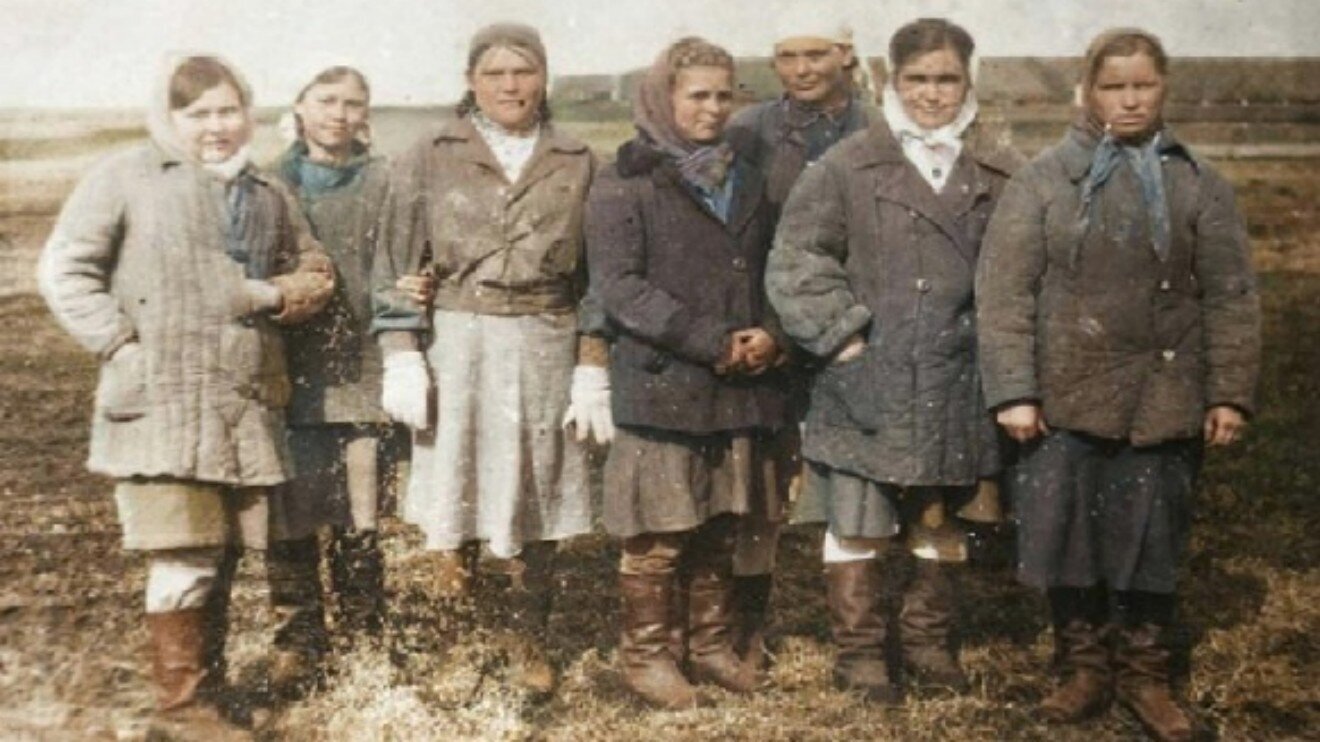
The word «shalashovka» is a specific term from Gulag camp slang, widely used in the 1930s and 1940s. The term is inseparably tied to the tragic history of the Soviet repressive system and reflects one of the darkest sides of camp life.
Etymology and Origin of the Term
The origin of the word «shalashovka» is tied to the particulars of how daily life was organized in Soviet forced-labor camps. The term «shalash» (a lean-to, or makeshift hut) in camp slang referred to an improvised shelter made from sheets or blankets, used to curtain off part of the bunks in a women’s barrack. These makeshift «rooms» were used for privacy and intimate encounters.
Alexander Solzhenitsyn, in «The Gulag Archipelago,» describes in detail how this system worked: a starving female prisoner would go to the men’s barrack, name her «price» (usually the equivalent of part of a loaf of bread), after which the interested man would follow her to the women’s barrack, where her sleeping spot would be curtained off on three sides with sheets, forming a kind of «lean-to.»
«A shalashovka — a camp woman of easy virtue, capable of love under the plainest of conditions.»
The Social Circumstances Behind the Phenomenon
It’s important to understand that women didn’t become «shalashovkas» by choice, but under the pressure of the camps’ most desperate conditions. As Solzhenitsyn noted, any female prisoner could end up in this position, regardless of her social standing outside the camp — from peasant women to members of the intelligentsia, from young students to seasoned academics.
The main factors pushing women toward this were:
- Chronic hunger — prisoners’ basic rations were extremely meager
- Grueling labor — the workday ran 12–14 hours, with no days off
- Harsh climate conditions — a shortage of warm clothing and housing
- No medical care — illnesses and injuries went untreated
- Psychological pressure — constant stress and humiliation
In exchange for intimate services, women could receive an extra ration of bread, lighter work, warm clothing, or a temporary reprieve from grueling physical labor. For many, this became the only way to survive under inhuman conditions.
Camp Hierarchy and «Clientele»
The «shalashovka» system operated within a complex camp hierarchy. «Clients» could come from various categories of people with access to one privilege or another:
Prisoners
- • Work-brigade leaders, including «blatnye» (criminal-class) foremen
- • Work assigners and record-keepers
- • Cooks and storekeepers
- • Orderlies and medical assistants
- • Members of the criminal underworld
Administration
- • Guards and convoy escorts
- • Production-facility workers
- • Medical personnel
- • Camp leadership
- • Civilian employees
Attitudes Toward «Shalashovkas» in the Camps
The standing of «shalashovkas» within camp hierarchy was ambivalent. On one hand, they faced contempt and condemnation from some prisoners, especially those who held to traditional moral principles. On the other, many understood that these women were victims of circumstance, not people who’d made a free choice.
It’s worth noting that «shalashovkas» weren’t part of the criminal underworld in the traditional sense. They didn’t follow the «thieves’ code» and held no special status in the criminal hierarchy. These were, as a rule, ordinary women caught in a desperate situation.
Forms of Protest and Resistance
Some «shalashovkas» practiced passive resistance against the system. For example, heading out to work, they might demonstratively strip naked, which forced the guard convoy to refuse to escort that group of prisoners. As a result, they’d be sent back to camp and placed in the punishment cell — which, paradoxically, gave them a temporary break from grueling labor.
Reflection in Literature and Memoirs
The theme of «shalashovkas» found its way into the work of writers who passed through the Gulag. The best-known such work is Alexander Solzhenitsyn’s play «The Love-Girl and the Innocent» (originally titled «The Republic of Labor»), written in 1954.
The play draws on the author’s own camp experience and includes a «short dictionary of camp language,» where the term «shalashovka» is defined. Though the Sovremennik Theatre planned to stage the play in 1963, censors refused to allow its production.
In memoir literature, the theme of «shalashovkas» appears in the work of:
- Alexander Solzhenitsyn — «The Gulag Archipelago,» «The First Circle»
- Varlam Shalamov — «Kolyma Tales»
- Lev Razgon — «True Stories»
- Yevgenia Ginzburg — «Journey Into the Whirlwind»
It’s worth noting that memoirists, as a rule, didn’t condemn «shalashovkas,» understanding that their behavior was driven by the instinct to survive under inhuman conditions.
Psychological Aspects
The psychological toll on women forced into becoming «shalashovkas» was severe. Many suffered from:
Immediate Effects
- • Feelings of shame and humiliation
- • Fear of condemnation
- • Loss of self-respect
- • Physical injuries
Long-Term Effects
- • Post-traumatic stress disorder
- • Difficulty trusting others
- • Struggles in personal relationships
- • Chronic depression
Many women couldn’t cope with the psychological toll and took their own lives. Others died at the hands of guards or in conflicts with other prisoners.
Use of the Term Today
In contemporary Russian, the word «shalashovka» has largely fallen out of use and appears mainly in historical texts, memoirs, and fiction dealing with the Gulag. Occasionally it’s used as an archaic and deeply offensive term for a promiscuous woman.
In the context of late-1990s Russia (the period the novel referenced here is set in), using this term would carry the weight of a deliberate insult referencing camp slang, revealing something about the speaker’s cultural background and their attitude toward the person they were addressing.
A Linguistic Note
The word «shalashovka» isn’t in common use in contemporary Russian. A character using it in dialogue can serve as a marker of the speaker’s character, signaling either familiarity with camp slang or the deliberate use of archaic, offensive language.
Historical Significance
The «shalashovka» phenomenon is an important part of the history of the Soviet repressive system. It illustrates:
- The inhuman conditions of detention in Gulag camps
- The moral degradation the system produced
- The extreme survival strategies prisoners were forced into
- The double standards of camp administration
- The vulnerability of women under a totalitarian regime
Studying this phenomenon helps us better understand how the repressive system functioned and how it affected the human personality.
Conclusion
The term «shalashovka» stands as tragic testimony to one of the darkest chapters of Russian history. It’s a reminder of just how far the Gulag system could drive people into inhumanity, turning victims into hostages of circumstance and forcing them to take extreme measures for basic survival.
It’s important to remember that «shalashovkas» weren’t criminals, but victims of the system. Their story is a story of human tragedy that must never be repeated. Preserving the memory of these women, and understanding the circumstances that led to their fate, is an important part of the nation’s historical memory.
Using terms like this in a contemporary context should be done with an understanding of their historical weight and respect for the memory of the repressive system’s victims.
Sources
- • A.I. Solzhenitsyn, «The Gulag Archipelago»
- • A.I. Solzhenitsyn, «The Love-Girl and the Innocent»
- • V.T. Shalamov, «Kolyma Tales»
- • L.E. Razgon, «True Stories»
Further Reading
- • Y.S. Ginzburg, «Journey Into the Whirlwind»
- • A.V. Antonov-Ovseyenko, «Portrait of a Tyrant»
- • Various studies on the history of the Gulag