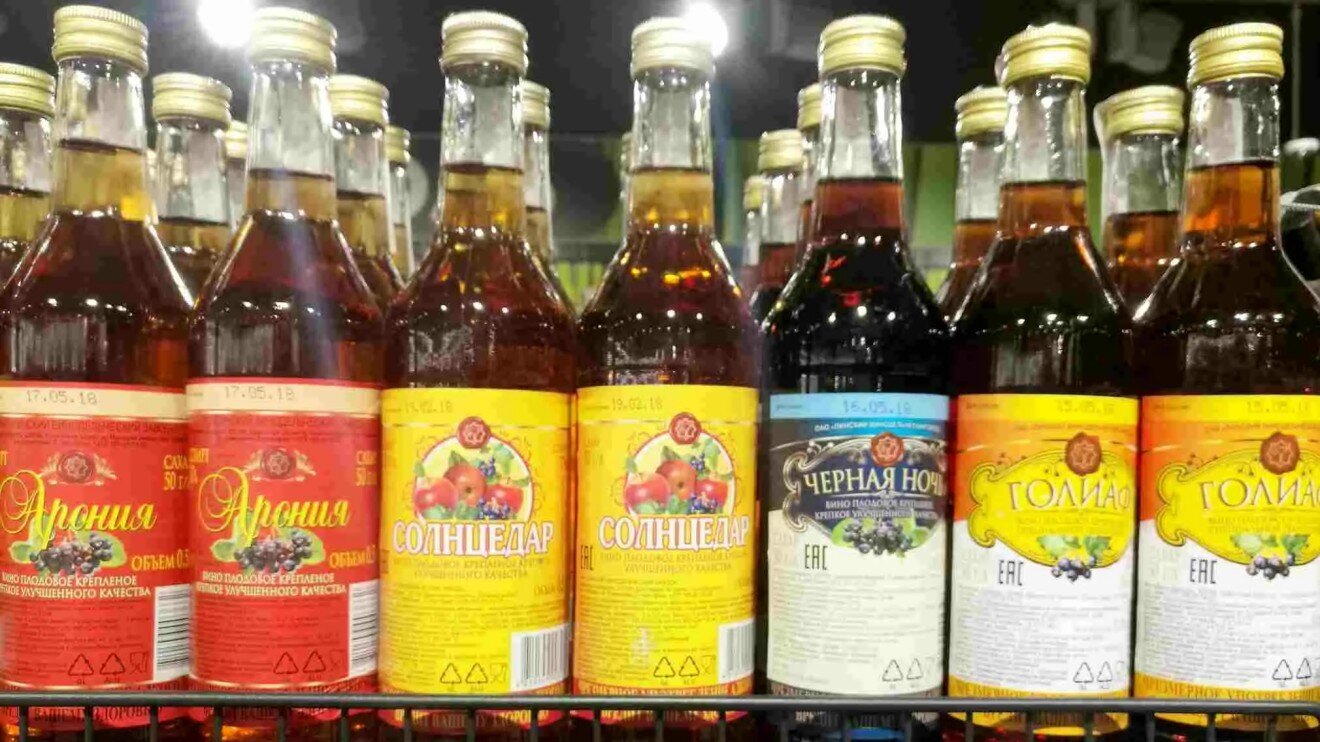
Shmurdyak is one of the many popular names for the cheap fortified wines that were widespread in the USSR from the late 1950s to the mid-1980s. In the context of a novel set in 1993, the mention of shmurdyak reflects the realities of the post-Soviet alcohol market.
What shmurdyak was
Shmurdyak was a surrogate alcoholic drink — a cheap fortified wine of 15–22 percent alcohol, made from low-grade wine stock with added sugar, ethyl alcohol, water, and colorings. These drinks were consumed for one purpose only, to get drunk; their flavor was beside the point.
Besides «shmurdyak,» these wines went by a whole gallery of popular nicknames: bormotukha («the mutterer»), plodovo-vygodnye (a pun turning «fruit-and-berry» into «fruit-and-profitable»), podlo-yagodnye («vile-and-berry»), chernila («ink»), gomuly, chervivka («the wormy one»), byrlo, gnilushka («the rotter»), and others. Every one of those names captured the popular verdict on the quality of the stuff.
The Soviet period
In Soviet times the typical price of such wines ran from 92 kopecks to 1 ruble 87 kopecks a bottle. Among the best-known labels were «Portwein 777» (nicknamed «three axes» or «three pokers»), the Azerbaijani «Portwein Agdam» («Kak dam!» – «I’ll clock you one!»), «Kagor 32,» «Anapa» (rechristened «Anna Pavlovna»), and «Golden Autumn» («Zosya Osipovna»).
One of the main sources of cheap wine stock was Algeria. After that country gained independence, the USSR signed a long-term contract for wine material delivered by tanker. The fortified wines themselves were then produced from it inside the Soviet Union.
The post-Soviet period
During Gorbachev’s 1985 anti-alcohol campaign a decision was taken to wind down production of bormotukha. But after the collapse of the USSR, against a backdrop of economic decline and the damage done to viticulture, many wineries went back to mass production of cheap wine.
By 1993 — the time in which the novel is set — the word «shmurdyak» for cheap wine had become especially common. Producers moved to making wine from bad grapes, from third- or fourth-pressing must with added sugar and yeast, and to turning out «wine drinks» from diluted spirit with colorings and flavorings.
Health hazards
The use of low-grade ingredients made bormotukha outright poisonous often enough. Drinking it could cause serious poisoning accompanied by vomiting, and sometimes ended in death. Consumers were well aware of this, but the low price kept the stuff attractive to certain layers of the population.
The reference in the novel
The mention of shmurdyak in a trading context, and its comparison with «alcohol of Belgian origin,» reflects a situation typical of the early 1990s, when trade in poor-quality alcohol passed off as imported flourished across the post-Soviet space. The line «at a wholesale price of a dollar fifty a bottle of shmurdyak, what difference does it make whether it’s Polish or Belgian?» underlines both the cynicism of the traders and the real quality of the goods being sold.
This kind of trade was a defining feature of the transition years, when the destruction of the old state quality-control structures coincided with the appearance of new opportunities for private enterprise – enterprise that was frequently semi-criminal in character.