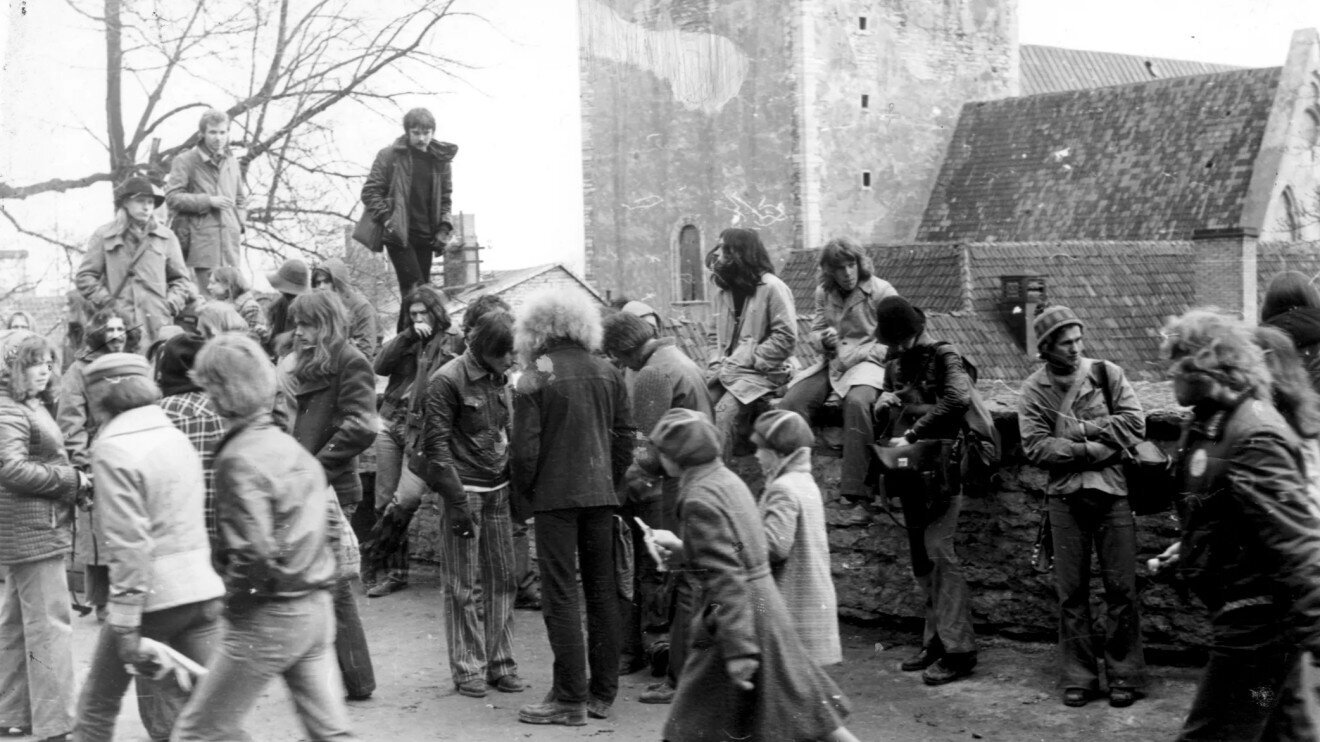
System hitchhikers were representatives of a distinct subculture in the 1970s USSR, part of a broader informal movement known as the «System.»
The «System» (self-styled «people of the System») was the Soviet counterpart to the Western hippie movement, which took shape in major Soviet cities in the late 1960s and early 1970s. This informal community brought together young people who rejected official Soviet ideology and lifestyle in favor of alternative values: freedom, creative self-expression, spiritual searching, and resistance to the bureaucratic system.
System hitchhikers were part of this counterculture and practiced hitchhiking not merely as a way of getting around for free, but as a philosophy of life. For them, hitchhiking symbolized freedom from social convention and state control, and an opportunity for exploring the world and themselves. They built their own culture of travel across the country, with distinct rules, traditions, and even a peculiar code of ethics.
Distinctive traits of the "System people" included:
- Rejecting material values in favor of spiritual development
- Long hair on men (which earned them the nickname "the hairy ones")
- A distinctive style of dress (worn jeans, friendship bracelets)
- A passion for rock music, especially music banned in the USSR
- Interest in Eastern philosophies and practices
- Their own slang and system of symbols
System hitchhikers often gathered at so-called «tusovki» — meetups of like-minded people at specific spots, for example "at the Gogols" in Moscow (by the monument to Nikolai Gogol). They had their own travel routes, meeting places, and «flats» (apartments) where they could stay. They developed an entire system of signs and symbols for communicating on the road.
The «System» movement was under constant pressure from the Soviet authorities, who viewed it as a manifestation of "corrupting Western influence." Members of the movement were frequently detained by police and ran into trouble finding work or continuing their education. Despite the crackdowns, the «System» survived until the end of the Soviet era, transforming in the 1980s as new youth subcultures emerged.