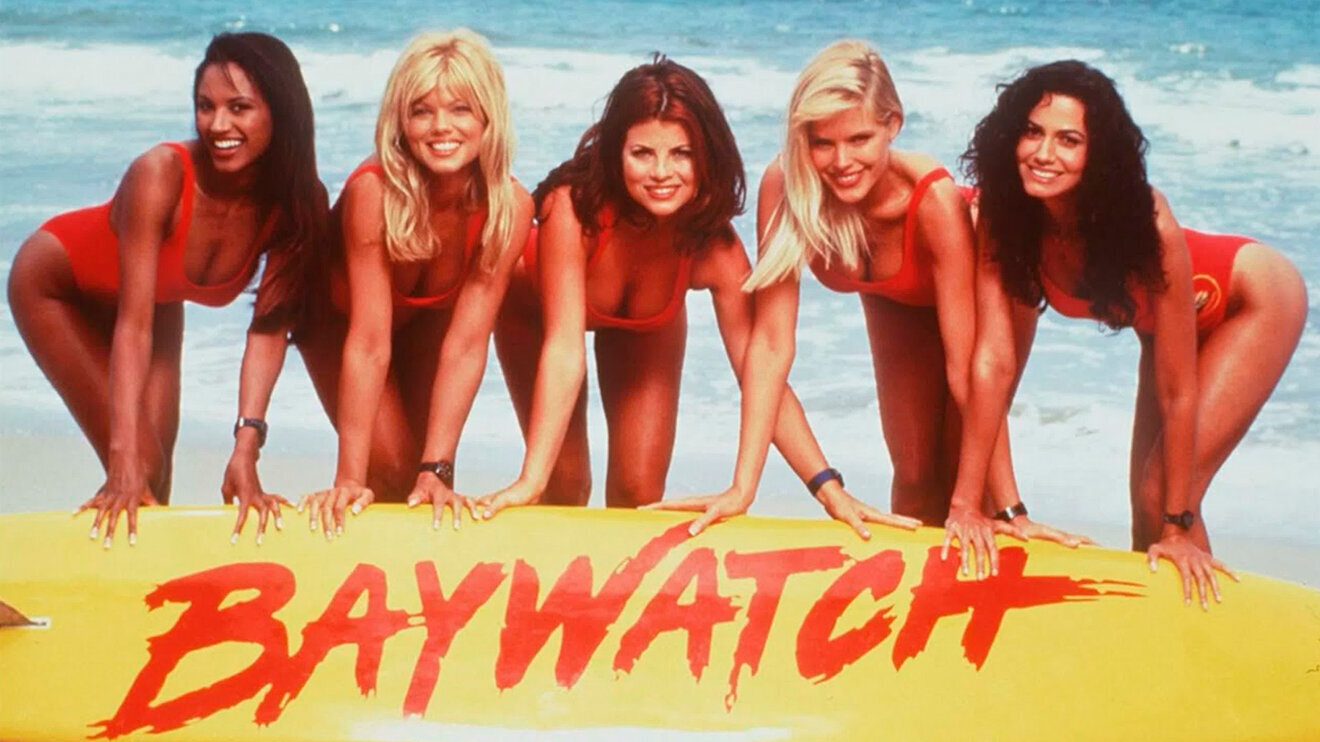
Baywatch — the American TV series that ran from 1989 to 1999 — became a genuine cultural phenomenon not just in the U.S. but worldwide. By 1996, when the novel’s events take place, the show was at its peak, recognized as the most-watched television program on Earth, with an audience of over 1.1 billion viewers — a record entered in the Guinness Book of World Records.
Origins and Concept
The series followed lifeguards working the beaches of Los Angeles County, California. The central setting was Malibu Beach, one of the world’s most famous and prestigious stretches of coastline, home to Hollywood stars and millionaires. That choice of location was largely responsible for the show’s success: viewers worldwide could «visit» the legendary California beach every week without leaving home.
The show’s core idea was to celebrate the heroism of lifeguards risking their lives daily to save others. Its creators leaned on the tagline «No one is immune,» stressing that danger could find anyone — even the lifeguards themselves. The show devoted considerable attention to CPR and artificial-respiration technique, making it as much educational as entertaining.
The Stars
By 1996 the show’s central figures were several charismatic actors who became global celebrities thanks to Baywatch. David Hasselhoff, as Lieutenant Mitch Buchannon, was the unbroken leader of the lifeguard team for nearly the entire run, appearing in 220 episodes. Already known from Knight Rider, Hasselhoff’s turn on Baywatch cemented his status as a TV superstar.
Pamela Anderson, as C.J. Parker, arguably became the show’s most recognizable face. Her character debuted in 1992 and, by 1996, had made Anderson one of the most famous women on the planet. Anderson appeared in 111 episodes, and her image — a blonde in a red swimsuit running down the beach in slow motion — became the show’s signature.
Other key cast members by 1996 included David Charvet (Matt Brody), Alexandra Paul (Stephanie Holden), Yasmine Bleeth (Caroline Holden), David Chokachi (Cody Madison), and Jeremy Jackson (Hobie Buchannon). All became international stars through the show.
Cultural Impact in the Mid-1990s
By 1996 Baywatch had become far more than a TV series — it was a cultural phenomenon shaping fashion, lifestyle, and even travel preferences for millions. The lifeguards’ red swimsuits became a fashion trend, and Malibu itself became a pilgrimage site for tourists worldwide.
Broadcast in more than 140 countries, the show made California’s beach culture a global phenomenon. For many viewers, especially those from the former USSR, Baywatch was a window into the American dream — a world of eternal summer, beautiful bodies, expensive cars, and a carefree life by the ocean.
Malibu Lagoon Beach and the Tourist Boom
Malibu Lagoon Beach, mentioned in the novel’s text, really was one of the show’s key filming locations. This beach, at the heart of Malibu, became a pilgrimage site for fans worldwide. By the mid-1990s, the flow of tourists wanting a photo «just like on the show» had grown so large it became a genuine headache for local authorities.
The beach is known for more than the show — it’s where Malibu Creek meets the Pacific, forming a unique lagoon ecosystem home to many bird and marine species, which makes it popular with nature lovers too. But it was Baywatch that made this spot famous worldwide.
Production Notes
The series was known for its striking ocean footage, shot with technology impressive for its time. The famous slow-motion beach runs became the show’s calling card and spawned countless parodies and imitations. Filming took place on real Los Angeles beaches, adding authenticity to what appeared on screen.
The creators paid close attention to the realism of the rescue operations. Many actors underwent genuine lifeguard training and certification, and real Los Angeles lifeguards often took part in filming, adding to the show’s credibility.
Spin-Offs and Franchise Expansion
By 1996 the Baywatch franchise was already expanding. In 1995, the spin-off Baywatch Nights launched, with Mitch Buchannon moonlighting as a private detective. That same year saw the TV movie Baywatch: Forbidden Paradise, set in Hawaii.
These expansions showed the brand’s growing popularity and its creators’ drive to squeeze every ounce of commercial potential from the show. By the mid-1990s, Baywatch had become a genuine entertainment industry with a wide range of tie-in products.
Impact on California Tourism
The show had an enormous effect on California tourism. Many travel agencies began offering special tours of Baywatch filming locations. The beaches of Malibu, Santa Monica, and other coastal parts of Los Angeles became must-see stops for millions of tourists.
Thanks largely to the series, people worldwide came to picture California as a place of eternal summer, where beautiful people spend their days on the beach under a bright sun. That image became a powerful tool of American soft power, promoting the American way of life and its values around the world.
Criticism and Controversy
Despite its massive popularity, the show was often criticized for shallow plots and excessive exploitation of female beauty. Critics accused its creators of making something closer to a swimsuit ad than a serious drama. None of that criticism dented the show’s popularity with audiences worldwide, though.
By 1996 Baywatch had become the symbol of an era — a time when television was the dominant entertainment, and simple, easy-to-follow stories with beautiful people in beautiful places could conquer the world. For Roman Peskov, visiting the Baywatch beach in 1996 wasn’t just tourism — it was a pilgrimage to one of that era’s central symbols of American pop culture.