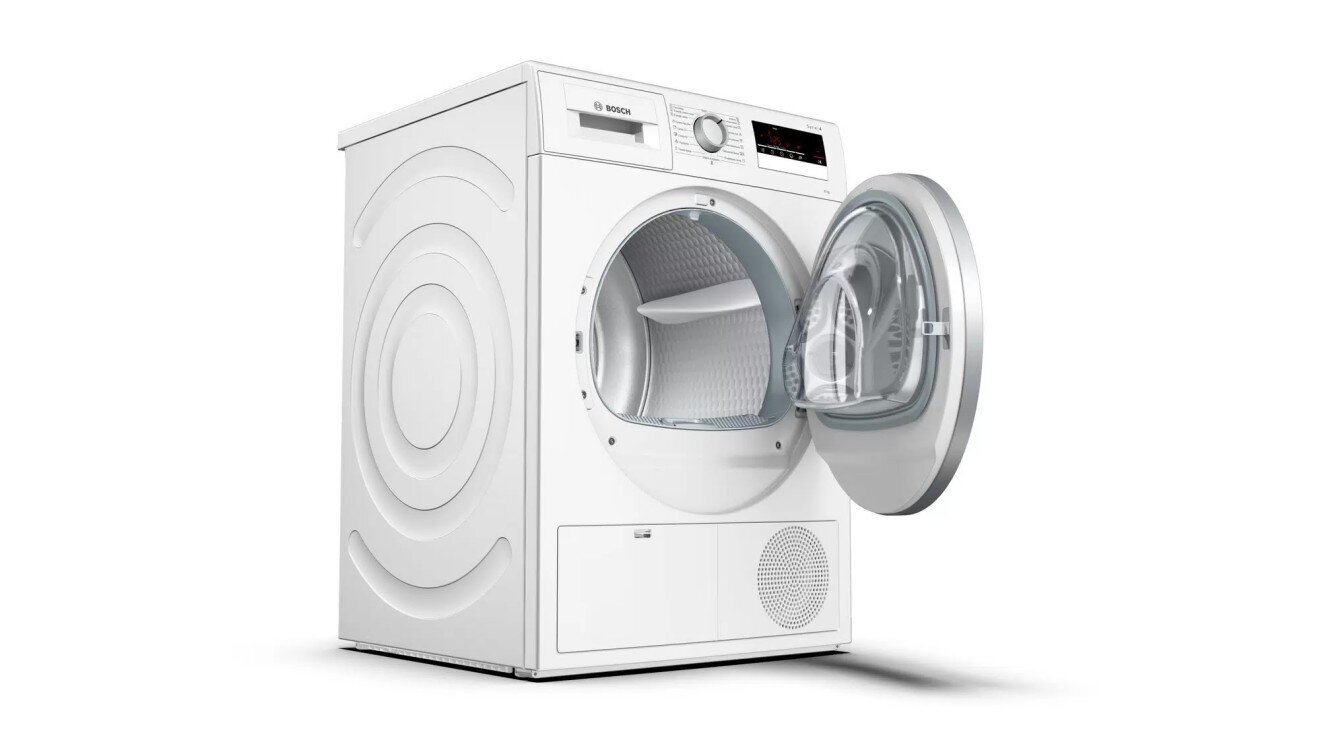
A clothes dryer is an electromechanical appliance for automatically drying textiles, widely used in American households since the mid-20th century.
General Description and How It Works
A clothes dryer is a household appliance designed to remove moisture from washed laundry and clothing using hot air and mechanical action. The main structural element is a rotating perforated drum, through which heated air circulates. The drum’s rotation ensures items are distributed evenly and creates air pockets between them, promoting more efficient moisture evaporation.
A typical dryer consists of the following components: a perforated steel drum, an electric motor to turn the drum, a heating element (electric or gas), a fan for air circulation, a lint-filtering system, a control panel with a timer and temperature setting, and a ventilation system to expel humid air.
Types of Dryers
Vented (Open-Cycle) Dryers
The most common type in American homes. Moist air from the drum is vented outside through a duct system. Air is continuously drawn from the room, heated, passed through the drum with the laundry, then expelled from the house through a vent duct. These machines are simple in design, reliable, and relatively inexpensive, which drove their widespread adoption.
Condenser Dryers
Operate on a closed-loop air-exchange principle. Heated air circulates inside the machine, passes through a condenser, where moisture condenses and collects in a special reservoir or drains into the sewer system. The cooled air is reheated and returned to the drum. These don’t require a connection to a ventilation system, but are less energy-efficient.
Size and Capacity
American dryers significantly exceed European models in size and capacity. A standard machine is about 68 cm wide, 70–75 cm deep, and 100–105 cm tall. Drum capacity ranges from 6 to 9 cubic feet (170–255 liters), letting a single cycle dry 7–12 kg of laundry. Larger-capacity models, up to 15 kg, also exist, especially popular with big families.
The larger size of American dryers reflects spacious houses and dedicated laundry rooms. Unlike European apartments, where appliances have to fit into limited space, American homes offer enough room to install full-size units.
Installation and Hookup
Vented dryers require a connection to the house’s ventilation system. The standard duct is 4 inches (10 cm) in diameter and made of galvanized steel. The system includes a flexible transition hose right behind the machine, rigid duct sections running inside the walls, and an exterior vent hood with flaps to keep out insects and animals.
Electric models plug into a 220V circuit (unlike ordinary American 110V outlets) via a special outlet. Gas models also require a connection to the house’s gas line. Proper installation is critical for safe operation of the appliance.
Placement in the Home
In American homes, dryers are traditionally installed in basements, dedicated laundry rooms, or garages. A popular setup places the washer and dryer side by side, often with the option of stacking the dryer on top of the washer to save space.
In newer homes, laundry rooms are located on the main floors, sometimes near the kitchen or in hallways. This requires a more complex duct system, but offers greater convenience.
Operating Requirements
Using a dryer requires regular maintenance. The main task is cleaning lint from the filter after every load. Lint buildup reduces efficiency, increases drying time, and creates a fire risk. The vent duct also needs periodic cleaning to remove accumulated lint.
Modern models come equipped with moisture sensors that automatically detect how dry the laundry is and stop the cycle, preventing over-drying. This saves energy and extends the life of fabrics.
Safety and Fire Risk
Dryers carry a certain fire risk. According to American fire service data, roughly 2,900 clothes-dryer fires occur each year. The main cause is improper maintenance and lint buildup in the ventilation system.
To prevent fires, it’s necessary to regularly clean the lint filter, check the condition of the vent duct, avoid overloading the machine, and use only manufacturer-recommended materials for the ductwork.
Energy Consumption
Dryers are among the most energy-intensive home appliances, second only to refrigerators and freezers. Electric models draw 3 to 5 kW during operation, with a drying cycle lasting from 30 minutes to 2 hours, depending on the type and amount of laundry.
Gas models are more economical to run, since gas is cheaper than electricity for heating air. But they require a gas-line hookup and mandatory venting to the outside, due to combustion byproducts.
Effect on Fabrics
Using a dryer can shrink certain fabrics, especially natural materials. High temperatures and mechanical action cause the loss of short fibers, which can, over time, change a fabric’s texture. For delicate items, low-heat settings or air-drying are recommended.
Modern machines offer various drying programs for different fabric types: cotton, synthetics, delicates. Some models include a steam function to reduce wrinkles and freshen clothing.