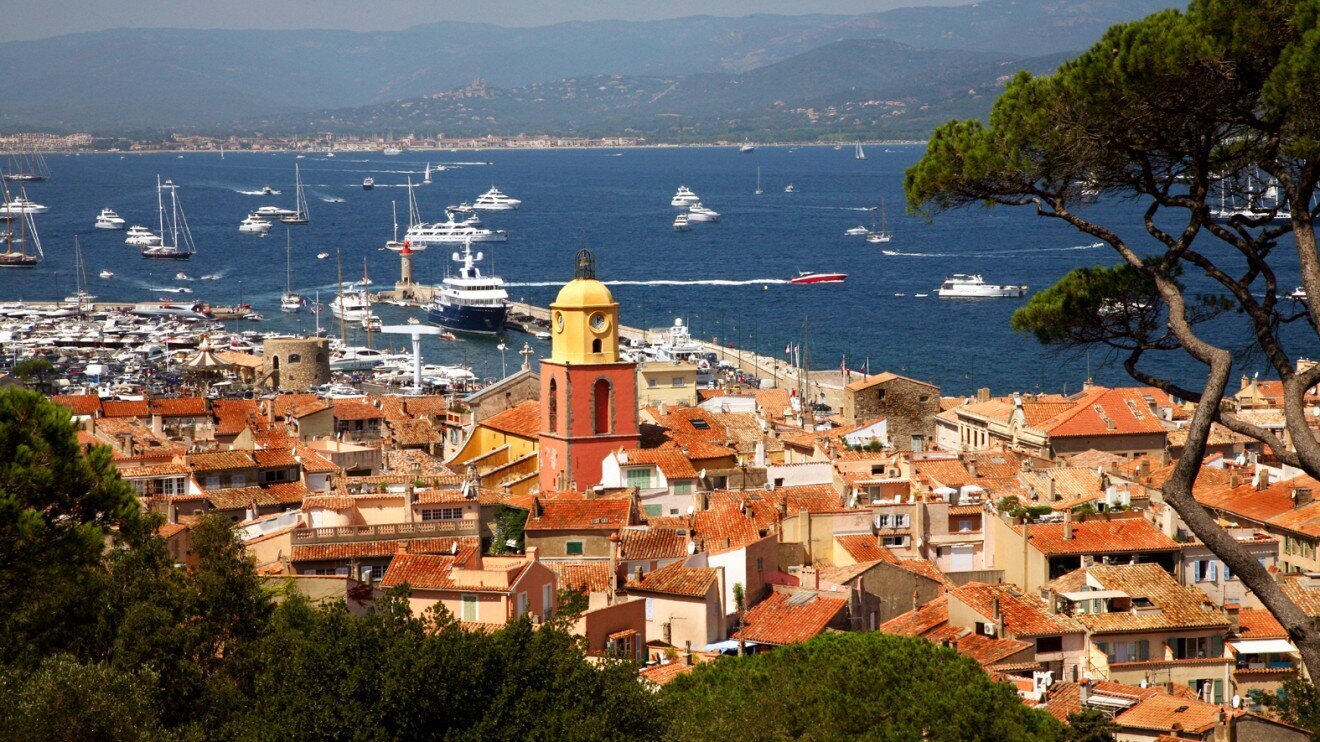
Two jewels of the European coastline – Italian Carloforte and French Saint-Tropez – have long drawn wealthy travelers with their unique atmosphere, rich history, and exclusive leisure opportunities. These resorts are more than tourist destinations – they are true symbols of the luxurious Mediterranean lifestyle.
Carloforte: Sardinia’s hidden paradise
Location and uniqueness
Carloforte is a small port town on the island of San Pietro, off the southwestern coast of Sardinia. This secluded island, just 51 square kilometers in area, lies roughly 7 kilometers from the main island and is one of Italy’s most exclusive resort destinations. Carloforte is included on the prestigious list «I Borghi più belli d’Italia» – the most beautiful villages in Italy.
The place’s uniqueness lies not only in its geographic isolation but in a remarkable cultural distinctiveness. Although the town is formally part of Italy, its residents still speak a distinct dialect of Ligurian – Tabarchino – radically different from both Italian and Sardinian.
Historical background
Carloforte’s history begins in the eighteenth century with a remarkable migration. Around thirty families of coral fishermen from the Ligurian town of Pegli (near Genoa) had sailed in 1541 to the island of Tabarka off the coast of Tunisia in search of precious coral. After living there for nearly two centuries, they found the local coral reefs depleted and decided to return to Italy.
On the way home the fishermen discovered rich coral deposits off the coast of Sardinia. In 1739 they petitioned King Charles Emmanuel III of Piedmont-Sardinia for permission to settle the uninhabited island of San Pietro. Granted royal permission, the settlers founded a town they named Carloforte – «Charles the Strong» or «Charles’s Fortress» – in honor of their benefactor.
Legend holds that as early as the start of the fourteenth century, the Chiesa dei Novelli Innocenti church was built on the island in memory of hundreds of children who took part in the so-called Children’s Crusade of 1212 and drowned off the island’s coast in a storm en route to North Africa. This church became the only architectural evidence of the island’s history predating the 1739 colonization.
The modern town and its landmarks
Today’s Carloforte is a picturesque fishing town with narrow, cobbled streets, colorful houses hugging the rocky shore, and a cozy harbor where traditional lateen-sail boats bob at their moorings. The town has kept its authentic Mediterranean character, having escaped mass development by hotels and shopping centers.
Key landmarks include the historic center with its Genoese architecture, and old fortress walls and towers built by the first settlers for protection against pirates. On the opposite side of the island stands the Capo Sandalo lighthouse, dating to the 1880s and still operating, though now automated. Locals simply call it «Il Faro» (The Lighthouse).
Of particular interest is the northern part of town, where the buildings of the former communal tuna-processing plant stand, linked to the island’s once-thriving tuna industry. Some of these buildings have been restored and are now used as a windsurfing school and a private tuna-processing operation; others remain in ruins but hold great architectural value.
Cultural features
Carloforte still maintains close cultural ties to the mainland towns of Pegli and Genoa. Tabarchino is taught in local schools and used by most children, making this corner of Sardinia a unique linguistic enclave. Locals often work as merchant sailors around the world, creating an interesting blend of cosmopolitanism and tradition.
The town is renowned for its ancient wooden-boatbuilding traditions. Traditional lateen-sail fishing boats built by local craftsmen can still be seen in the harbor – genuine works of maritime art.
Saint-Tropez: an icon of the French Riviera
Location and climate
Saint-Tropez lies in the Var department, in the Provence-Alpes-Côte d’Azur region of southern France. This legendary resort sits 68 kilometers west of Nice and 100 kilometers east of Marseille, on the famous French Riviera. The town sits on the narrow Gulf of Saint-Tropez, which stretches north to Sainte-Maxime beneath the Massif des Maures mountains.
Saint-Tropez has a Mediterranean climate, with hot summers and mild winters. Daytime temperatures are somewhat tempered by the coastal location, making summer holidays comfortable even in the hottest months – ideal conditions for sailing, beach life, and open-air socializing.
Historical heritage
Saint-Tropez’s history goes back to antiquity. In 599 BC, Phocaeans from Ionia founded Massalia (modern Marseille) and established other coastal outposts in the region. According to the Roman historian and military commander Pliny the Elder, in ancient times Saint-Tropez was known as Athenopolis and belonged to the Massaliotes. In 31 BC the Romans invaded the region, and Roman citizens built numerous luxurious villas here, including the famous «Villa of the Plane Trees.»
The town’s modern name honors an early Christian martyr, Saint Torpes. Legend holds he was beheaded in Pisa under Nero’s reign, his body placed in a rotten boat along with a rooster and a dog. The body supposedly drifted ashore at what is now Saint-Tropez.
In the late ninth century, long after the fall of the Western Roman Empire, pirates and privateers began a century of raids and pillaging. In the tenth century the settlement of La Garde-Freinet was founded 15 kilometers north of Saint-Tropez. From 890 to 972, Saint-Tropez and its surroundings became an Arab Muslim colony, controlled by the nearby Saracen settlement of Fraxinet.
The Renaissance and its flourishing
Starting in 1436, Count René I («Good King René») tried to repopulate Provence. He established the barony of Grimaud and turned to the Genoese Raphael de Garezzio, a wealthy nobleman, who sent a fleet of caravels with 60 Genoese families to the area. In exchange, Count René promised to exempt the citizens from taxes.
On February 14, 1470, Jean de Cossa, baron of Grimaud and grand seneschal of Provence, agreed to let the Genoese build town walls and two large towers that still stand today: one at the end of the Grand Môle, the other at the entrance to the Ponche.
The town became a small republic with its own fleet and army, governed by two consuls and 12 elected councilors. In 1558 town captain Honoré Coste was granted authority to defend the town. The captain commanded the militia and mercenaries who successfully repelled Turkish and Spanish attacks.
The modern era and the town’s transformation into a resort
Until the early twentieth century, Saint-Tropez remained a military fortress and fishing village. The town was the first on its stretch of coast to be liberated during the Second World War, as part of Operation Dragoon in August 1944.
In the late 1950s and early 1960s, Saint-Tropez became internationally known as a seaside resort, thanks mainly to an influx of French New Wave filmmakers and the yé-yé music movement. They were followed by European and American high society, and then by tourists.
In the 1920s, Saint-Tropez attracted famous fashion figures such as Coco Chanel and Elsa Schiaparelli. In the 1950s the town gained international fame as the filming location for movies like «And God Created Woman,» starring French actress Brigitte Bardot.
Cultural life and traditions
Saint-Tropez’s motto is «Ad usque fidelis» (Latin for «faithful to the end»). The phrase reflects the town’s historic devotion to its traditions and independence.
One of the oldest traditions in Provence is the «Bravade de Saint-Tropez,» held every year in mid-May for more than 450 years. The town celebrates its patron saint, Torpes of Pisa, and its military achievements. Over three days of celebration, various militias in period costume fire muskets into the air at traditional stops, march to the sound of brass bands, and carry a bust of Saint Torpes in procession.
Every year in late September the Gulf of Saint-Tropez hosts the famous «Les Voiles de Saint-Tropez» regatta, drawing yachts up to 50 meters long and crowds of tourists.
Beaches and water activities
Carloforte: hidden coves and wild beaches
The island of San Pietro offers both rocky and sandy beaches, many of which remain relatively wild and uncrowded. Thanks to its geography and limited access (ferry only), Carloforte’s beaches have kept their pristine beauty.
A notable feature of the island is the clarity of the water and the richness of its underwater life. The coral reefs that once drew the first settlers still draw the interest of divers and snorkelers today. The rocky shoreline creates numerous secluded coves, ideal for private relaxation.
Saint-Tropez: the beaches of Pampelonne and the coast’s luxury
Saint-Tropez’s beaches lie along the coast of the Bay of Pampelonne, south of Saint-Tropez and east of Ramatuelle. Pampelonne offers a string of beaches along its five-kilometer coastline. Each beach is about 30 meters wide, with its own beach huts and private or public sunbathing areas.
Many beaches rent equipment for windsurfing, sailing, and canoeing, while others specialize in motorized water sports such as speedboats, jet skis, water skiing, and diving. Some of the beaches are nudist.
Especially famous is Tahiti Beach, made renowned by the film «And God Created Woman» with Brigitte Bardot. The beach became a symbol of freedom and ease, though later the mayor of Saint-Tropez ordered police to ban topless sunbathing and monitor the beach by helicopter. In the end, topless sunbathing became the norm for men and women alike, from the beaches of Pampelonne to the yachts moored in the middle of Saint-Tropez harbor.
Cost of a stay: luxury demands investment
Carloforte: exclusivity justifies the price
A stay in Carloforte is an expensive pleasure for several reasons. First, geographic isolation means all goods and services must be brought to the island by ferry, substantially raising their cost. Ferries run several times a day, connecting Carloforte to the Sardinian mainland at Portovesme and to the fishing port of Calasetta on the island of Sant’Antioco.
Accommodation on Carloforte is limited to a small number of hotels and private villas, creating high demand against limited supply. Most lodging options are boutique hotels or exclusive sea-view apartments, with prices reaching several thousand euros a week in high season.
The restaurant scene is also pricey, especially at establishments specializing in fresh seafood and local delicacies. Tuna caught in the local waters is considered among the best in the Mediterranean, and its price reflects that.
Private yacht charters and boat excursions likewise require significant outlay. Many wealthy tourists prefer to charter yachts for a week or more, using Carloforte as a base for coastal cruising along Sardinia.
Saint-Tropez: synonymous with luxury and high prices
Saint-Tropez has long established itself as one of the most expensive resorts in the world. Tourism is the town’s main economic resource, and prices here match its status as an international destination for the very wealthy.
The famous Hotel Byblos and the Les Caves du Roy club, a member of Leading Hotels of the World, set the standards of luxury and prices to match. Its opening in 1967, attended by Brigitte Bardot and Gunter Sachs, was an international event, and prices have only risen since.
Exclusive beach clubs, popular with the wealthy from around the world, charge high prices not just for food and drinks but for access to their grounds. Renting a lounger at a prestigious beach club can cost several hundred euros a day.
Saint-Tropez restaurants are known for astronomical prices, especially those with a view of the port, where diners can watch the luxurious yachts. Dinner at a good restaurant can easily run several hundred euros per person, not counting wine.
Renting property in Saint-Tropez is among the most expensive in the world. A sea-view villa can cost tens of thousands of euros a week in high season, and buying property requires investments in the millions.
Yacht culture and harbors
Carloforte: a quiet haven for connoisseurs
Carloforte’s harbor has kept its authentic fishing-village atmosphere, where modern yachts sit alongside the traditional boats of local fishermen. The town’s maritime school maintains high standards of seamanship and training for professional sailors.
Many yacht owners prize Carloforte for its tranquility and lack of tourist crowds. It’s an ideal spot for those seeking a secluded getaway surrounded by unspoiled nature. The harbor offers all the services yachts need, including fuel, repairs, and provisioning.
Saint-Tropez: a mecca for yachting
Saint-Tropez harbor is a genuine theater of luxury, where some of the most expensive yachts in the world can be seen every day. In the eighteenth century the port was actively used for trade – in 1789, 80 ships called there. Local shipyards built tartanes and three-masted ships with a capacity of 1,000 to 12,200 barrels.
Though its role as a commercial port has declined, Saint-Tropez has become a primary base for many well-known sailing regattas. Fast water transport to Sainte-Maxime on the other side of the bay and to other resorts is provided by the company Les Bateaux Verts.
The annual «Les Voiles de Saint-Tropez» regatta in late September draws yachts up to 50 meters long and thousands of tourists, turning the town into an international yachting hub.
Culinary traditions
Carloforte: the culinary heritage of the Tabarchini
Carloforte’s cuisine reflects the unique history of its residents, blending Ligurian, North African, and Sardinian influences. Seafood forms the backbone of local cuisine, especially tuna, still caught using traditional methods.
Tuna from Carloforte’s waters is considered among the best in the Mediterranean, thanks to the local ecosystem’s particular conditions. Traditional methods of preserving and preparing tuna, passed down through generations, make the local cuisine especially authentic.
Ligurian culinary influence shows in the use of pesto, focaccia, and other specialties of northern Italy, adapted to local conditions and ingredients.
Saint-Tropez: refined French cuisine
Saint-Tropez is famous for its refined restaurants, serving both classic Provencal cooking and modern interpretations of French gastronomy. Local restaurants frequently earn Michelin stars and other prestigious awards.
The famous «tarte tropezienne» dessert was invented by a Polish pastry chef who opened a shop in Saint-Tropez in the mid-1950s, and was popularized by actress Brigitte Bardot. This traditional cake became a symbol of the town and an essential part of local culinary culture.
Saint-Tropez restaurants are known not just for the quality of their food, but for a unique atmosphere created by a combination of refined interiors, a beautiful sea view, and top-tier service.
Transport access
Getting to Carloforte
Carloforte can only be reached by sea. The ferry company Delcomar provides regular service between the port of Carloforte and the Sardinian mainland at Portovesme, as well as with Calasetta on the island of Sant’Antioco, home to another Tabarchini community.
For wealthy tourists, a popular way to arrive is by private yacht or chartered vessel, letting them enjoy the sea journey as part of the getaway.
Getting to Saint-Tropez
Saint-Tropez is accessible by both sea and land. The nearest airport is in Nice, from where visitors can travel by car or helicopter. Many wealthy tourists prefer to arrive on their own yachts or chartered vessels.
In summer, Saint-Tropez frequently sees traffic jams due to the influx of tourists, making sea transport not just more comfortable but also more practical.
Conclusion
Carloforte and Saint-Tropez represent two different, yet equally appealing, destinations for wealthy travelers. While Carloforte offers seclusion, authenticity, and a chance to discover the unique culture of the Tabarchini, Saint-Tropez offers a plunge into an atmosphere of international glamour and luxury.
Both resorts share one thing in common – a stay here is an expensive pleasure, available only to those who can afford significant spending on accommodation, food, entertainment, and transport. That very exclusivity creates the special atmosphere of these places, where one can meet members of the global elite enjoying the best the Mediterranean lifestyle has to offer.
For those who value history, culture, and tranquility, Carloforte is the ideal choice. Lovers of the social scene, fashion trends, and recognized luxury will find all of that in Saint-Tropez. Either way, visiting these resorts leaves unforgettable impressions and confirms that true luxury lies not just in comfort, but in the uniqueness of the experience.