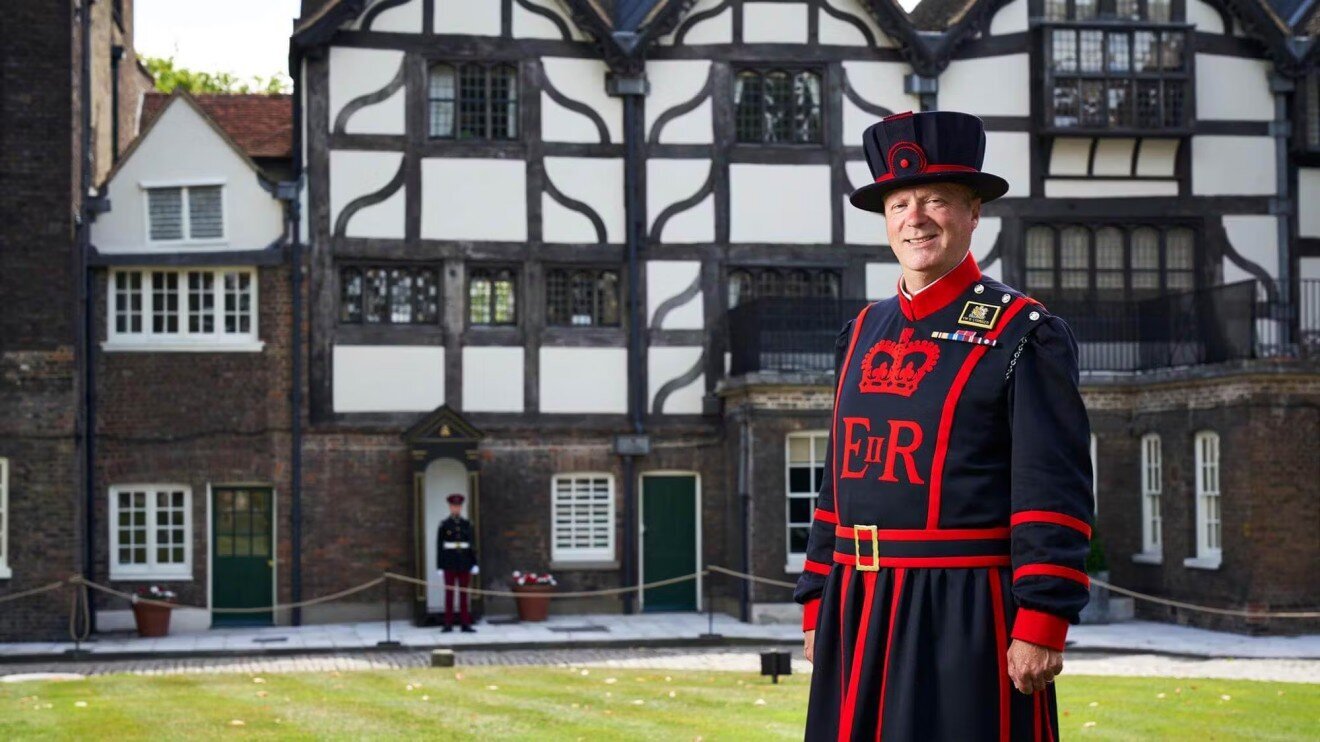
A yeoman was a member of a distinct social class in medieval England, occupying a position between the peasantry and the lesser nobility. The term is first documented in the mid-14th century, though the social class itself had formed somewhat earlier.
In the social hierarchy of medieval England, yeomen ranked above simple farming peasants (husbandmen) but below the landed gentry. These were free-born people who owned small plots of land or leased land on favorable terms. Many yeomen also served in royal or aristocratic households as mid-ranking servants, holding positions between sergeants and grooms.
An important feature of yeomen was that, unlike serfs, they enjoyed personal freedom and certain rights. After the Electors of Knights of the Shires Act of 1429, yeomen whose landholdings were valued at 40 shillings or more in annual income gained the right to vote.
Yeomen Archers: Military Glory
Yeomen won particular fame as archers during the Hundred Years’ War (1337–1453). Yeoman archers became the backbone of English military strength in the 14th and 15th centuries. Armed with the famous longbow, they inflicted devastating defeats on French knights at the battles of Crécy (1346), Poitiers (1356), and Agincourt (1415).
These commoners, most of them drawn from the yeoman class, revolutionized medieval military tactics. Their ability to loose up to 12 arrows a minute at ranges of up to 300 meters turned foot infantry into a formidable force, capable of standing against heavily armored knightly cavalry.
Social Standing and Ambitions
Yeomen were an ambitious social class. Many of them aspired to climb the social ladder, accumulate wealth, and perhaps earn a knighthood. But their social origins created serious obstacles to making advantageous marriages with members of the nobility.
The situation depicted in the novel — a yeoman’s son in love with a peer’s daughter — reflects real social tensions of the time. Daughters of peers and barons married exclusively within their own class, or higher. For a yeoman, such a marriage was practically an unattainable dream, unless he performed some outstanding feat of arms or grew wealthy enough to buy himself land and a title.
The Crusades: Motives and Participants
The Crusades (1095–1291) drew participants from every stratum of medieval society, but for very different reasons. While great feudal lords went to the Holy Land out of religious conviction, a desire for glory, or a wish to expand their holdings, for lesser knights, yeomen, and commoners, the Crusades often became the only way to change their fate.
The papal bull promised participants absolution from sin, but material incentives mattered just as much. The Church promised crusaders the right to plunder seized from the «infidels,» which was especially appealing to impoverished members of the military class.
Younger Sons and Impoverished Yeomen
Particularly active participants in the Crusades were the so-called «younger sons» — second, third, and later sons of feudal lords who, under the law of primogeniture, inherited none of their father’s land. The entire estate passed to the eldest son, leaving the younger sons without resources befitting their social status.
These men received a knightly upbringing and military training but held no land that could secure them a dignified life. The Crusades gave them a chance to put their military skills to use and, perhaps, win land and wealth in the East.
A similar situation arose for impoverished yeomen. Many lost their small landholdings to poor harvests, livestock disease, warfare, or other misfortunes. With no way back to the status of a simple peasant, they saw the Crusades as a chance to restore their social standing.
Northamptonshire: a Typical English County
The mention of Northamptonshire in the text of the novel is no accident. This county in central England was a typical example of a region that produced many yeoman crusaders. Northamptonshire was famous for its archers and, during the Hundred Years’ War, supplied a significant number of yeomen to the English army.
The county had a well-developed system of small and mid-sized landholding, which created favorable conditions for the formation of a yeoman class. Many of them served in the castles of local barons or in royal residences, giving them the chance to receive military training and become familiar with chivalric culture.
The Psychology of a Yeoman Crusader
A yeoman crusader was a complex psychological figure. On one hand, he was driven by sincere religious devotion — the medieval worldview drew no sharp line between material and spiritual motives. Taking part in a holy war was genuinely seen as a path to the salvation of the soul.
On the other hand, he was driven by thoroughly earthly ambitions. Yeomen understood well that military glory won in the Crusades could open doors into higher society. History held no shortage of examples where simple knights, even yeomen, who distinguished themselves in the Holy Land received grants of land and the chance to marry into noble families.
The Reality of the Crusades
But the reality of the Crusades often turned out to be far from the romantic image. Long marches across deserts, disease, hunger, constant skirmishes with the local population turned a holy mission into a string of survival and plunder.
Many crusaders drawn from the ranks of yeomen and lesser knights quickly lost their original ideals and focused on plain enrichment. The plunder of Christian cities (such as the sack of Constantinople in 1204) showed just how far practice had drifted from theory.
Social Mobility Through Military Service
Even so, the Crusades did offer real opportunities for social advancement. Some yeomen, proving themselves talented commanders or simply amassing enough wealth, could buy land and earn a knighthood upon their return.
Examples of this kind of social mobility inspired new generations to take part in military campaigns. The story of Godfrey of Bouillon, who became the first ruler of the Kingdom of Jerusalem, or of Tancred of Hauteville, showed that even younger sons could rise to royal power.
The Tragedy of Unmet Goals
But for most participants, the Crusades ended in disappointment. Many died of disease or in battle without ever seeing the Holy Land. Others returned home penniless, having spent everything they owned on equipment and travel.
Those who survived and accumulated wealth often found that social barriers proved sturdier than they’d expected. A peer’s daughter remained just as out of reach for a yeoman’s son, even a celebrated crusader.
It’s precisely this tragic unattainability of social ambition that likely gave rise to the «witch» visions tormenting the novel’s protagonist. The dream of a beloved left behind in distant Northamptonshire turned into a recurring nightmare, reflecting the crusader’s inner conflict between ideals and reality.