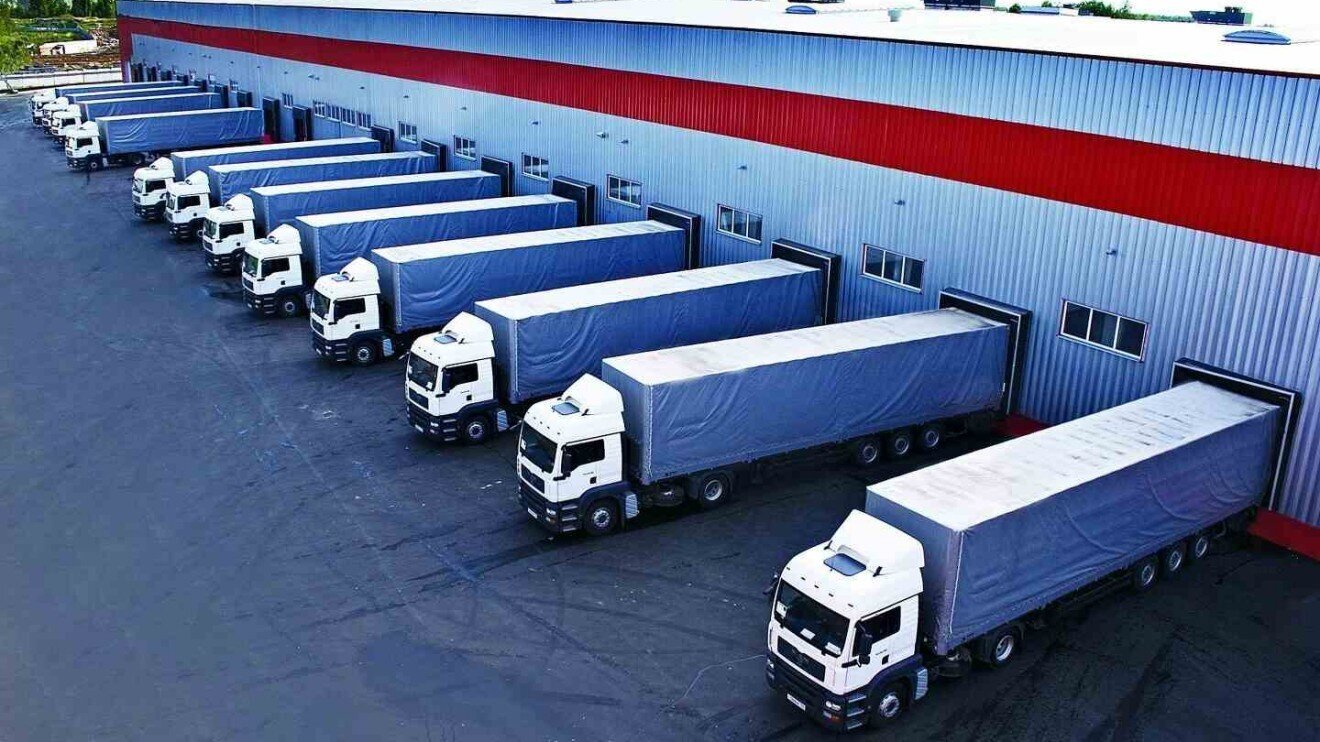
Over 1991–1993, a distinctive model for importing consumer goods took shape in Russia. The way trading companies operated rested on international delivery terms, administrative connections, and the economic realities of the transitional period.
Who took part in import operations
Two main categories of entrepreneurs handled the import of consumer goods into Russia. The first group consisted of former employees of Soviet foreign-trade organizations, who had gained access to international contacts under the state monopoly on foreign trade. The second group included former fartsovshchiki* (black-market traders), who had established connections both with foreign suppliers and with officials in the regulatory agencies.
Graduates of MGIMO* (the Moscow State Institute of International Relations) and similar specialized schools had an advantage in the form of international contacts made during their studies and internships. Knowledge of foreign languages and an understanding of how international trade worked let this category of entrepreneurs build commercial relationships with foreign companies quickly.
The basic structure of an import deal
A trading company would receive price lists of available goods from foreign suppliers. The range of goods offered was shaped by the company founders' particular contacts, and could include a wide variety of consumer goods — from textiles to home appliances.
The company would offer these goods to Russian buyers on CIF Moscow* terms. The buyer would pay an advance equal to the goods' selling price abroad. Once the advance payment was received, the company would pay the supplier and arrange shipment to Moscow.
When the truck carrying the goods arrived in Moscow, the buyer would be asked to pay the remainder of the cost. This additional payment amounted to 200–300 percent of the advance. The final payment covered the cost of delivery, customs duties, and the trading company's fee.
How the money flowed
Funds received from the buyer were split several ways. The first portion went to pay for transport services. Delivery costs were set by the transport company separately from the goods' price, and billed to the seller rather than the buyer.
A second portion covered customs duties. Where connections existed within the customs authorities, these payments were significantly reduced compared to official rates. The remaining amount, equal to 100–200 percent of the advance, formed the trading company's profit.
The role of the customs authorities
The customs regulatory system was still taking shape in 1993. The State Customs Committee (GTK) of Russia was working to strengthen oversight of import-tax revenue flowing into the budget, and checking how goods moved under the internal customs transit procedure.
The Moscow Regional Customs office began reassessing the customs value declared for goods. This assessment was based on catalog data, without a physical inspection of the goods, and used a simplified method for determining customs value.
Measures were considered for introducing advance payments at the point of border crossing, for shipments containing excisable goods, with final processing at the destination. It was assumed the shipper would independently determine the range and quantity of goods within the terms of the contract, which made it difficult to precisely determine the amount of the advance payment.
Unofficially, customs officials were considered the wealthiest category of the population — their financial standing outstripped the incomes even of members of criminal organizations or commercial firms.
Customs regimes used in Russian company practice
Russian companies made use of various customs regimes to increase the efficiency of import-export operations. Applying special procedures made it possible to achieve results beyond those of simple import or export deals.
Enterprises from the former Soviet republics actively used schemes involving several territories. Deep production cooperation led to stamped goods being shipped from Ukraine to Russia, further processed in Belarus, and the finished product imported back into Ukraine and Russia in set proportions.
Barter deals included shipping trucks to China in exchange for textiles and footwear. Light-industry products were exported to Kazakhstan, Estonia, Latvia, Turkmenistan, and Azerbaijan — including carpets, men's sheepskin coats, winter jackets, coats, shirts, and shoes.
Chemical products were exported to CIS countries — low- and high-density polyethylene, film, polypropylene, and dyes. Food exports to Ukraine, Uzbekistan, Kazakhstan, Lithuania, and Latvia included pasta, canned meat, coffee, cocoa, tea, butter, and jam.
Inflation and the exchange rate
Government economic policy rested on Keynesian ideas about money supply stimulating economic growth. Under the conditions of 1991–1993, however, flooding the economy with money instead drove inflation.
Goods paid for in advance often rose sharply in ruble price a month or two later, once their foreign-currency value was reconverted at the current exchange rate. Buyers of imported goods bore costs three to four times higher than the goods' original foreign-currency price, converted to rubles.
Companies without connections within customs faced prohibitively high duties. Official customs rates and duties made import operations economically unviable for anyone lacking administrative leverage.
How risk was distributed in the import scheme
The trading company bore no risk at any stage of the deal. The advance payment arrived before the goods were paid for from the supplier. The final settlement was made only after the goods physically arrived in Moscow. The gap between the advance and the final payment covered all of the company's costs and formed its profit.
The risks of currency fluctuations and changing customs conditions were passed on to the buyer. The company fixed its own fee in foreign currency at the time the deal was struck. The buyer took on the obligation to pay the actual costs as they stood once customs clearance was complete.
Warehouse logistics
Trading companies operated without warehouse space. The goods sat on the buyer's premises from the moment customs clearance was completed. Having no warehouses ruled out costs for rent, storage, and security of inventory.
Advance payment let the company build up a portfolio of orders before physically receiving any goods. It would then arrange delivery in a volume matching actual orders. Overstocking and shortages of working capital were ruled out by the very structure of the deal.
Restrictions on private individuals
The Customs Committee decided to eliminate duty-free import of unaccompanied baggage, regardless of value. Measures to stop registering new imported cars to private individuals were also under consideration.
These planned restrictions threatened the retail car-sales segment. Companies specializing in selling inexpensive, small-displacement cars found themselves under pressure from these administrative measures.
The limits of taxation
Those drafting regulations were guided by budgetary considerations, without regard for the point beyond which economic actors turn to ways of minimizing their tax obligations.
For many imported goods, the tax burden exceeded economically reasonable levels. Goods kept flowing into the domestic market through channels the state could not control. With no developed tax service, the tax authorities had no way of tracking every channel goods entered through, or of collecting taxes in full.
The scheme's competitive advantages
The company earned profit exceeding the goods' original price, without taking on commercial risk. Administrative leverage reduced customs payments. Having no warehouse capacity ruled out ongoing overhead.
Buyers accepted these terms because they had no alternative channel of access to imported goods. Organizing an import operation independently required international contacts, knowledge of procedures, and connections within the regulatory agencies. The markup was offset by the ability to get the goods without going through every stage of the operation oneself.