The name Jean Valjean appears in this passage of the novel in an ironic context: it’s what the hero, Zhora, calls the French lawyer. It’s a reference to the famous literary character who, by the mid-1990s, had become a symbol of the fight for justice and spiritual transformation.
The character’s origins
Jean Valjean is the protagonist of Victor Hugo’s novel Les Misérables, published in 1862. The work is one of the most famous novels of the nineteenth century and is considered a masterpiece of French literature.
The character is partly based on the real-life figure of Eugène François Vidocq – a former convict who became a successful entrepreneur and philanthropist. Vidocq assisted Hugo with research for other works, and in 1828 he saved a worker at his paper factory by lifting a heavy cart on his shoulders – an episode Hugo drew on for the novel.
The literary figure
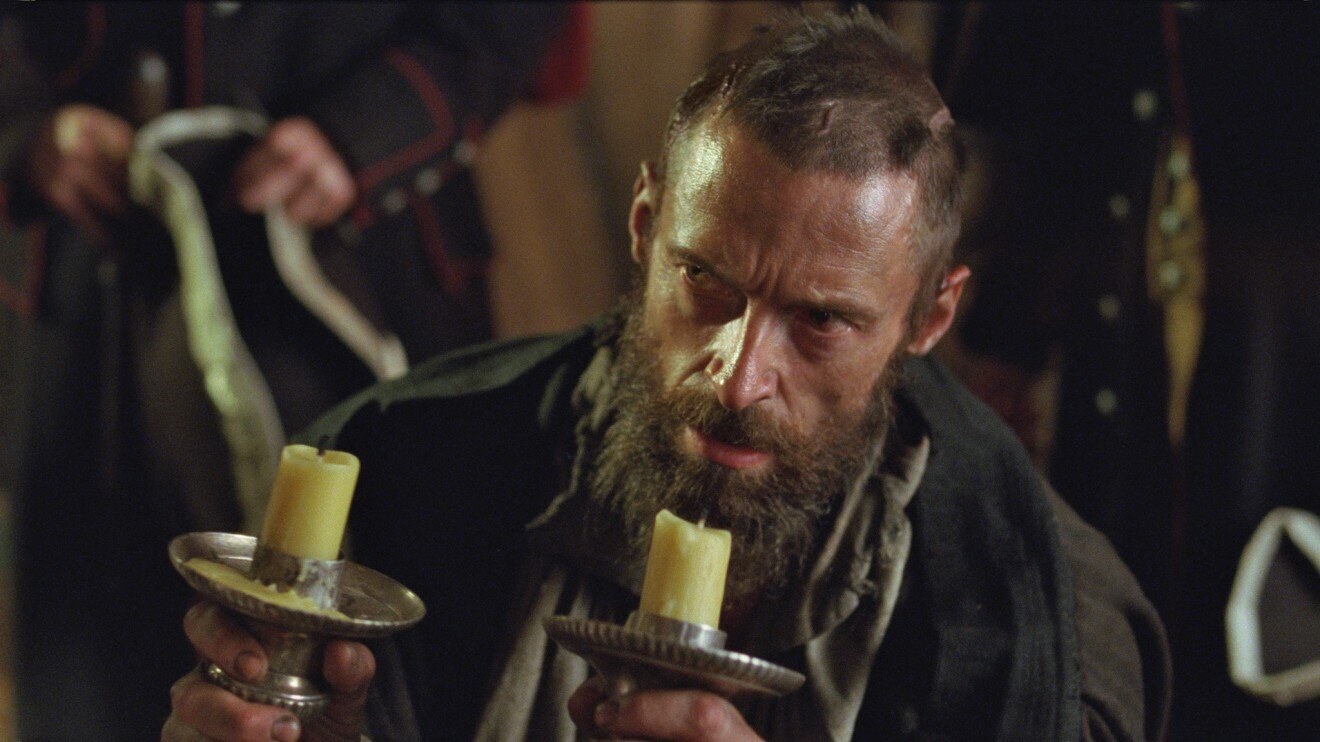
In the novel, Jean Valjean is a man sentenced to hard labor for stealing bread to feed his starving sister’s children. After 19 years of imprisonment he’s released, but carries the stigma of a former convict. His life changes fundamentally after he meets Bishop Myriel of Digne, who forgives him for stealing silver and thereby sets him on the path to redemption.
Under the name Monsieur Madeleine, Valjean becomes a successful industrialist and mayor of the town of Montreuil-sur-Mer. He spends his fortune on charity, funding hospitals, orphanages, and schools. He’s pursued by Inspector Javert, who embodies the unforgiving letter of the law.
The novel’s central theme is the tension between formal justice and human mercy. Javert represents the letter of the law, Valjean its spirit. When Valjean saves the life of the man hunting him, it forces Javert to reconsider his convictions, ultimately driving him to suicide.
Symbolic meaning
By the end of the nineteenth century, the name Jean Valjean had become a byword. It symbolizes:
- The possibility of redemption: a person can change and become better despite past mistakes
- The fight against social injustice: a critique of a society that offers no second chances
- Mercy over formalism: humanity set against bureaucracy
- Self-sacrifice: a willingness to suffer for the sake of others
Cultural influence
Hugo’s novel has been adapted for the screen many times, starting from the era of silent film. The character gained particular popularity thanks to the musical Les Misérables, which premiered in London in 1985. The musical became one of the most successful in theatrical history and introduced Jean Valjean to new generations of audiences.
Interestingly, in the musical, Javert often calls Valjean «prisoner 24601,» though in the original novel that number is mentioned only twice and never spoken by Javert. Hugo chose those digits believing he himself had been conceived on June 24, 1801 (24-6-01).
Reception in Russia
In Russia, Les Misérables was translated as early as the nineteenth century and enjoyed great popularity. The figure of Jean Valjean resonates especially with Russian culture and its tradition of compassion for the «humiliated and insulted.» Dostoevsky, for instance, was familiar with Hugo’s work and shared its humanist ideals.
In the Soviet period the novel was read as a critique of bourgeois society, though its Christian themes went unmentioned. Valjean’s image was interpreted as a symbol of class struggle and protest against social injustice.
The 1990s context
By the mid-1990s, when the novel is set, the name Jean Valjean was well known to Soviet and post-Soviet readers. The novel had been published in the USSR in large print runs, and classic film adaptations existed. By this time the Les Misérables musical had already achieved worldwide fame, though it hadn’t yet been staged in Russia.
The ironic use of the name «Jean Valjean» for a French lawyer reflects several things at once:
- Cultural literacy: both speaker and reader recognize the literary reference
- The irony of the situation: the contrast between a noble literary hero and a prosaic lawyer
- Attitudes toward French culture: a mix of respect and irony typical of the Russian view
Adaptations and film versions
By 1997 many film adaptations of the novel existed. Among the best known: the films starring Jean Gabin (1958) and Lino Ventura (1982), and the American version with Liam Neeson (1998, though not yet made at the time the novel is set). Each adaptation interpreted the protagonist in its own way, but his core traits remained constant: the drive toward redemption, a readiness for self-sacrifice, and a struggle against injustice.
It’s especially worth noting that in 1990s Russia, the 1982 French version starring Lino Ventura was popular, broadcast on television and available on videocassette.
A psychological portrait
Jean Valjean is a complex psychological portrait of a man who undergoes a profound personal transformation. Hugo shows how circumstance can turn an honest man into a criminal, and how mercy can lead him back to goodness. The character struggles with himself throughout the novel, and that inner struggle is what makes him so deeply human.
Importantly, Valjean never becomes a sinless saint – he’s capable of cruelty (as in the episode with the boy Petit-Gervais), of lying, even of contemplating murder. But his greatness lies in his constant struggle to overcome those dark impulses.
Conclusion
The mention of the name Jean Valjean in a novel about 1997 Russia is a cultural marker of its time. It signals that classic European literature was part of the cultural baggage of an educated Russian of that era. At the same time, the ironic use of the name reflects a complicated relationship with ideals and heroes – caught between admiration and skepticism, between faith in the possibility of change and an awareness of harsh reality.
The figure of Jean Valjean remains relevant today as a symbol of human dignity, the capacity for change, and the triumph of mercy over formal justice. In the context of the transitional 1990s, these themes carried a particularly sharp resonance.