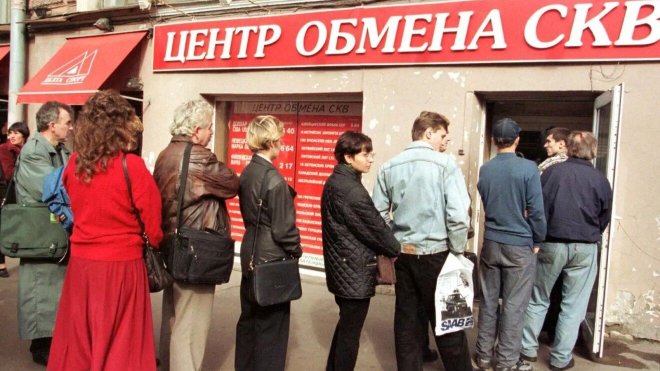
September 27 – October 1, 1993
I came down into the «Terem» and was struck. Anastasia Igorevna was enthroned at the bar. Her whole look had shifted from mousy bookkeeper to lordly director. Nastya gave off a definite aura: the wise manager thoughtfully steering, paternally instructing, and stirringly rallying the collective. One more happy person in the world. I’d observed another one just yesterday.
An hour and a half in which Verochka copulated desperately and talked in the pauses between thrusts had shown me that happiness exists. There was no room left for doubt or gloom! The future was mapped out years ahead and would come as a bonus on top of the attributes of happiness already acquired – the apartment, the foreign car, and doing the work she loved. Sewing «Versace» and selling it at Luzhniki meant more than dreams coming true. It was self-realization. She hadn’t finished the textile institute for nothing. She’d dreamed of competing with the European fashion houses. She’d gotten her competition – hard, vicious, real. And she’d won it, even if only within the Moscow city limits. Things had worked out just as handsomely for Vadim.
Vadim had just sat down across from me, drained a shot of the fashionable «B-52,» set alight by Sveta the waitress, and was now baring his teeth, rolling his eyes, rejoicing in life while he waited for his salmon. Not bad at all! He had a restaurant right under his nose where a man could stuff himself, get drunk, get swinishly wrecked, receive the bill in the morning and hand it to the bookkeeper for payment by bank transfer from the company account.
I sipped my beer and thought about it. I ate at the «Terem» on exactly the same terms and felt no joy at all.
Why? Was I afraid of becoming happy? Did the unknown frighten me? Could I not imagine what would happen when my turn came and Zhorik, with a stroke of the pen, made everything I’d dreamed of real?
I knocked back the rest in one go and looked around the room. Monday was considered a dead day, but tonight the crowd was more like a Thursday: a room full of our own people, not a stranger among them.
At the table by the stage sat Chicha with his athletes. At the bar Nastya was testing Misha’s cocktails. In the corner opposite were Vadim and I. We formed an isosceles triangle. All the locals present and accounted for.
Outside citizens occupied half of the remaining tables. Though they counted as outsiders only in a manner of speaking. The neighborhood businessmen considered it chic to hold their negotiations at the «Terem.» Zhorik seemed to know every one of them personally. He would appear in the restaurant with his arms flung wide: «Good to see you! Where’ve you been hiding? How’s business?» He never skipped anyone.
It struck me that every last person willing to put money by bank transfer into «Russian Horizon» had been found right here. And sure enough, coming into the «Terem» just now, Zhorik exchanged kisses with everyone present, lingered here and there, rubbed cheeks with a couple of newcomers, and collapsed at the table with me and Vadim.
Said hello, ordered vodka as usual. Announced that we’d be getting three trucks this week, which came to more than fifty thousand bottles. The warehouse question we’d solve!
He went over to Nastya, came back: Nastya has no objection! We take the basement. The «Terem» doesn’t need it.
From morning on I was being torn to pieces. Calling in exterminators to deal with the rodents, handing things over to Yurik, initiating the new boys from the dorm – Pavel and Vovka – into the essence of trading operations, sitting them down at the phone, teaching them business communication. If a client called about the ad, you lie and say the goods are in the warehouse, come on over and buy. If a repeat customer called, you warn him that certain items are about to run out. Which ones exactly, unclear, paperwork trouble. In short, come on over anyway, dear customers, and we’ll sort it out on the spot. It doesn’t matter whether the liquor is in stock or gone. The customer has to come!
Then I dashed between the second floor and the basement, negotiating with the plant about overtime work for the Gazon.
At noon we sent the truck out for the second load of booze. At six in the evening we got word from Genka: truck loaded and dispatched. We were stuck at work until midnight.
By Wednesday things went more cheerfully – we had stock, the range had widened. Work got simpler, but no easier. The number of clients grew in arithmetic progression. The Gazon was doing two runs a day and something was always missing from the warehouse.
By the end of the week, instead of the three thousand six hundred dollars we’d targeted, we’d knocked out nine thousand eight hundred. I calculated the promised wages and nearly fell off my chair. It came out to six hundred and eighty dollars a head. That was working at a loss. Something was wrong. I reached for the phone to call Zhorik… and realized there were more boys now. Ten cents of bonus on every above-plan dollar had to be split not two ways but four. I recalculated the wages. It came out to two hundred and fifteen dollars per person for a week’s work. Still too much.
I had to call Zhorik for clarification. Zhorik wasn’t listening. He cut me off mid-sentence: swamped to the eyeballs, no time for bullshit. The voucher had crashed from nine bucks to seven and a half, the dollar had jumped from eleven hundred to fifteen hundred, the White House was seething with counter-revolutionary ideas and in general, quit fucking with my brain.
He ordered me to do whatever I saw fit, but to pay what had been promised. Wages were to be paid without fail in rubles, the ones sitting in Vadim’s cash box.
Vadim reported that the dollar had stabilized at thirteen hundred. There were about thirty kilograms of rubles in the box. I wrote out the payroll and handed each of our heroes of labor two hundred and eighty thousand rubles.
The heroes gasped, gulped air, choked on their own happiness, and decided to wash the pay down at the «Terem» together with me. A couple of minutes later we were settled at a table with our noses in the menus.
I nodded to Inna the waitress – «the usual» – and shifted my gaze to my friends, who were ready to burst with joy. They were prowling up and down the columns, elbowing each other: «And this? And this? And this?» They’d had no mentor like mine, who would have ordered simply and from the heart: «Some nice vodka and a bite of something to go with it.»
I didn’t get distracted prompting my friends, just scratched figures in my planner: received, paid out, wages, rent, advertising, transport costs and so on…
I wrapped up the bookkeeping when the boys’ shashlik arrived and my entrecôte with it. Before shutting the planner I noted that net profit for the week came to three and a half thousand dollars, in spite of the swings in the exchange rate and the scandals in the country’s leadership. We didn’t trade in rubles, our prices were written in hard currency. The dollar and the Bundesmark stood unshaken. We drank to that. Then I warned them not to celebrate too hard. Next week the plan would rise to nine thousand eight hundred. As agreed – the sales target equals the figure hit the week before. They’d have to strain harder than ever. The boys assured me that for money like that you’d run a hare down in an open field with a shovel. I agreed. For money like that a man could run with his tongue over his shoulder. We drank again.
At ten in the evening I left the boys to go on celebrating and drove home with a hundred dollars in my pocket. My own wage didn’t depend on anything at all.