October 1, 1993
5:00 p.m.
Before closing I rushed over to Vadim to sort out the payments hanging in limbo, and stopped short. Vadim didn’t make his usual excuses – the client wired the money but the cash hasn’t landed, either our bank or theirs is spinning it around. He waved a hand: it’s all nonsense and dust! And announced that he was cooking up a little bank of his own.
– You’re winding me up? – I didn’t believe him.
– Not in the least! They brought me a fellow. The document package is ready, but he got nervous over the ruckus with the Supreme Soviet. He’s off to the Czech Republic one way. I picked up the deal. Zhorik’s coming by now, we’ll discuss it. The fellow wants five million for the papers. We’ll just change the name. «Sevzapavtodorstroyrembank» isn’t to my taste.
– And what is to your taste?
– Amidavknab.
– What the hell is that?
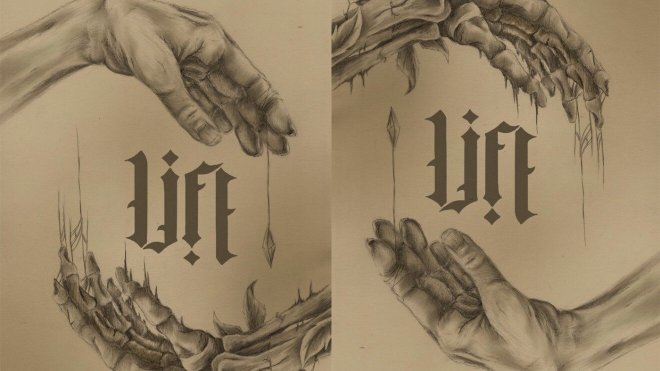
– A palindrome! «Bank Vadima» – Vadim’s Bank – backwards.
Zhorik, bursting into the office, nearly choked on a chebureki:
– Now that’s some serious creativity! Why don’t you draw yourself a business card with an ambigram on it while you’re at it. What’s your last name? Troshkin? Right, then it’s «Vatrobank» – Vadim Troshkin’s bank – and no arguments. Show me what they’re asking money for.
I had my own affairs piling up. I went off to Oksana, who was at war with the computer database and with the clients. The database promised a sea of spirit that had been sold two days before it cleared customs. Today another truck was clearing customs, and it too was sold off the wheels. The day after tomorrow a truck was arriving that we ought to be planning around. We had to steer our way out!
At half past six Vadim called me over to knock back some cognac and celebrate the birth of the bank. I waved him off: I’ll be free later, head to the «Terem» without me. A mouthful of worries, I’m knocked back already without any cognac.
I wrote out the boys’ wages, delighted at turnover rising to eighteen thousand dollars, and even more amazed at Zhorik’s foresight. At this rate we’d hit the hundred-thousand mark by December. This week the boys had earned two hundred and ten dollars each. Well done, Stakhanovites of capitalist labor!
I wrote Oksana a bonus of sixty-two dollars, pulled the calculator over to convert the wages into rubles, and caught myself. Since last week, when the events around the Supreme Soviet began, we’d stopped accepting Russian money. Rubles were ignored, and that pleased me. It made calculating wholesale prices and profit simpler. So: nine hundred and two dollars out of the till for the collective’s wages, then a hundred for myself. Though after a couple of seconds’ reflection I decided I’d worked no less than Oksana, and wrote myself a hundred-dollar bonus too.
So, in the dry residue: one thousand one hundred and two dollars in wages, plus four hundred dollars in rent for the premises and the truck; advertising had cost six hundred. I got out a sheet of paper, added up the income figures in a column, multiplied by fifty percent… stop, that’s wrong! Took fifty percent out, two thousand one hundred. Whew!
It came to almost seven thousand dollars of net profit for a week’s work! In a year you could earn three hundred and fifty thousand, and in three years reach the million mark. Buy white trousers, brilliantine by the liter jar, «Burberrys» sunglasses and sail off on a tour of foreign parts!
I got carried away, wrote out a disbursement check, signed it myself, and went off to Olga, Vadim’s cashier. Meanwhile the boys had summoned Vovka up from the warehouse with three bottles of «Spumante.» Last time, after the vermouth, everyone had suffered with their stomachs. «Spumante,» according to the buyers, had no such defect.
The moment I handed the boys their wages they uncorked the bottles, poured the fizz into teacups and settled around Pashka’s desk. I sighed, remembering how civilized the end-of-week celebrations had been at the fund. There we had sipped quality alcohol like cultured people, ate cervelat with it, and suffered no belly trouble in the morning. Here the collective slurped Polish swill and chased it with bluish meat pies, at the risk of not remembering their own full names or place of residence come morning.
I sighed again.
Zhorik had condemned the drinking session at the «Terem» a week ago and, more than that, forbidden carousing with employees in restaurants and other dens of temptation. He permitted merging with the collective in festive ecstasy three times a year – New Year’s, the Eighth of March, and the firm’s birthday.
A great pity.
I looked at the boys and understood: here it was, a real gang, ready to work from dawn to dawn, with no complaints toward me and no pity for themselves. Two hundred dollars a week – where else were they going to earn that? I knew for a fact that money like that got hammered out only by lucky financiers, unprincipled bribe-takers, and golden children slotted into warm places like «Russian Horizon.»
I sighed a third time: «Carry on without me, I’ve got things to do,» and went down to the «Terem.» I had a couple of questions to work through with Zhorik, who’d promised to drop by.